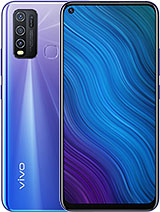
Oscal Modern 8 review
The Modern 8 suits someone in a region with reliable LTE coverage who needs a phone that lasts two days, keeps a 3.5mm jack, and displays a large screen without premium trappings. Skip it if you game regularly, need sharp text, or expect responsive multitasking—the T616 and 720p screen will frustrate you, and rivals offer more speed for the same money."
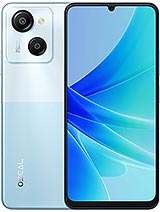
This review is based on Oscal’s published specifications and public benchmark data for the Oscal Modern 8, and the rating is spec-based. GoSolo does not physically test devices; where we estimate real-world behaviour such as battery life or charge time, we say so. How we rate phones.
Overview
The Oscal Modern 8 is a budget large-screen phone with a 6000mAh battery, 3.5mm jack, and 90Hz display, aimed at buyers who value endurance and headphone connectivity over speed or sharpness. For around €100, it delivers solid daylong battery life and a wide 6.75-inch canvas, but the 720p resolution looks soft, the Unisoc T616 chipset is dated even for its price tier, and 18W charging is slow.
Design & build
The Modern 8 sits at 214g and 9.1mm thick, a chunky but straightforward slab that feels substantial without being awkward to hold. The 6.75-inch frame is wide, and at 77.4mm, it may challenge single-handed use if you have small hands. Build materials aren't specified, but for €100, you're looking at plastic, not metal or glass. The design is functional rather than refined, with a side-mounted fingerprint sensor and dual nano-SIM slots. Dual SIM support is useful in regions where multiple carriers or roaming is common, a practical choice often missing from Western flagship lines.
Display
The 6.75-inch IPS LCD with 90Hz refresh is the centerpiece, and the 90Hz motion smoothness does matter for scrolling and light gaming. However, 720p resolution on this diagonal is a real compromise. At 260 ppi pixel density, text and icons appear visibly soft compared to the 1080p standard rivals now deliver at the same price. The 450-nit brightness is adequate for indoor use but won't punch through sunlight as reliably as 600+ nit displays common in this era. The 20:9 aspect ratio stretches content vertically, useful for reading and video, but the narrow width can make typing awkward on larger keyboards.
Performance
The Unisoc Tiger T616 is a 2021-generation chip that handles everyday tasks—messaging, social media, browsing, light photography editing—without stuttering. Multitasking with 5+ apps is manageable as long as you're not switching between heavy applications constantly. Gaming is where limits show: casual titles run fine, but demanding 3D games will drop frames or refuse to launch. The 8GB RAM helps, but the GPU (Mali-G57 MP1) is modest. Rivals using MediaTek Helio G99 or Snapdragon 685 at similar prices offer notably snappier performance for the same workload. This chipset feels a generation behind what you should expect at €100 in 2024.
Software
Android 13 with DokeOS 4 is a custom Oscal layer atop Google's OS. DokeOS is lighter than MIUI or ColorOS, which is a point in its favor—less bloat, fewer forced updates interrupting your workflow. However, support longevity is unclear, and Oscal's update track record is patchy compared to established brands. You get the basics: standard Android features, Google Play, and a simple launcher. No obvious bloatware preloaded, which is refreshing at this price, but expect a learning curve if the launcher differs from stock Android.
Camera
The 50MP main sensor with f/1.8 aperture and PDAF captures crisp detail in bright daylight, a genuine strength for the price. HDR and panorama modes are included. The weakness is video—1080p@30fps caps your motion capture, and there's no zoom at all, so distant subjects stay small and soft. The 8MP selfie is basic but adequate for video calls and casual selfies. Night mode isn't mentioned, so low-light photos will struggle. If you're shooting stills in daylight and don't need a telephoto or video work, this camera over-delivers for €100. If you want versatility or night photography, you'll feel the limits quickly.
Battery & charging
6000mAh is substantial and, paired with the efficient T616 chipset, stretches past a day on moderate use—messaging, social media, a few video calls, light gaming. Light users may see closer to two days. Heavy gaming, navigation, or streaming video will drop that to a full day or slightly less. The 18W charging is the sore spot: roughly 90 minutes to full from empty is acceptable but slow by 2024 standards, where 33W and 65W chargers have become normal at this price. If you're in a region with inconsistent power or travel frequently, the battery capacity is a real asset, but the slow charge speed means longer downtime when you do need a quick top-up.
Connectivity & value
No 5G, no NFC—the Modern 8 is LTE-only, which is fine in areas with solid 4G coverage but will feel throttled in regions rolling out 5G or where networks are congested. Connectivity bands support most global carriers, and dual SIM is useful for travelers or dual-carrier users. At €100, the Modern 8 targets buyers who prioritize battery life, a headphone jack, and a large display over performance or refinement. It's a no-nonsense workhorse for someone in a region with strong LTE infrastructure who doesn't game, edit video, or run multiple demanding apps. Compared to rivals like the Redmi 13 or Tecno Spark 20, it lags in performance and screen sharpness but matches or beats them on battery and design simplicity. The 3.5mm jack is genuinely rare at this price now and pushes the value proposition for audio enthusiasts or corporate environments where wireless buds aren't practical.
Verdict
The Modern 8 suits someone in a region with reliable LTE coverage who needs a phone that lasts two days, keeps a 3.5mm jack, and displays a large screen without premium trappings. Skip it if you game regularly, need sharp text, or expect responsive multitasking—the T616 and 720p screen will frustrate you, and rivals offer more speed for the same money."
- 6000mAh battery stretches past a day of moderate use, a real draw for buyers in regions without reliable power access or frequent travelers
- 3.5mm headphone jack still present—a feature vanishing even at budget tiers, valuable if you own wired earbuds or audio equipment
- 6.75-inch display with 84.7% screen-to-body ratio gives a spacious canvas for video, reading, and gaming without excessive bezels
- 50MP main camera with f/1.8 and PDAF captures sharp stills in daylight conditions, a genuine strength on phones at this price
- 720p resolution on a 6.75-inch screen produces noticeably soft text and icons compared to the 1080p standard now common at this price
- Unisoc T616 chipset struggles with heavy multitasking and demanding games—performance lags behind rivals using MediaTek Helio or Snapdragon 685 at similar cost
- 18W charging is sluggish; competing budget phones now offer 33W or 65W, meaning roughly 90 minutes to full charge here versus 30–45 minutes elsewhere
Oscal Modern 8 Key Specifications
The essentials at a glance. See the full spec sheet.
| Released | 2024, May |
|---|---|
| Display | 6.75 inches, 110.0 cm2 (~84.7% screen-to-body ratio), IPS LCD, 90Hz, 450 nits (typ) |
| Resolution | 720 x 1600 pixels, 20:9 ratio (~260 ppi density) |
| Chipset | Unisoc Tiger T616 (12 nm) |
| RAM & storage | 128GB 8GB RAM, 256GB 8GB RAM |
| Main camera | 50 MP, f/1.8, 23mm (wide), 1/2.76", PDAF Auxiliary lens |
| Selfie camera | 8 MP, (wide), 1/4.0" |
| Battery | 6000 mAh |
| Charging | 18W wired |
| Software | Android 13, DokeOS 4 |
| Dimensions | 167.8 x 77.4 x 9.1 mm (6.61 x 3.05 x 0.36 in) |
| Weight | 214 g (7.55 oz) |
| Network | GSM / HSPA / LTE |
| NFC | No |
| USB | USB Type-C |
Oscal Modern 8 FAQ
Common questions, answered from the spec sheet.
Does the Modern 8 support 5G?
No. The Modern 8 tops out at GSM / HSPA / LTE, without 5G.
What chipset does the Modern 8 use?
The Modern 8 runs on the Unisoc Tiger T616 (12 nm).
What display does the Modern 8 have?
A 6.75 inches, 110.0 cm2 (~84.7% screen-to-body ratio) IPS LCD, 90Hz, 450 nits (typ), 720 x 1600 pixels, 20:9 ratio (~260 ppi density).
How big is the Modern 8 battery?
The Modern 8 has a 6000 mAh battery. Charging is rated at 18W wired.
Does the Modern 8 have NFC?
No, the Modern 8 does not list NFC support.
Does the Modern 8 support a microSD card?
Yes, the Modern 8 supports expandable storage (microSDXC (dedicated slot)).
Does the Modern 8 have a headphone jack?
Yes, the Modern 8 has a 3.5mm headphone jack.
Alternatives to consider
If the Modern 8 isn’t quite right, these are the closest calls.
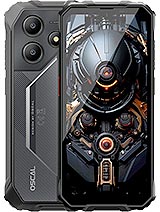
Marine 1
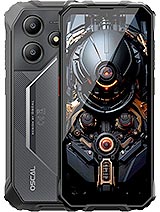
Marine 2
Flat 2
Tiger 8
Galaxy M06 5G