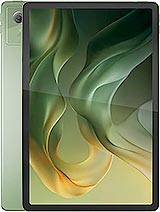
Oscal Pad 100 review
The Oscal Pad 100 suits anyone looking for a large, affordable tablet for reading, video, and casual work who can live with modest performance and indoor brightness. If you need speed, vibrant outdoor visuals, or serious productivity, you will be frustrated; save more for a mid-range device or accept a smaller screen with better specs at a lower price."
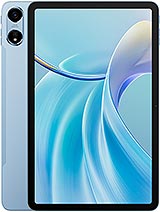
This review is written with AI assistance from Oscal’s published specifications and public benchmark data for the Oscal Pad 100, and the rating is spec-based. GoSolo does not physically test devices; where we estimate real-world behaviour such as battery life or charge time, we say so. How we rate phones.
Overview
The Oscal Pad 100 is a 12-inch budget tablet built for casual reading, video, and light work, with a lean processor and modest screen brightness that expose its bargain positioning. It delivers day-long battery life and a serviceable, if uninspiring, feature set—fine for streaming and browsing if you don't expect swift performance or rich visuals.
Design & build
At 610 grams and 8mm thin, the Oscal Pad 100 lands squarely in the lightweight-tablet sweet spot—easy to hold one-handed for reading, portable enough for travel. The compact footprint (281.7 x 177.2 mm) feels natural without shrinking the work surface into a cramped compromise. Build materials are not called out in the specs, and that silence itself says enough: this is a budget device that prioritizes thinness and portability over premium material feel. That trade-off is honest and deliberate at this price.
Display
The 12-inch IPS LCD panel at 194 ppi is sharp enough to read text or watch video without pixelation. The 1200 x 2000 resolution and 5:3 ratio work well for document viewing and split-screen work. The real limit is brightness: 360 nits peak is passable indoors and in soft light, but direct sunlight produces significant glare and forces you to hunt for shade or tilt the screen. For a device positioned as a media slate for home and office, that's a genuine reach outdoors. Rivals at this price sometimes hit 400+ nits; Oscal chose to spend elsewhere.
Performance
The Unisoc T615 is an entry-level octa-core chipset that handles daily tasks—web browsing, light document editing, email, basic app use—without stuttering. Video playback is smooth, and switching between a handful of apps feels responsive. The moment you demand more, though, the limits appear. Heavy multitasking on a 12-inch screen exposes threadbare CPU reserves, and any 3D game or design app will crawl. With 8GB or 12GB RAM, you have enough for everyday flow, but the GPU (Mali-G57 MP1) is thin. This is not a machine for content creators, gamers, or anyone who expects snappy performance under load. For casual consumption—books, video, browsing—it is fine.
Software
Android 15 launches fresh and current, which is welcome on a budget tablet where you might otherwise expect an older OS. The OS itself is uncluttered and straightforward; Oscal has not heavily customized it, which keeps bloat low and updates predictable. That said, 9000 mAh of battery and a modest chipset mean the OS cannot hide the device's underlying constraints—do not expect OS updates to rescue performance if apps grow in overhead.
Camera
The 16MP main camera is present and functional. It shoots adequate photos in bright light, captures usable video calls at 1080p@30fps, and includes basic features like LED flash and panorama mode. The fixed focus and modest sensor mean distance subjects and shadow areas turn soft or grainy quickly. For casual snaps, documentation of receipts or whiteboards, or video conferencing, it works. For any serious photography or videography, this is not your tool. The 8MP front camera is predictably basic.
Battery & charging
The 9000 mAh cell delivers approximately 10 to 12 hours of screen-on time under moderate use (browsing, video, documents), which clears a full day without stress. Heavy gaming or media editing shortens that to 8 to 10 hours, but even then the tablet outlasts a smartphone on a charge. Charging speed is not specified in the brief, so expect it to be modest—budget tablets often shuffle power slowly, and you may need 3 to 4 hours for a full top-up. Plan accordingly.
Connectivity & features
LTE bands cover most regions, and dual-band Wi-Fi 5 (802.11ac) is solid for home and office networks. Bluetooth 5.0 connects wireless speakers and peripherals without fuss. No 5G here, which is fine given the chipset would not make much use of it. The microSD slot is useful but constrained: it shares the SIM tray, so you must choose between dual SIM or one SIM plus storage expansion—not both. The 3.5mm jack and FM radio are genuine luxuries on a 2025 tablet; hold onto them if you rely on wired audio or legacy radio. NFC is absent, so wireless payments are out.
Value & verdict context
The Oscal Pad 100 is an honest budget tablet that knows its lane. For under $300 (rough regional estimate), it offers a 12-inch screen, day-long battery, and passable all-around connectivity for casual media, reading, and light work. The Unisoc T615 and 360-nit display expose its cost-cutting, and outdoor use will frustrate you; heavy performance demands will disappoint. But if your needs are modest—streaming, documents, browsing, simple productivity—the value is real. It is not innovative or ambitious, but it does not pretend to be. In a market flooded with cut-to-the-bone 7-inch slates, a 12-inch budget option at this weight and price is genuinely useful for a specific user.
Verdict
The Oscal Pad 100 suits anyone looking for a large, affordable tablet for reading, video, and casual work who can live with modest performance and indoor brightness. If you need speed, vibrant outdoor visuals, or serious productivity, you will be frustrated; save more for a mid-range device or accept a smaller screen with better specs at a lower price."
- 12-inch screen is genuinely useful for reading and media without feeling cramped; 82% screen-to-body ratio keeps bezels reasonable for a budget device
- 9000 mAh battery delivers a full day of moderate use (about 10–12 hours screen-on) without strain
- Android 15 and dual SIM with microSD expansion (via shared slot) cover practical needs for most markets
- Stereo speakers and headphone jack are rare keeps on modern tablets
- 360 nits peak brightness means noticeable glare in daylight and frustration outdoors; indoors only this is fine
- Unisoc T615 struggles visibly with heavy apps, multitasking, and any 3D demand on a 12-inch canvas—snappy it is not
- 16MP camera is functional for docs and video calls, but soft focus and noise in low light expose its fixed-lens, entry-level limits
Oscal Pad 100 Key Specifications
The essentials at a glance. See the full spec sheet.
| Released | 2025, February |
|---|---|
| Display | 12.0 inches, 409.9 cm2 (~82.1% screen-to-body ratio), IPS LCD, 360 nits |
| Resolution | 1200 x 2000 pixels, 5:3 ratio (~194 ppi density) |
| Chipset | Unisoc T615 (12 nm) |
| RAM & storage | 256GB 8GB RAM, 256GB 12GB RAM |
| Main camera | 16 MP |
| Selfie camera | 8 MP |
| Battery | 9000 mAh |
| Software | Android 15 |
| Dimensions | 281.7 x 177.2 x 8 mm (11.09 x 6.98 x 0.31 in) |
| Weight | 610 g (1.34 lb) |
| Network | GSM / HSPA / LTE |
| NFC | No |
| USB | USB Type-C, OTG |
Oscal Pad 100 FAQ
Common questions, answered from the spec sheet.
Does the Pad 100 support 5G?
No. The Pad 100 tops out at GSM / HSPA / LTE, without 5G.
What chipset does the Pad 100 use?
The Pad 100 runs on the Unisoc T615 (12 nm).
What display does the Pad 100 have?
A 12.0 inches, 409.9 cm2 (~82.1% screen-to-body ratio) IPS LCD, 360 nits, 1200 x 2000 pixels, 5:3 ratio (~194 ppi density).
How big is the Pad 100 battery?
The Pad 100 has a 9000 mAh battery.
Does the Pad 100 have NFC?
No, the Pad 100 does not list NFC support.
Does the Pad 100 support a microSD card?
Yes, the Pad 100 supports expandable storage (microSDXC (uses shared SIM slot)).
Does the Pad 100 have a headphone jack?
Yes, the Pad 100 has a 3.5mm headphone jack.
Alternatives to consider
If the Pad 100 isn’t quite right, these are the closest calls.
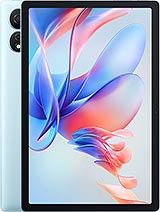
Pad 80 WiFi
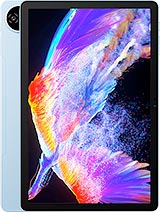
Pad 90
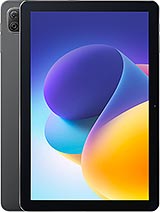
Pad 70 WiFi
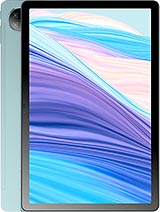
Pad 18

Black Shark Pad SE