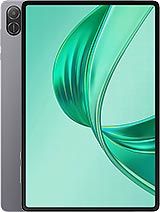
Oscal Pad 13 review
The Oscal Pad 13 suits anyone who reads, watches, and browses on a budget and values battery life over raw power. It is not for someone who plays modern games, edits video, or expects the tablet to age gracefully beyond three years, nor for anyone bothered by soft text and slow app load times."
This review is based on Oscal’s published specifications and public benchmark data for the Oscal Pad 13, and the rating is spec-based. GoSolo does not physically test devices; where we estimate real-world behaviour such as battery life or charge time, we say so. How we rate phones.
Overview
The Oscal Pad 13 is a no-frills 10-inch tablet built for browsing, reading, and video at a price that undercuts most rivals by a wide margin. The soft-spoken T606 chip and modest 224-ppi screen are honest trade-offs for someone who doesn't demand speed or pixel density, but long battery life and dual speakers make it genuinely useful for media and email on a tight budget.
Design & build
At 435g and 7.6mm thin, the Oscal Pad 13 is slim and light for its screen size, making it easy to hold for reading or lap browsing without fatigue. The build materials are not specified, but the design is straightforward—no fancy frame or premium finish, just the shape of a workaday tablet. Dual-SIM connectivity baked in is a practical nod to users in regions where multiple carriers matter. For the price, there's no fussiness here; it's a straightforward slab designed to do a job, and it does not feel cheap in hand because there is simply less to break or rattle.
Display
The 10.1-inch IPS LCD with 1200×1920 resolution and 224 ppi is adequate but not sharp by modern tablet standards. At typical reading distance, it's perfectly legible for email, web pages, and ebooks, but zoom in on maps or fine print and the softness becomes apparent. The 16:10 aspect ratio is well-suited to books and long documents, and the 78.3% screen-to-body ratio means most of the front is display rather than bezel. Brightness and colour accuracy are not detailed, but IPS panels at this price tier tend to be comfortable for indoor use; outdoor visibility under direct sun is typically ordinary. For someone upgrading from a small phone screen, this will feel noticeably larger and easier on the eyes.
Performance
The Unisoc T606 with 8GB RAM handles light work without noticeable lag: email, web browsing, office documents, and casual video all run smoothly. This chip is not built for heavy lifting. Demanding games, video editing, and streaming apps with heavy background tasks will reveal stutters and slowdowns. The Mali-G57 GPU is capable enough for basic graphics, but do not expect console-level performance. For the target use case—a second screen for media and productivity apps—the T606 is appropriately matched to the job and the price. It is a 2023 tablet with a 2023 entry-level chip, so expectations should be calibrated accordingly.
Software
The tablet ships with Android 12 and Doke-OS 3.0, Oscal's overlay. Android 12 is now two years behind the latest major version, which matters less for tablet users than phone users, since major updates are less critical to daily use. Doke-OS appears to be a light skin rather than a heavy fork, which means the core Android experience remains recognisable. No detail is given on update frequency or support duration, which is typical for budget devices from less established brands; expect 1–2 years of OS updates and regular security patches if you are lucky. For email, media, and light productivity, the software is not a bottleneck.
Camera
The 13MP rear camera with LED flash captures decent daytime photos and can scan documents adequately for email or cloud storage. In lower light or for fast movement, it will struggle; this is a snapshot camera, not a documentary tool. The 8MP front-facing sensor is fine for video calls and the occasional selfie, but again, nothing to celebrate. Video maxes out at 1080p at 30fps, which is usable for casual recording but not for content creation. For a tablet primarily meant for consumption rather than capture, the camera setup is practical but forgettable.
Battery & charging
The 7680 mAh battery is the tablet's strongest card. With light to moderate use—browsing, reading ebooks, video playback—you can comfortably get 12 to 15 hours of screen-on time, meaning a full day without charging and into the next morning. This is exactly what budget tablet buyers want: a device they reach for in the morning and do not have to plug in until evening or the next day. The spec sheet omits charging speed and wattage, so actual time-to-full is unknown, but the large battery size suggests charging is measured in hours, not minutes. For a tablet in this category, that trade-off is entirely reasonable.
Value & verdict-context
At roughly €130, the Oscal Pad 13 is priced to undercut budget Android tablets from more recognisable brands. You are not paying for a name or cutting-edge hardware; you are paying for 10 inches of screen and a battery that keeps up with your day. The T606 is a known quantity in budget tablets and can handle the job for the audience. No 5G, no cutting-edge display tech, no flagship features—and nobody shopping at this price expects them. The question is whether the value proposition holds: does the experience justify the outlay? For reading, video, and light work without demanding games, yes. For anything more intensive or any need for future-proofing beyond 2–3 years, you should save a bit more for a midrange alternative. The Pad 13 is an honest tablet for honest money, with one genuine strength—battery life—that matters far more than the processor does for the typical buyer in this segment.
Verdict
The Oscal Pad 13 suits anyone who reads, watches, and browses on a budget and values battery life over raw power. It is not for someone who plays modern games, edits video, or expects the tablet to age gracefully beyond three years, nor for anyone bothered by soft text and slow app load times."
- 7680 mAh battery delivers genuine all-day stamina with everyday tasks, comfortably clearing 12–15 hours on a single charge
- 10.1-inch screen at 78% body ratio leaves little bezel waste and gives real estate for reading and video without bulk
- Dual speakers and FM radio turn it into a credible media companion for a price near budget phones
- Expandable storage via microSD and solid connectivity (Wi-Fi 5, Bluetooth 5.0, dual SIM, USB-C) round out a practical tablet
- The Unisoc T606 is decidedly entry-level and cannot handle demanding apps or games; multitasking will show stutters on less optimised software
- 224 ppi falls behind what budget Android tablets offer now, so smaller text and fine details lack crispness
- Only 1080p video recording and a 13MP rear camera that handles basic snapshots but nothing more
Oscal Pad 13 Key Specifications
The essentials at a glance. See the full spec sheet.
| Released | 2023, April 12 |
|---|---|
| Display | 10.1 inches, 295.8 cm2 (~78.3% screen-to-body ratio), IPS LCD |
| Resolution | 1200 x 1920 pixels, 16:10 ratio (~224 ppi density) |
| Chipset | Unisoc T606 (12 nm) |
| RAM & storage | 256GB 8GB RAM |
| Main camera | 13 MP |
| Selfie camera | 8 MP, 1/4.0", 1.12µm |
| Battery | 7680 mAh |
| Software | Android 12, Doke-OS 3.0 |
| Dimensions | 239.2 x 158 x 7.6 mm (9.42 x 6.22 x 0.30 in) |
| Weight | 435 g (15.34 oz) |
| Network | GSM / HSPA / LTE |
| NFC | No |
| USB | USB Type-C, OTG |
Oscal Pad 13 FAQ
Common questions, answered from the spec sheet.
Does the Pad 13 support 5G?
No. The Pad 13 tops out at GSM / HSPA / LTE, without 5G.
What chipset does the Pad 13 use?
The Pad 13 runs on the Unisoc T606 (12 nm).
What display does the Pad 13 have?
A 10.1 inches, 295.8 cm2 (~78.3% screen-to-body ratio) IPS LCD, 1200 x 1920 pixels, 16:10 ratio (~224 ppi density).
How big is the Pad 13 battery?
The Pad 13 has a 7680 mAh battery.
Does the Pad 13 have NFC?
No, the Pad 13 does not list NFC support.
Does the Pad 13 support a microSD card?
Yes, the Pad 13 supports expandable storage (microSDXC (uses shared SIM slot)).
Does the Pad 13 have a headphone jack?
No, the Pad 13 does not have a 3.5mm headphone jack.
Alternatives to consider
If the Pad 13 isn’t quite right, these are the closest calls.
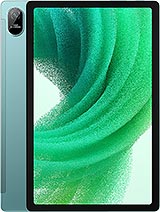
Pad 15
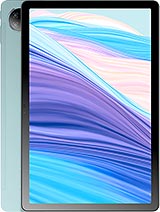
Pad 18
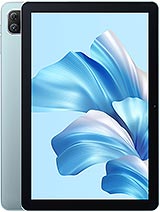
Pad 60
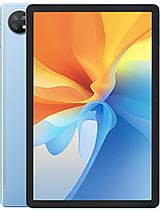
Pad 16
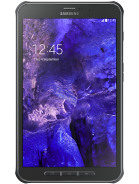
Galaxy Tab Active 5