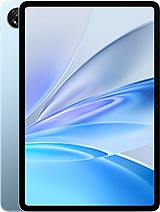
Oscal Pad 16 review
This tablet suits cost-conscious buyers, field workers, and office staff in emerging markets who need LTE connectivity and a readable screen for emails, browsing, and video—the lightweight design and dual SIM setup are genuine wins for mobile professionals. Anyone depending on speed, sharp visuals, or portable gaming should look elsewhere; the T606 will frustrate you within weeks.
This review is based on Oscal’s published specifications and public benchmark data for the Oscal Pad 16, and the rating is spec-based. GoSolo does not physically test devices; where we estimate real-world behaviour such as battery life or charge time, we say so. How we rate phones.
Overview
The Oscal Pad 16 is a budget 10.5-inch tablet aimed at everyday tasks like reading, video, and light work—its LTE and dual SIM support make it useful for office work in regions with poor Wi-Fi, but the Unisoc T606 chipset struggles with anything heavier than casual use. For the price, it delivers a full day of battery life and enough screen real estate to get things done, though performance throttles quickly under load and the cameras are merely functional.
Design & build
At 515 grams and 7.4 mm thick, this tablet is remarkably thin and light for a 10.5-incher, making it genuinely pocketable in a daypack or large bag. The frame feels plastic, which is standard for the price, and there's no waterproofing or Gorilla Glass mentioned—so treat it accordingly. The addition of stylus support is useful if you plan to sketch or annotate documents, though Oscal doesn't bundle a pen in the box, which is typical at this price point. Build quality appears adequate; it won't survive a heavy drop, but it's not fragile.
Display
The 10.5-inch IPS LCD panel runs 1200 × 1920 pixels at 216 ppi—low for a tablet, but acceptable at arm's length for reading articles, browsing, or watching video. Text remains legible without squinting, though fine print will look slightly soft up close and you'll notice the pixel grid if you're used to sharper iPad or Samsung Tab screens. Color reproduction is neutral, not warm or oversaturated, and viewing angles are decent for an IPS panel. Brightness isn't a standout—it's fine indoors and adequate in mild sunlight, but not as vivid as higher-end competitors.
Performance
The Unisoc T606 is an entry-level SoC, and the tablet reflects that plainly. Day-to-day tasks—email, web browsing, document reading, Netflix, YouTube—run smooth enough to not annoy you. Jump to gaming, heavy multitasking, or video editing and it loses steam fast; demanding games stutter, spreadsheets lag when you're flipping between tabs, and rendering or exporting video feels glacially slow. The 8 GB of RAM helps keep apps in memory, but can't overcome the chip's architectural limits. If your workload is productivity-light (mail, messaging, some office documents), this tablet is fine. If you're a creator or a heavy user, save for something faster.
Software
The Oscal runs Android 13 with DokeOS_P 3.0 overlay, a custom skin that adds extra home screens and bloat. DokeOS isn't aggressive with ads, but it does clutter the interface with widgets and icons you didn't ask for—some can be uninstalled, others can't. Updates are unlikely to be frequent, given Oscal's position in the budget tier; security patches may lag, so don't assume monthly releases. The OS itself is responsive for light tasks, but the custom skin adds overhead that becomes noticeable on slower chips.
Camera
Both rear (13 MP) and front (13 MP) cameras are modest by any standard. The rear shoots 1080p video at 30 fps and has an LED flash for emergencies, but don't expect sharp detail in daylight or usable low-light shots. The front camera is serviceable for video calls or the occasional selfie, nothing more. These are utility cameras—useful for scanning documents with OCR apps, capturing reference photos, or hopping on a Zoom call—but not for photography. If visual content matters, don't rely on this tablet's lenses.
Battery & charging
The 8200 mAh battery should deliver about 12 to 15 hours of mixed use (browsing, video, light work) on a full charge, which covers a full workday comfortably. Heavy users or those watching video continuously will see the lower end of that range. The spec sheet doesn't list the charging speed or wattage, which is a red flag—it likely trickles in slowly via USB Type-C, possibly taking 3 to 4 hours to fill. There's no fast charging, so plan to top up overnight or during lunch.
Value & verdict
The Oscal Pad 16 fits a specific niche: anyone in a cost-conscious market who needs a 10.5-inch screen, doesn't care about speed or fancy cameras, and appreciates LTE + dual SIM for work flexibility. At this price, there aren't many other options with cellular built in and a decent screen size. The trade-off is clear: you're sacrificing performance and camera quality for affordability and portability. Compared to older flagship tablets from 2-3 years ago, this lags in speed and finish, but costs far less. For reading, light office work, and streaming, it delivers. For gaming or creative work, it's a frustration.
Verdict
This tablet suits cost-conscious buyers, field workers, and office staff in emerging markets who need LTE connectivity and a readable screen for emails, browsing, and video—the lightweight design and dual SIM setup are genuine wins for mobile professionals. Anyone depending on speed, sharp visuals, or portable gaming should look elsewhere; the T606 will frustrate you within weeks.
- LTE + dual SIM in a compact 10.5-inch tablet—rare for the price, and valuable for office workers in regions with unreliable Wi-Fi
- Slim (7.4 mm) and light (515 g) for a tablet this size, genuine pocketability in a bag
- 8200 mAh battery lasts a full workday on mixed use without needing a midday charge
- Unisoc T606 throttles quickly under load; gaming, video editing, and heavy multitasking stall noticeably
- Charging speed is unspecified and likely glacial (no fast charging mentioned); expect 3+ hours to full battery
- 216 ppi display is soft for a tablet; fine text and detail blur up close compared to sharper alternatives
Oscal Pad 16 Key Specifications
The essentials at a glance. See the full spec sheet.
| Released | 2024, January |
|---|---|
| Display | 10.5 inches, 319.7 cm2 (~80.6% screen-to-body ratio), IPS LCD |
| Resolution | 1200 x 1920 pixels, 16:10 ratio (~216 ppi density) |
| Chipset | Unisoc T606 (12 nm) |
| RAM & storage | 256GB 8GB RAM |
| Main camera | 13 MP Auxiliary lens |
| Selfie camera | 13 MP |
| Battery | 8200 mAh |
| Software | Android 13, DokeOS_P 3.0 |
| Dimensions | 246.6 x 160.8 x 7.4 mm (9.71 x 6.33 x 0.29 in) |
| Weight | 515 g (1.14 lb) |
| Durability | Stylus support |
| Network | GSM / HSPA / LTE |
| NFC | No |
| USB | USB Type-C, OTG |
Oscal Pad 16 FAQ
Common questions, answered from the spec sheet.
Does the Pad 16 support 5G?
No. The Pad 16 tops out at GSM / HSPA / LTE, without 5G.
What chipset does the Pad 16 use?
The Pad 16 runs on the Unisoc T606 (12 nm).
What display does the Pad 16 have?
A 10.5 inches, 319.7 cm2 (~80.6% screen-to-body ratio) IPS LCD, 1200 x 1920 pixels, 16:10 ratio (~216 ppi density).
How big is the Pad 16 battery?
The Pad 16 has a 8200 mAh battery.
Does the Pad 16 have NFC?
No, the Pad 16 does not list NFC support.
Is the Pad 16 water resistant?
The Pad 16 carries a Stylus support rating.
Does the Pad 16 support a microSD card?
Yes, the Pad 16 supports expandable storage (microSDXC (uses shared SIM slot)).
Does the Pad 16 have a headphone jack?
No, the Pad 16 does not have a 3.5mm headphone jack.
Alternatives to consider
If the Pad 16 isn’t quite right, these are the closest calls.
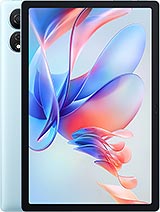
Pad 80 WiFi
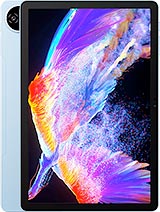
Pad 90
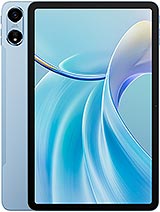
Pad 100
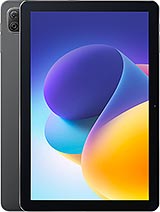
Pad 70 WiFi
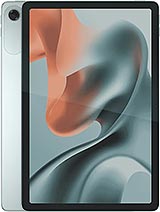
Moto Pad 60 Lite