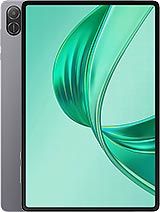
Oscal Pad 18 review
The Pad 18 suits casual readers, video watchers, and workers in markets where dual-SIM and LTE connectivity are valued. Skip it if you do any gaming, creative work, or expect fast charging; the chipset will disappoint quickly, and the 18W charger will test your patience daily.
This review is based on Oscal’s published specifications and public benchmark data for the Oscal Pad 18, and the rating is spec-based. GoSolo does not physically test devices; where we estimate real-world behaviour such as battery life or charge time, we say so. How we rate phones.
Overview
The Oscal Pad 18 is a 11-inch budget tablet that prioritizes screen size and battery endurance over speed, landing it squarely in the read-and-watch category. It delivers on day-long battery life and a sharp enough display for its price, but the aging Unisoc chipset and sluggish 18W charging hold it back for anything beyond casual use.
Design & Build
The Pad 18 is a lightweight 490-gram slab at 7.4mm thick, designed for lap or hand use over long periods. That thinness is genuine; it feels less like an iPad stand and more like a large paperback. The 16:10 aspect ratio and dual-SIM design suggest this is built for emerging markets where connectivity and size matter more than slimness cult. The materials are not flagged in the spec sheet, so expect plastic or budget aluminum, typical for this price tier. At its size and weight, it trades portability against screen real estate fairly well.
Display
A 10.95-inch IPS LCD running 1200×1920 at 207 ppi is exactly what you'd expect from a mid-range tablet launched in 2023. The pixel density is not phone-sharp, but for a screen this large, it's the right balance; text is clean, colors are muted but accurate, and there's no obvious graininess at normal viewing distance. IPS means decent angles without the contrast punch of OLED, but that's not the point here. For reading, browsing, and video, this display earns its place. It's not a visual showcase, but it's fit for purpose and wouldn't feel cheap in daily use.
Performance
The Unisoc Tiger T616 paired with Mali-G57 is the core problem. This chipset was mid-range in 2022 and has aged noticeably. It handles everyday apps, YouTube, and office work fine, but stumbles on 3D games, video editing, and heavy browser tabs. If you're just reading news, emails, and watching Netflix, you won't notice. If you're trying to run Genshin Impact or Procreate, don't. The 8GB or 12GB RAM variants help smooth light multitasking, but the CPU ceiling limits real improvements. By 2026 standards, you're looking at a chip that is two generations behind what competitors offer at the same price point.
Software
Android 13 with DokeOS_P 3.0 is Oscal's fork, pitched as privacy-focused but sparsely documented. It should handle standard Google apps and Play Store software, though OS updates and long-term support are unlikely to match Samsung or iPad. For a global-south audience, this is a known trade-off; cheaper tablets often ship with custom Android skins to cut licensing costs. As long as DokeOS doesn't lock you into proprietary apps, it's workable, but don't expect years of OS updates. Security patches are also a question mark.
Camera
A 13MP rear module and 2MP ultrawide are table stakes for a 2023 tablet; the 13MP selfie camera is fine for video calls. Where it falters is 1080p video at 30fps, which is notably soft and low-bitrate compared to rivals that now shoot 4K or at least 1080p 60fps. Photo quality is decent for snapshots and document scans but nothing more. This is a consume-media tablet, not a create-on tool; the camera feels like an afterthought, which is fair at this price.
Battery & Charging
The 8800 mAh battery yields roughly 10–12 hours of real screen-on time for mixed use (reading, browsing, video), which is solid for a 11-inch tablet and meets the goal of one full day without fussing. The killer is 18W wired charging; most rivals in 2024–2025 jumped to 30W or 45W for similar capacity, leaving this one stuck at 60–75 minutes to full. For a device meant to be always-on, slow charging is a daily nuisance. The lack of wireless charging is unremarkable at this price, but the wired speed is behind the curve.
Value & Verdict
The Oscal Pad 18 is a tablet for someone who needs a large screen for reading, video, and light work and is willing to sacrifice gaming and raw responsiveness to get a full day of use and dual-SIM connectivity. It's not broken, and the price likely reflects that positioning. If you're shopping in markets where big displays are scarce and 4G multi-carrier support is essential, this fills a gap. For anyone with higher performance or charging-speed expectations, or who wants to future-proof against software abandonment, look at Samsung or Lenovo. The Unisoc chipset and 18W charger are compromises that cut costs, not add features. That's honest, but it limits its appeal to a narrow use case.
Verdict
The Pad 18 suits casual readers, video watchers, and workers in markets where dual-SIM and LTE connectivity are valued. Skip it if you do any gaming, creative work, or expect fast charging; the chipset will disappoint quickly, and the 18W charger will test your patience daily.
- 10.95-inch 207-ppi display is bright and sharp enough for reading, video, and casual browsing without eye strain.
- 8800 mAh battery comfortably stretches to 10–12 hours of real screen-on time, covering a full workday.
- Dual Nano-SIM with LTE support is useful in markets where multi-carrier flexibility matters; rare on tablets at this price.
- Stylus support and 4 stereo speakers add value for content consumption and note-taking without pushing the price higher.
- Unisoc Tiger T616 is entry-level even for 2023—it chokes on demanding apps, games, and heavy multitasking; rivals now use Snapdragon or MediaTek chips a tier above.
- 18W charging is glacial for an 8800 mAh battery; expect 60–75 minutes to full capacity, which is tedious for a device meant for all-day carry.
- Only 1080p video recording and a 13MP camera setup that is competent only for stills; video quality lags modern tablets by a clear margin.
Oscal Pad 18 Key Specifications
The essentials at a glance. See the full spec sheet.
| Released | 2023, December 05 |
|---|---|
| Display | 10.95 inches, 347.7 cm2 (~80.4% screen-to-body ratio), IPS LCD |
| Resolution | 1200 x 1920 pixels, 16:10 ratio (~207 ppi density) |
| Chipset | Unisoc Tiger T616 (12 nm) |
| RAM & storage | 256GB 8GB RAM, 256GB 12GB RAM |
| Main camera | 13 MP 2 MP |
| Selfie camera | 13 MP |
| Battery | 8800 mAh |
| Charging | 18W wired |
| Software | Android 13, DokeOS_P 3.0 |
| Dimensions | 256.8 x 168.3 x 7.4 mm (10.11 x 6.63 x 0.29 in) |
| Weight | 490 g (1.08 lb) |
| Durability | Stylus support |
| Network | GSM / HSPA / LTE |
| NFC | No |
| USB | USB Type-C, OTG |
Oscal Pad 18 FAQ
Common questions, answered from the spec sheet.
Does the Pad 18 support 5G?
No. The Pad 18 tops out at GSM / HSPA / LTE, without 5G.
What chipset does the Pad 18 use?
The Pad 18 runs on the Unisoc Tiger T616 (12 nm).
What display does the Pad 18 have?
A 10.95 inches, 347.7 cm2 (~80.4% screen-to-body ratio) IPS LCD, 1200 x 1920 pixels, 16:10 ratio (~207 ppi density).
How big is the Pad 18 battery?
The Pad 18 has a 8800 mAh battery. Charging is rated at 18W wired.
Does the Pad 18 have NFC?
No, the Pad 18 does not list NFC support.
Is the Pad 18 water resistant?
The Pad 18 carries a Stylus support rating.
Does the Pad 18 support a microSD card?
Yes, the Pad 18 supports expandable storage (microSDXC (uses shared SIM slot)).
Does the Pad 18 have a headphone jack?
No, the Pad 18 does not have a 3.5mm headphone jack.
Alternatives to consider
If the Pad 18 isn’t quite right, these are the closest calls.
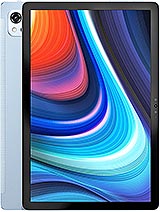
Pad 13
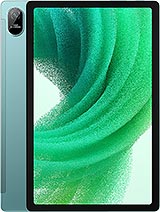
Pad 15

Pad 60
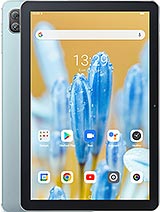
Pad 70
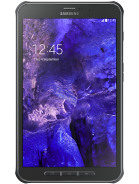
Galaxy Tab Active 5