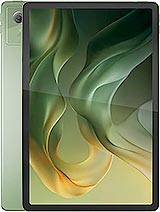
Oscal Pad 80 WiFi review
This tablet suits anyone who wants an affordable 10-inch screen for reading, video, and light browsing at home without the budget for a mid-range alternative. It is a poor fit if you plan to game, edit photos or video, or expect fast charging; in those cases, a mid-range tablet or a used flagship will serve you far better for roughly the same outlay.
This review is based on Oscal’s published specifications and public benchmark data for the Oscal Pad 80 WiFi, and the rating is spec-based. GoSolo does not physically test devices; where we estimate real-world behaviour such as battery life or charge time, we say so. How we rate phones.
Overview
The Pad 80 is a straightforward budget tablet for home browsing, reading, and video on a stable 10.5-inch display. The 10W charging is painfully slow, and the Unisoc T606 processor won't handle serious multitasking or gaming, but for its price it delivers reasonable battery life and a comfortable screen size to justify keeping one at home.
Design & build
At 495 grams and 9.1 mm thick, the Pad 80 is lean for a 10-inch tablet, making it genuinely portable around the house or easy to hold for longer reading sessions. The form factor trades build quality for portability; the specs do not detail materials, so assume a plastic chassis typical of budget tablets. For a device positioned as a home entertainment and productivity tool rather than something to throw in a backpack daily, the weight and thickness are sensible choices. The lack of a SIM slot and cellular radios confirms this is a Wi-Fi only tablet, which is the expected trade-off at this price tier.
Display
The 10.51-inch IPS LCD panel runs at 1200×1920 pixels (16:10 aspect ratio) for 215 ppi density. That pixel count is not particularly sharp—most phones now exceed 300 ppi—but on a 10-inch screen at normal reading distance, text and images remain clear and legible. IPS technology ensures consistent colours and viewing angles even if you tilt the tablet, a genuine plus for a household device that will be shared or viewed from various angles. The 16:10 ratio suits video and document work better than a more square screen. There is no mention of an anti-glare coating or high refresh rate, so expect brightness and responsiveness typical of an entry-level LCD from 2025: adequate for indoors, potentially washed out in direct sunlight, and standard 60Hz refresh.
Performance
The Unisoc T606 is an entry-level octa-core processor paired with 6GB RAM. For everyday tasks—browsing, email, reading, light document editing, and casual video—this combination is sufficient. Opening apps and scrolling through feeds happens without noticeable stutter in typical use. Where the T606 shows its limits is heavy multitasking, modern gaming, and apps that demand sustained CPU or GPU load. If you attempt to run a demanding game or compile a large video edit, you will feel the lack of performance. Android 14 and Doke OS_P 4.0 run smoothly on this hardware, but the chip is two or three generations behind what you would find in mid-range tablets this year, making it a deliberate cost cut rather than a capable mid-range processor.
Camera
A 13MP rear sensor with f/2.0 aperture and LED flash, plus an 8MP front camera at f/2.2, delivers what you expect from a budget tablet's optics. The 1080p video at 30fps is serviceable for casual clips. These cameras exist to cover the basics—family snapshots, video calls, and perhaps a quick receipt scan—not for serious photography or video work. In daylight, the images are clear and usable; in low light, the LED flash helps but does not perform miracles. For a tablet used mainly at home, the camera capability is incidental rather than a reason to buy or reject it.
Battery & charging
The 8200 mAh battery achieves roughly one to two days of real-world use depending on activity level. Light tasks like reading, light web browsing, and streaming video can stretch it to a full day, sometimes longer. Intensive use or long gaming sessions will burn through it in a single day. For a device intended to sit on a nightstand or coffee table, a day or two between charges is practical. The real pain point is the 10W charging speed, which takes roughly 2 to 3 hours to reach full capacity. By 2025 standards, even budget tablets often offer 20W or faster charging, so this is noticeably slow and inconvenient if you need to top up quickly or use the device while it charges. The dedicated microSDXC slot helps offset the modest internal storage, though it does not speed up charging.
Connectivity & software
Wi-Fi 802.11ac dual-band covers most home and office networks reliably, and Bluetooth 5.0 connects headphones and speakers without fuss. USB-C makes charging and file transfer straightforward with a modern cable standard. The absence of NFC, GPS, and FM radio is standard for a Wi-Fi-only budget tablet and not a practical loss. Android 14 with Doke OS_P 4.0 indicates Oscal's custom skin, which typically adds bloatware or system tweaks; without hands-on experience, assume it is lighter than some manufacturer overlays but heavier than stock Android. The OS will receive security updates at minimum, though long-term support on a budget brand is uncertain.
Value & verdict context
The Pad 80 WiFi is a no-frills 10-inch tablet for home entertainment and light productivity. It excels when you want a stable screen for reading, streaming, and casual web use; the battery lasts long enough for a weekend away without a charger if your usage is gentle. The bottlenecks are obvious: the 10W charging is frustratingly slow by current standards, the Unisoc T606 is entry-level and will stall on heavy work, and camera quality is incidental at best. At its launch price (expect it to be under $150–200 USD equivalent in global south markets), it competes directly with other budget 10-inch tablets, where the advantage is simply that it exists and meets the basic checklist. If you need something faster, more capable, or quicker to charge, a used or refurbished flagship tablet from a year or two back often offers better performance and charging speed for a similar price.
Verdict
This tablet suits anyone who wants an affordable 10-inch screen for reading, video, and light browsing at home without the budget for a mid-range alternative. It is a poor fit if you plan to game, edit photos or video, or expect fast charging; in those cases, a mid-range tablet or a used flagship will serve you far better for roughly the same outlay.
- 8200 mAh battery lasts a full day of light use (web, reading, video) without a charge
- 10.51-inch 1200×1920 display is large enough for comfortable reading and video at home, with decent color and wide viewing angles on IPS
- Dual-band Wi-Fi ac is stable for typical home networks; Bluetooth 5.0 keeps wireless audio and accessories responsive
- Compact and light enough (495g, 9.1mm) to hold and carry without strain for a tablet this size
- 10W charging takes roughly 2–3 hours to full, which is slow even by budget tablet standards and inconvenient if you need to use it while charging
- Unisoc T606 processor struggles with heavy multitasking, demanding apps, or modern games; expect lag during intensive work
- Modest 215 ppi density and entry-level chipset mean this is a consumption device, not designed for creative work or performance tasks
Oscal Pad 80 WiFi Key Specifications
The essentials at a glance. See the full spec sheet.
| Released | 2025, January |
|---|---|
| Display | 10.51 inches, 320.3 cm2 (~80.2% screen-to-body ratio), IPS LCD |
| Resolution | 1200 x 1920 pixels, 16:10 ratio (~215 ppi density) |
| Chipset | Unisoc T606 (12 nm) |
| RAM & storage | 256GB 6GB RAM |
| Main camera | 13 MP, f/2.0 |
| Selfie camera | 8 MP, f/2.2 |
| Battery | 8200 mAh |
| Charging | 10W wired |
| Software | Android 14, Doke OS_P 4.0 |
| Dimensions | 246.8 x 161.9 x 9.1 mm (9.72 x 6.37 x 0.36 in) |
| Weight | 495 g (1.09 lb) |
| Network | GSM |
| NFC | No |
| USB | USB Type-C |
Oscal Pad 80 WiFi FAQ
Common questions, answered from the spec sheet.
Does the Pad 80 WiFi support 5G?
No. The Pad 80 WiFi tops out at GSM, without 5G.
What chipset does the Pad 80 WiFi use?
The Pad 80 WiFi runs on the Unisoc T606 (12 nm).
What display does the Pad 80 WiFi have?
A 10.51 inches, 320.3 cm2 (~80.2% screen-to-body ratio) IPS LCD, 1200 x 1920 pixels, 16:10 ratio (~215 ppi density).
How big is the Pad 80 WiFi battery?
The Pad 80 WiFi has a 8200 mAh battery. Charging is rated at 10W wired.
Does the Pad 80 WiFi have NFC?
No, the Pad 80 WiFi does not list NFC support.
Does the Pad 80 WiFi support a microSD card?
Yes, the Pad 80 WiFi supports expandable storage (microSDXC (dedicated slot)).
Does the Pad 80 WiFi have a headphone jack?
Yes, the Pad 80 WiFi has a 3.5mm headphone jack.
Alternatives to consider
If the Pad 80 WiFi isn’t quite right, these are the closest calls.
Pad 70 WiFi
Pad 100
Pad 90
Pad 16
Black Shark Pad SE