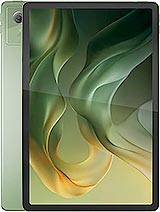
Oscal Pad 90 review
The Oscal Pad 90 suits buyers who need a large, light tablet for leisure—reading, casual browsing, video, and basic apps—and can accept low resolution and modest performance as the cost of size and price. Anyone planning heavy work, media editing, gaming, or detailed reading should look elsewhere; the display and processor simply aren't built for that pace."
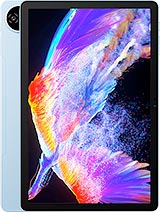
This review is based on Oscal’s published specifications and public benchmark data for the Oscal Pad 90, and the rating is spec-based. GoSolo does not physically test devices; where we estimate real-world behaviour such as battery life or charge time, we say so. How we rate phones.
Overview
The Oscal Pad 90 is a lightweight 10.92-inch tablet built for reading, casual browsing, and video, with an entry-level processor and low-resolution screen that makes it a functional bargain for users who prioritize screen size and portability over sharpness or speed. The 138 ppi display and Unisoc T606 chip are the real limiting factors, but at this price for a dual-SIM tablet with LTE, it checks the basic boxes—just not gracefully.
Design & Build
At 534 grams and 8mm thick, the Pad 90 is genuinely portable for its screen size, making it one of the lighter 10.92-inch tablets on the market. The metal frame should survive casual handling, and the Mohs 7 glass on the display resists minor scratches. What you're getting is functional, not refined: there's no premium finish here, and a tablet this thin with that much unsupported screen area is accident-prone if dropped. The dual-SIM tray is a practical touch for international users or those juggling work and personal lines, though it eats the microSD slot if you want expandable storage.
Display
A 10.92-inch IPS LCD at 800 x 1280 pixels amounts to just 138 ppi, and that's the tablet's biggest compromise. Text looks noticeably pixelated at normal viewing distance, fine details blur, and the experience reading small fonts or scrolling through web pages feels dated. The 350-nit brightness is adequate for indoor use and moderate sunlight, but this is not a screen built for detail work or image editing. Where it does work is for video playback and casual reading—the large size means you can sit further back and the low density becomes less jarring. By 2025 standards, even budget tablets are pushing 250+ ppi, so this one is behind.
Performance
The Unisoc T606 is entry-level by design, and the Pad 90 makes no attempt to hide it. Apps open without drama, scrolling through feeds is smooth, and light multitasking poses no problem. Gaming and demanding work will stutter—don't expect smooth play in modern titles or lag-free video editing. For emails, web browsing, social media, document reading, and casual video, it's adequate. The 8GB of RAM helps prevent crashes in day-to-day use, but you're not getting a device built for heavy workloads. This is a tablet that knows its lane and stays in it.
Software
Android 14 with DokeOS_P 4.0 is Doke Technology's custom skin, and without hands-on testing, it's hard to assess bloat or usability. What matters is that you have a current Android version, full access to the Play Store, and no locked ecosystem. The FM radio built into the hardware is a rarity and a bonus for users in areas with terrestrial broadcasts. Long-term software support from Oscal is unclear, so don't expect four years of updates if you plan to keep this tablet for a long time.
Camera
The 13MP rear and 8MP front cameras are adequate for video calls and basic documentation, shooting up to 1080p video. In daylight, both sensors should capture acceptable shots. Low light will struggle, and don't expect clarity or color accuracy that rivals a smartphone camera. For tablet use, the cameras are an afterthought—they exist for tasks like Zoom calls and snapping receipts, not for daily photography. Compared to budget tablet rivals, this is standard and unremarkable.
Battery & Charging
The 7700 mAh battery should deliver eight to ten hours of mixed screen time, though the lack of any stated fast-charging specification suggests the charger is standard and slow—expect several hours to reach full capacity. For a tablet, that's workable if you charge overnight or dock it while working. The large battery capacity is a strength relative to the thin frame, and the USB Type-C port supports OTG for expandable storage via external drives. Battery endurance is unlikely to be a frustration over the long term.
Value & Verdict
The Oscal Pad 90 competes in a shrinking market segment: affordable, large-screen tablets aimed at emerging markets where a bigger screen justifies lower resolution. The price should reflect that positioning—if it's half the cost of a decent 10-inch iPad, or significantly cheaper than Samsung's entry tablets, the trade-offs become easier to accept. Connectivity is solid with LTE bands covering most regions, dual-SIM for flexibility, and Wi-Fi 6 is absent but 802.11ac delivers decent speeds. The real question is intent: if you're buying this for serious work or media consumption at close range, the 138 ppi screen will frustrate you. If you want a large, light, cheap device for reading, browsing in bed, and video on a train, it gets the job done. No 5G, no fast charging, no high refresh rate, and no premium build—but those omissions are baked into the price.
Verdict
The Oscal Pad 90 suits buyers who need a large, light tablet for leisure—reading, casual browsing, video, and basic apps—and can accept low resolution and modest performance as the cost of size and price. Anyone planning heavy work, media editing, gaming, or detailed reading should look elsewhere; the display and processor simply aren't built for that pace."
- Genuinely light and thin (534g, 8mm) for a 10.92-inch tablet, making it portable without feeling fragile
- Dual-SIM LTE with broad band support means reliable connectivity across most regions without fuss
- 7700 mAh battery provides realistic all-day use over a variety of tasks, no charging anxiety
- 138 ppi at this screen size means visible pixelation and blurry text—fine for casual use, poor for reading-heavy work
- Unisoc T606 handles basics but stutters under any real workload, limiting gaming and multitasking
- No fast charging specification suggests slow, hours-long charging cycles despite the large battery
Oscal Pad 90 Key Specifications
The essentials at a glance. See the full spec sheet.
| Released | 2025, January |
|---|---|
| Display | 10.92 inches, 345.8 cm2 (~79.0% screen-to-body ratio), IPS LCD, 350 nits |
| Resolution | 800 x 1280 pixels, 16:10 ratio (~138 ppi density) |
| Chipset | Unisoc T606 (12 nm) |
| RAM & storage | 128GB 8GB RAM |
| Main camera | 13 MP |
| Selfie camera | 8 MP |
| Battery | 7700 mAh |
| Software | Android 14, DokeOS_P 4.0 |
| Dimensions | 258.1 x 169.6 x 8 mm (10.16 x 6.68 x 0.31 in) |
| Weight | 534 g (1.18 lb) |
| Network | GSM / HSPA / LTE |
| NFC | No |
| USB | USB Type-C, OTG |
Oscal Pad 90 FAQ
Common questions, answered from the spec sheet.
Does the Pad 90 support 5G?
No. The Pad 90 tops out at GSM / HSPA / LTE, without 5G.
What chipset does the Pad 90 use?
The Pad 90 runs on the Unisoc T606 (12 nm).
What display does the Pad 90 have?
A 10.92 inches, 345.8 cm2 (~79.0% screen-to-body ratio) IPS LCD, 350 nits, 800 x 1280 pixels, 16:10 ratio (~138 ppi density).
How big is the Pad 90 battery?
The Pad 90 has a 7700 mAh battery.
Does the Pad 90 have NFC?
No, the Pad 90 does not list NFC support.
Does the Pad 90 support a microSD card?
Yes, the Pad 90 supports expandable storage (microSDXC (uses shared SIM slot)).
Does the Pad 90 have a headphone jack?
Yes, the Pad 90 has a 3.5mm headphone jack.
Alternatives to consider
If the Pad 90 isn’t quite right, these are the closest calls.
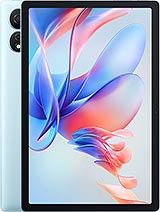
Pad 80 WiFi
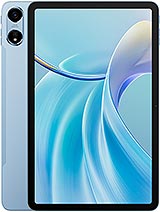
Pad 100
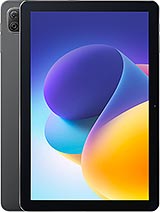
Pad 70 WiFi
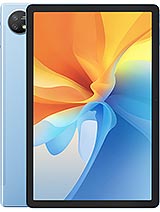
Pad 16
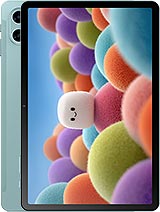
Black Shark Pad SE