Oscal Pilot 1 review
This phone suits outdoor workers, delivery drivers, construction crews, and travelers in areas without reliable charging—people who trade gaming smoothness and video quality for two-day battery life and proven toughness. Anyone prioritizing speed, camera range, or fast charging should look at mainstream midrange rivals; the Pilot 1 is a specialist, not a catch-all.
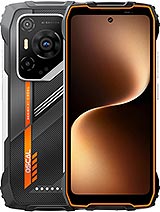
This review is written with AI assistance from Oscal’s published specifications and public benchmark data for the Oscal Pilot 1, and the rating is spec-based. GoSolo does not physically test devices; where we estimate real-world behaviour such as battery life or charge time, we say so. How we rate phones.
Overview
A rugged mid-range workhorse built for durability and battery life rather than raw power or style. At €250, the Pilot 1 appeals to field workers and outdoor users who value toughness and multi-day stamina, not gamers or heavy creatives.
Design & durability
The Pilot 1 wears its purpose plainly. At 357g and 14.5mm thick, it sits between a compact phone and a small brick, with a utilitarian feel that suits its target market. IP68/IP69K sealing, MIL-STD-810H certification, and a tested 2m drop resistance are not marketing theatre; they address real needs for outdoor workers, delivery staff, and anyone operating in harsh conditions. Gorilla Glass 5 is practical if not cutting-edge, and the side-mounted fingerprint sensor works faster than in-display alternatives in wet or dusty environments. The phone is heavier than flagships, but weight is expected in a durability-first design—it signals substance rather than fragility. Build materials aren't detailed in the spec sheet, but the combination of toughness specs and price point suggests composite casing rather than glass or metal.
Display
The 6.78-inch, 1080x2460 IPS LCD runs at 120Hz and peaks at 750 nits, a practical set of choices for a rugged device. 120Hz is standard now at this price, and the 396ppi density is adequate though not sharp—text and icons remain clear, but fine details lack the crispness of higher-res flagships. 750 nits is genuinely useful; it makes the screen readable in direct sunlight, a priority for outdoor work where screen-squinting kills productivity. The aspect ratio is tall, maximizing content per inch, which suits reading and navigation. IPS has wider viewing angles than OLED, a plus for shared viewing on job sites. The 69.7% screen-to-body ratio reflects the thick bezels needed for durability and side-button placement, a known trade-off in rugged phones.
Performance
The Dimensity 6300 is a mainstream midrange chip in 2025—capable for office tasks, messaging, and light browsing, but not a performance standout. Everyday apps open without stutter, and Wi-Fi video streaming is fluid. Gaming is where limits show: lighter titles like Candy Crush or slower strategy games run smoothly, but demanding games like Genshin Impact or Call of Duty Mobile will throttle on medium settings and drop frames. The Mali-G57 GPU and octa-core CPU lack the efficiency of newer chips at this price. For a phone at €250, this is typical, not a weakness, but buyers expecting snappy multitasking or casual gaming without compromise should look at rivals with Snapdragon 6 Gen 1 or Dimensity 7050 inside.
Software
Android 15 with DokeOS 4.1 is the custom layer. DokeOS is Oscal's own overlay, and without hands-on time it is hard to judge bloat or lag, but typical custom skins at this price add bloatware and adware alongside useful tools. The fact that the spec sheet highlights DokeOS suggests it may include work-focused features—perhaps task pinning, secure profiles, or offline maps for field use. Updates will depend on Oscal's track record; established brands usually commit to at least two years of patches, while smaller players often fall short. For workers, consistency and reliability matter more than cutting-edge features, so a stable, lightweight OS is preferable to a feature-rich one that slows down.
Camera
The 50MP main camera with f/1.8 aperture and PDAF is a strong point for this price. Daylight shots capture good detail and natural color, and the wide aperture helps in dimly lit spaces. The 20MP infrared night vision camera with two IR lights is unusual and practical—it lets you see in complete darkness, useful for security work, emergency response, or off-road navigation. Video is capped at 1440p@30fps, which captures usable footage for documentation but lacks the fluidity and cinematic potential of 4K 60fps rivals. The 32MP selfie camera is adequate for video calls. Overall, the camera system prioritizes utility over artistry; it solves the problem of 'I need to record what happened here' rather than 'I want beautiful stills.'
Battery & charging
The 7500 mAh cell is the phone's quiet hero. At this capacity with a modest display density and an efficient chipset, expect two days of mixed use—calls, messaging, moderate browsing, and GPS navigation. That stamina removes a major pain point for workers without daily charging access or travelers in remote areas. 33W wired charging pushes 20% in 27 minutes, implying a full charge in roughly an hour. By 2025 standards, 33W is mid-pack; rivals at €250 now routinely offer 65–100W, halving charge time. The 10W reverse charging is useful if you need the phone to top up a smartwatch or earbuds in a pinch, though it is slow. No wireless charging is expected in this segment.
Value & verdict
At €250, the Pilot 1 stakes a clear claim: durability and endurance over power and polish. The Dimensity 6300 is not snappy, the display is not sharp, and video stops at 1440p. But the 7500 mAh battery lasts days, the IP68/MIL-STD body survives drops and weather, and the infrared night vision is a feature you will not find at this price elsewhere. Compared to mainstream €250 rivals, which often optimize for everyday performance and camera versatility, the Pilot 1 narrows its focus to field work, outdoors, and durability-first use. That focus is honest and consistent with the price.
Verdict
This phone suits outdoor workers, delivery drivers, construction crews, and travelers in areas without reliable charging—people who trade gaming smoothness and video quality for two-day battery life and proven toughness. Anyone prioritizing speed, camera range, or fast charging should look at mainstream midrange rivals; the Pilot 1 is a specialist, not a catch-all.
- 7500 mAh battery with 33W charging covers two days of typical use, addressing a real need for workers and travelers in regions with spotty power access
- IP68/IP69K and MIL-STD-810H compliance plus 2m drop resistance make it genuinely tough—not aspirational ruggedness, but tested durability for site work and outdoor use
- 120Hz IPS display at 750 nits is bright enough for outdoor work, and the 6.78-inch footprint balances screen real estate with handleability for one-handed use
- 50MP main camera with PDAF and infrared night vision lights covers practical daylight and low-light scenarios where a 20MP sensor would lose detail
- Dimensity 6300 is entry-level for 2025; expect throttling in demanding games and apps, and everyday performance lags rivals at this price with better mid-range chips
- 1440p video maximum and no optical zoom limit creative ambitions; competitors in this class now routinely offer 4K and 2x or 3x tele
- 33W charging is slow relative to the €250 segment—rivals routinely hit 65–100W, meaning a full top-up takes longer than many would prefer
Oscal Pilot 1 Key Specifications
The essentials at a glance. See the full spec sheet.
| Released | 2025, June |
|---|---|
| Display | 6.78 inches, 109.2 cm2 (~69.7% screen-to-body ratio), IPS LCD, 120Hz, 750 nits |
| Resolution | 1080 x 2460 pixels (~396 ppi density) |
| Chipset | Mediatek Dimensity 6300 (6 nm) |
| RAM & storage | 256GB 12GB RAM |
| Main camera | 50 MP, f/1.8, (wide), 1/2.76", PDAF 20 MP, f/2.0, (night vision), 1/2.8", 2 infrared night vision lights Auxiliary lens |
| Selfie camera | 32 MP, f/2.2, (wide), 1/3.1" |
| Battery | 7500 mAh |
| Charging | 33W wired, 20% in 27 min10W reverse wired |
| Software | Android 15, DokeOS 4.1 |
| Dimensions | 182.2 x 86 x 14.5 mm (7.17 x 3.39 x 0.57 in) |
| Weight | 357 g (12.59 oz) |
| Durability | IP68/IP69K dust tight and water resistant (high pressure water jets; immersible up to 1.5m for 30 min) Drop resistant up to 2m MIL-STD-810H compliant |
| Network | GSM / CDMA / HSPA / LTE / 5G |
| NFC | Yes |
| USB | USB Type-C, OTG |
Oscal Pilot 1 FAQ
Common questions, answered from the spec sheet.
Does the Pilot 1 support 5G?
Yes. The Pilot 1 supports 5G networks.
What chipset does the Pilot 1 use?
The Pilot 1 runs on the Mediatek Dimensity 6300 (6 nm).
What display does the Pilot 1 have?
A 6.78 inches, 109.2 cm2 (~69.7% screen-to-body ratio) IPS LCD, 120Hz, 750 nits, 1080 x 2460 pixels (~396 ppi density).
How big is the Pilot 1 battery?
The Pilot 1 has a 7500 mAh battery. Charging is rated at 33W wired, 20% in 27 min10W reverse wired.
Does the Pilot 1 have NFC?
Yes, the Pilot 1 has NFC.
Is the Pilot 1 water resistant?
The Pilot 1 carries a IP68/IP69K dust tight and water resistant (high pressure water jets; immersible up to 1.5m for 30 min) Drop resistant up to 2m MIL-STD-810H compliant rating.
Does the Pilot 1 support a microSD card?
Yes, the Pilot 1 supports expandable storage (microSDXC (uses shared SIM slot)).
Does the Pilot 1 have a headphone jack?
No, the Pilot 1 does not have a 3.5mm headphone jack.
Alternatives to consider
If the Pilot 1 isn’t quite right, these are the closest calls.

Tiger 8
Pilot 8
Pilot 3
Pilot 6

N6