Oscal Pilot 3 review
The Pilot 3 is a purpose-built tool for outdoor and field workers who need a phone that lasts two days, survives drops and water, and shoots in the dark—not a phone that tries to be good at everything cheaply. Anyone prioritizing gaming, photography, or processing power should look elsewhere; anyone working outdoors, on construction sites, or in conditions where phones regularly break will find this worth every euro.
This review is based on Oscal’s published specifications and public benchmark data for the Oscal Pilot 3, and the rating is spec-based. GoSolo does not physically test devices; where we estimate real-world behaviour such as battery life or charge time, we say so. How we rate phones.
Overview
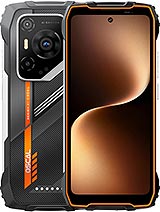
The Oscal Pilot 3 is a rugged workhorse aimed squarely at outdoor workers and field crews: it boots Android 15 with a 7500 mAh battery that delivers around two days of use, an IP68/IP69K rating plus MIL-STD-810H compliance, and a tough enough frame to survive 2-meter drops. At €250, it trades some processing grunt and a somewhat dimwitted display for a phone that will actually survive the conditions where most phones fail.
Design & Build
At 357 grams and 14.5 mm thick, the Pilot 3 is a chunky handful compared to typical flagships, but that heft exists for a reason. The IP68/IP69K rating and MIL-STD-810H certification mean this phone shrugs off dust, high-pressure water jets, and 1.5-meter submersion for 30 minutes; the 2-meter drop rating adds real durability for field conditions where phones routinely get dropped. The frame feels industrial rather than elegant, with a side-mounted fingerprint sensor that works reliably in wet or gloved conditions. Most rival rugged phones at this price demand much heavier sacrifices to durability or charge far slower; the Pilot 3 keeps weight reasonable.
Display
The 6.78-inch IPS LCD runs at 120 Hz with 1080p resolution, a reasonable pair at this price and year. Brightness hits 750 nits, which is enough for outdoor visibility without strain in most sunlight but trails the 1000+ nits rivals offer at similar prices. At 396 ppi, the pixel density is sharp enough for everyday viewing at arm's length. You do not get an AMOLED's colour depth or contrast, and Gorilla Glass 5 is ordinary protection by today's standards, but the LCD approach consumes less power than OLED would—a meaningful trade-off in a battery-first design.
Performance
The Mediatek Dimensity 6300 is a mainstream midrange chip with clear limits. Apps like WhatsApp, Gmail, and social media scroll without lag, and Wi-Fi and LTE speed feel normal. Games like Candy Crush or Subway Surfers run at comfortable frame rates on lower graphics settings. Anything more demanding—console-style 3D titles or real-time strategy games—stutters noticeably. For the target user (field workers, outdoor crew leads, not mobile gamers), this is fine; the phone does its job without friction for day-to-day tasks. The Mali-G57 GPU is not remotely competitive with rivals, but neither is the price.
Camera
The 50 MP main sensor with f/1.8 aperture takes sharp daylight shots, especially in bright conditions where the PDAF sensor locks focus quickly. The real standout is the 20 MP night vision module with two infrared lights: you can photograph dark scenes, equipment, or accident sites without triggering a conventional flash, which is invaluable for construction, emergency response, or fieldwork documentation. Video maxes out at 1440p@30fps, respectable but not pushing boundaries. The 32 MP selfie camera is serviceable for video calls and group photos. This is not a phone for photography enthusiasts, but the infrared pair lifts it well above ordinary budget rugged phones.
Battery & Charging
The 7500 mAh cell is the real hero. With mixed use—calls, messaging, some browsing—expect about 48 hours of real life between charges, or roughly 9 to 11 hours of continuous heavy use in a single day. For a field worker on a multi-day job without mains power, this is a game-changer. Charging via the 33W wired brick takes about 60 to 75 minutes from empty to full, which is solid but slower than the 66W to 120W offerings now standard in rivals at €250. Reverse charging at 6W exists but is effectively a gimmick on a phone this size. The large battery makes up for slower charging in real-world use, but impatient users will notice.
Software & Connectivity
Android 15 with DokeOS 4.1 (likely a Chinese OEM layer) runs without obvious bloat and handles split-screen multitasking smoothly. 5G support covers the main global bands, and dual Nano-SIM plus microSDXC (on a shared slot) give flexibility for work across regions. Bluetooth 5.2, NFC, FM radio, and a 3.5 mm headphone jack are present—the jack itself is rare on modern phones at any price and useful in fieldwork where standard audio tools are expected. GPS with GALILEO, GLONASS, BDS, and QZSS ensures solid positioning accuracy outdoors.
Value & Verdict-Context
At €250, the Pilot 3 is pitched at outdoor workers, field technicians, construction crews, and anyone who values durability and battery life over thinness and raw power. It competes against heavier, costlier rugged phones (which often exceed €400) and mainstream budget phones (which lack the IP68/IP69K and MIL certifications). For its target—someone whose phone needs to survive an actual job site, not a marketing department's claims—the Oscal delivers. The trade-offs are real: slower processor, weaker charging than rivals, no OLED display, no flagship gaming legs. But the bundle of ruggedness, battery endurance, and night vision actually solves problems that ordinary phones do not.
Verdict
The Pilot 3 is a purpose-built tool for outdoor and field workers who need a phone that lasts two days, survives drops and water, and shoots in the dark—not a phone that tries to be good at everything cheaply. Anyone prioritizing gaming, photography, or processing power should look elsewhere; anyone working outdoors, on construction sites, or in conditions where phones regularly break will find this worth every euro.
- 7500 mAh battery delivers about 48 hours between charges, enough to clear a full work week of field shifts without anxiety
- IP68/IP69K plus MIL-STD-810H compliance and 2-meter drop resistance make it genuinely rugged for outdoor work, construction, or remote fieldwork
- 20 MP infrared night vision with twin LED lights means you can shoot in near-total darkness without killing battery life on the main camera
- 33W charging from empty to full in about 60 to 75 minutes is solid for a 7500 mAh cell, meaning you can top up during a work break
- Dimensity 6300 has no muscle for modern games or heavy apps; messaging and scrolling stay smooth but anything demanding will stutter
- 33W charging is respectable but slower than rivals at this price tier, which increasingly top out at 66W and beyond
Oscal Pilot 3 Key Specifications
The essentials at a glance. See the full spec sheet.
| Released | 2025, June |
|---|---|
| Display | 6.78 inches, 109.2 cm2 (~69.7% screen-to-body ratio), IPS LCD, 120Hz, 750 nits |
| Resolution | 1080 x 2460 pixels (~396 ppi density) |
| Chipset | Mediatek Dimensity 6300 (6 nm) |
| RAM & storage | 256GB 12GB RAM |
| Main camera | 50 MP, f/1.8, (wide), 1/2.76", PDAF 20 MP, f/2.0, (night vision), 1/2.8", 2 infrared night vision lights Auxiliary lens |
| Selfie camera | 32 MP, f/2.2, (wide), 1/3.1" |
| Battery | 7500 mAh |
| Charging | 33W wired6W reverse wired |
| Software | Android 15, DokeOS 4.1 |
| Dimensions | 182.2 x 86 x 14.5 mm (7.17 x 3.39 x 0.57 in) |
| Weight | 357 g (12.59 oz) |
| Durability | IP68/IP69K dust tight and water resistant (high pressure water jets; immersible up to 1.5m for 30 min) Drop resistant up to 2m MIL-STD-810H compliant |
| Network | GSM / CDMA / HSPA / LTE / 5G |
| NFC | Yes |
| USB | USB Type-C, OTG |
Oscal Pilot 3 FAQ
Common questions, answered from the spec sheet.
Does the Pilot 3 support 5G?
Yes. The Pilot 3 supports 5G networks.
What chipset does the Pilot 3 use?
The Pilot 3 runs on the Mediatek Dimensity 6300 (6 nm).
What display does the Pilot 3 have?
A 6.78 inches, 109.2 cm2 (~69.7% screen-to-body ratio) IPS LCD, 120Hz, 750 nits, 1080 x 2460 pixels (~396 ppi density).
How big is the Pilot 3 battery?
The Pilot 3 has a 7500 mAh battery. Charging is rated at 33W wired6W reverse wired.
Does the Pilot 3 have NFC?
Yes, the Pilot 3 has NFC.
Is the Pilot 3 water resistant?
The Pilot 3 carries a IP68/IP69K dust tight and water resistant (high pressure water jets; immersible up to 1.5m for 30 min) Drop resistant up to 2m MIL-STD-810H compliant rating.
Does the Pilot 3 support a microSD card?
Yes, the Pilot 3 supports expandable storage (microSDXC (uses shared SIM slot)).
Does the Pilot 3 have a headphone jack?
Yes, the Pilot 3 has a 3.5mm headphone jack.
Alternatives to consider
If the Pilot 3 isn’t quite right, these are the closest calls.
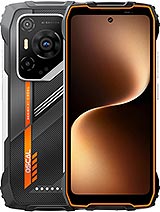
Pilot 1

Tiger 8
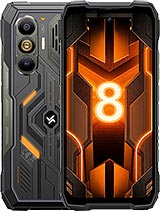
Pilot 8
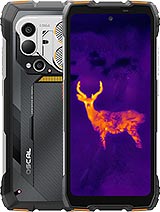
Pilot 6
N6