Oscal S70 Pro review
Buy this only if your work routine involves dust, water, drops, or extreme heat that would kill a normal phone. If your phone spends most of its time indoors or in an ordinary backpack, pick something faster and brighter.
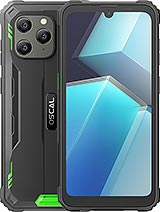
This review is based on Oscal’s published specifications and public benchmark data for the Oscal S70 Pro, and the rating is spec-based. GoSolo does not physically test devices; where we estimate real-world behaviour such as battery life or charge time, we say so. How we rate phones.
Overview
The Oscal S70 Pro is a rugged workhorse built for harsh environments, with IP68/IP69K and MIL-STD-810H certification that few phones match. Everything else—slow charging, low-res screen, weak cameras, and dated performance—makes it unsuitable for anyone else.
Design & build
At 273g and 15mm thick, the S70 Pro sits squarely in the rugged-phone class: hefty but purposeful. The weight reflects its core strength: IP68/IP69K certification and MIL-STD-810H compliance mean it swallows high-pressure water jets, survives immersion to 1.5 meters for half an hour, and endures the temperature swings, vibration, and shock that field work demands. This is genuine durability, not marketing hyperbole. For construction sites, emergency response, or outdoor survey work, this ruggedness matters. For everyday use in an office or home, it is overkill and will feel awkward in your pocket.
Display
The 6.1-inch IPS LCD screen resolves only 720 by 1560 pixels—a 282 ppi density that leaves pixels visible at normal viewing distance. Text reads blocky, photos look soft, and the screen dims noticeably indoors and in bright sunlight. By 2023 standards this was already dated; rivals even in the budget rugged segment had moved to 1080p and higher by then. No refresh-rate figure is listed, so assume 60Hz. For reading work orders, checking GPS, or browsing safety documents, it is functional. For anything involving detail or color accuracy, it will frustrate.
Performance
The MediaTek Helio P35 is an entry-level chip that handles calls, messaging, and light browsing without drama, but stumbles under real load. With 4GB RAM, the phone manages everyday tasks smoothly enough until you juggle multiple apps or try anything CPU-intensive. Gaming, video editing, or processing large files cause noticeable stutters. For a rugged phone in 2023, this was behind what rivals offered at similar durability tiers, but for workers whose phones mostly serve as communication and navigation tools, the lag is tolerable. It simply means do not expect this to double as a creative or gaming device.
Camera
Both cameras are basic: a 13MP rear and 8MP front, each capped at 1080p 30fps. No optical zoom, optical stabilization, or night mode. Low-light photos emerge grainy, video looks choppy at 30fps, and there is no way to frame shots tighter without walking closer. As a tool for documenting site conditions or taking quick work records, it performs. As a camera phone, it is obsolete. The LED flash is a small lifeline in dark spaces, but cannot compensate for the sensor's limits.
Battery & charging
The 6580 mAh cell is generous and paired with the low-power Helio P35, it stretches to roughly 1.5 days on light use or a full day on moderate mixed use—a genuine asset for field teams. The problem is charging. At 10W, a full recharge takes over three hours; there is no practical way to grab a meaningful boost during a shift break. Users in remote areas or on job sites far from power will appreciate the large battery. Those with daily access to outlets will resent the charging speed.
Software
Android 12 ships with Doke OS 3.1, a skin built for durability-focused environments rather than speed. It is stable and includes practical features like NFC and FM radio, but do not expect frequent updates. Doke OS is not known for prompt security patches, so this phone will age less gracefully in terms of protection than mainstream Android phones. For workers buying this phone to last five years without replacement, that is a live risk.
Value & verdict
The S70 Pro targets a narrow slice of the market: workers in construction, mining, emergency services, or field operations who need a phone that survives genuine abuse and cost nothing to replace if dropped into water. For them, the IP68/IP69K and MIL-STD-810H certifications justify the entire purchase. For everyone else—students, office workers, casual users—the ruggedness is wasted, and the slow charging, dim screen, sluggish chip, and weak cameras make daily use grinding. If your phone lives on a desk or in a bag in climate-controlled spaces, this phone will feel slower and more frustrating than a mainstream device at the same or lower price.
Verdict
Buy this only if your work routine involves dust, water, drops, or extreme heat that would kill a normal phone. If your phone spends most of its time indoors or in an ordinary backpack, pick something faster and brighter.
- IP68/IP69K and MIL-STD-810H certification: genuinely survives immersion to 1.5m, high-pressure jets, and extreme temperature swings that would destroy typical phones
- 6580 mAh battery keeps pace with a day of moderate use and delivers real peace of mind in remote or offline work
- Dedicated microSDXC slot lets you expand storage without sacrificing a SIM, crucial for work phones that log video or data-heavy tasks
- 10W charging is painfully slow; a full charge takes 3+ hours, so there is no practical quick-top-up option during a work shift
- 720p on a 6.1-inch display is visibly pixelated and dim indoors, making text and images a strain after a few hours of use
- Helio P35 and 4GB RAM struggle with multitasking; the phone bogs down noticeably once you have several apps running or try light photo editing
Oscal S70 Pro Key Specifications
The essentials at a glance. See the full spec sheet.
| Released | 2023, August |
|---|---|
| Display | 6.1 inches, 91.3 cm2 (~72.9% screen-to-body ratio), IPS LCD |
| Resolution | 720 x 1560 pixels, 19.5:9 ratio (~282 ppi density) |
| Chipset | Mediatek MT6765 Helio P35 (12 nm) |
| RAM & storage | 64GB 4GB RAM |
| Main camera | 13 MP other unspecified cameras |
| Selfie camera | 8 MP |
| Battery | 6580 mAh |
| Charging | 10W wiredReverse wired |
| Software | Android 12, Doke OS 3.1 |
| Dimensions | 161.5 x 77.6 x 15 mm (6.36 x 3.06 x 0.59 in) |
| Weight | 273 g (9.63 oz) |
| Durability | IP68/IP69K dust tight and water resistant (high pressure water jets; immersible up to 1.5m for 30 min) Drop resistant up to 1.5m MIL-STD-810H compliant |
| Network | GSM / HSPA / LTE |
| NFC | Yes |
| USB | USB Type-C, OTG |
Oscal S70 Pro FAQ
Common questions, answered from the spec sheet.
Does the S70 Pro support 5G?
No. The S70 Pro tops out at GSM / HSPA / LTE, without 5G.
What chipset does the S70 Pro use?
The S70 Pro runs on the Mediatek MT6765 Helio P35 (12 nm).
What display does the S70 Pro have?
A 6.1 inches, 91.3 cm2 (~72.9% screen-to-body ratio) IPS LCD, 720 x 1560 pixels, 19.5:9 ratio (~282 ppi density).
How big is the S70 Pro battery?
The S70 Pro has a 6580 mAh battery. Charging is rated at 10W wiredReverse wired.
Does the S70 Pro have NFC?
Yes, the S70 Pro has NFC.
Is the S70 Pro water resistant?
The S70 Pro carries a IP68/IP69K dust tight and water resistant (high pressure water jets; immersible up to 1.5m for 30 min) Drop resistant up to 1.5m MIL-STD-810H compliant rating.
Does the S70 Pro support a microSD card?
Yes, the S70 Pro supports expandable storage (microSDXC (dedicated slot)).
Does the S70 Pro have a headphone jack?
No, the S70 Pro does not have a 3.5mm headphone jack.
Alternatives to consider
If the S70 Pro isn’t quite right, these are the closest calls.

C30 Pro

Tiger 10
Spider 8

Modern 8
Galaxy XCover 7