Oscal Tiger 8 review
The Oscal Tiger 8 is a practical choice for someone in a 5G market who values a large, light phone for messaging and streaming over screen clarity and speed; anyone who does photography, gaming, or heavy multitasking should look to rivals with sharper displays and faster chipsets, even if they cost a bit more.

This review is written with AI assistance from Oscal’s published specifications and public benchmark data for the Oscal Tiger 8, and the rating is spec-based. GoSolo does not physically test devices; where we estimate real-world behaviour such as battery life or charge time, we say so. How we rate phones.
Overview
The Oscal Tiger 8 is a budget large-screen phone aimed at basic daily use and streaming in regions with 5G reach; its 720p display looks soft at 6.88 inches and the Unisoc T8100 chipset struggles with anything beyond messaging and video playback, making it a practical choice only if you value screen real estate over clarity and performance.
Design & build
At 210g and 8.5mm thick, the Tiger 8 sits comfortably in hand despite its vast 6.88-inch frame, making it genuinely one-handed for reading and casual browsing. The Mohs level 7 screen protection is adequate for everyday knocks. Dual Nano-SIM and a microSDXC slot (though it shares the SIM tray) offer flexibility for users juggling multiple carriers or needing local storage expansion. The side-mounted fingerprint reader is standard fare and responsive. For a budget device released in 2025, the build feels light and practical rather than cheap, though the spec sheet reveals nothing about the material or finish—likely plastic or soft-touch plastic throughout.
Display
The 6.88-inch IPS LCD is where the Tiger 8 reveals its compromises. At 720p resolution and 260 ppi, text rendering looks visibly soft when reading articles, email, or e-books—a notable step down from 1080p competitors in the same price tier. The 120Hz refresh is a welcome addition for scrolling smoothness, though it does not make up for the low pixel density. At 450 nits peak brightness, the screen handles indoor reading and typical daylight conditions but won't shine outdoors in direct sun. For someone who treats a phone mostly as a video and messaging device, the large canvas and smooth scrolling will feel adequate; those who care about text clarity should look to rivals with sharper panels.
Performance
The Unisoc T8100 is entry-level silicon even by 2025 standards. With four Cortex-A76 cores clocked at 2.2GHz and the Mali-G57 GPU, it handles light apps, social media, and video streaming without drama. Messaging, browsing, and audiobook apps run smoothly. Heavy multitasking—switching between multiple apps with lots of background processes—causes visible lag and frame stutters. Gaming is a non-starter; even casual titles will choke. The 4GB and 8GB RAM options both support everyday use, though 8GB provides more breathing room if you keep many apps open. This is a phone for single-task workflows: message, then browse, then video—not juggling five apps at once.
Software
The Tiger 8 ships with Android 15 and DokeOS 4.2, Oscal's custom layer. DokeOS is relatively light and does not add significant bloat, meaning updates should flow reasonably fast and the interface should stay responsive on the modest hardware. No word yet on how long Oscal will support this model, but budget brands typically offer two major OS updates and three years of patches—check with your regional retailer before buying. Out of the box, you get the standard Google services and stock-like Android behaviour, which is fine for a budget device.
Camera
The 16MP rear camera with f/2.2 aperture and AF captures bright daylight scenes decently, aided by the LED flash and basic HDR. Low-light performance suffers; the shallow 1/3.06" sensor and fixed focus lead to soft, noisy shots in dim rooms or at dusk. Video recording maxes out at 4K@30fps, which is acceptable but not fluid enough for action footage. The 8MP selfie camera is basic and suited only to video calls and casual portraits. If photography matters to you, this is not the phone; if you just need to record the occasional moment or take video calls, it will do.
Battery & charging
The 5000mAh battery delivers roughly one full day on moderate use—social media, messaging, video streaming, and basic browsing. Heavy gaming or video recording drains it faster, to around 18–20 hours. Standby time is solid, so if you use the phone lightly, you may stretch it to a day and a half. The 18W wired charging is slow by today's standards; rivals at the same price now offer 65W or more. A full charge from empty takes about 90–120 minutes, which means planning a midday top-up if you drain the battery before work ends. No wireless charging.
Value & verdict-context
For a budget 2025 phone, the Tiger 8 offers practical 5G connectivity, a genuinely large screen, respectable all-day battery, and a few rare touches like the headphone jack and FM radio. The 720p display is soft and the chipset is strictly light-duty, but they are honest trade-offs at the asking price. Regions with solid 5G infrastructure will see the most benefit; markets with only patchy 4G may find the 5G hardware less useful. The closest rivals in this segment typically offer sharper 1080p screens or faster chipsets for a similar cost, so the Tiger 8 suits buyers who prioritize battery life and screen size over display clarity and performance. It is not an undiscovered gem, but it is a straightforward option for light daily use and streaming in regions where you need 5G and the budget is tight.
Verdict
The Oscal Tiger 8 is a practical choice for someone in a 5G market who values a large, light phone for messaging and streaming over screen clarity and speed; anyone who does photography, gaming, or heavy multitasking should look to rivals with sharper displays and faster chipsets, even if they cost a bit more.
- 5G connectivity with broad band support and dual-SIM flexibility for multi-carrier switching
- 5000mAh battery lasts a full day on moderate use (social media, messaging, streaming)
- Large 6.88-inch screen and light 210g weight make it comfortable to hold and use one-handed for prolonged reading or video
- Includes headphone jack and FM radio, uncommon in 2025, plus NFC for contactless payments
- 720p resolution at 6.88 inches produces noticeably soft text and icons compared to 1080p rivals at this price
- 18W charging is slow; a full cycle takes 90–120 minutes, requiring a midday top-up on heavy use days
- Unisoc T8100 chipset stutters under gaming and heavy multitasking, limiting the phone to light apps and single-task workflows
Oscal Tiger 8 Key Specifications
The essentials at a glance. See the full spec sheet.
| Released | 2025, September |
|---|---|
| Display | 6.88 inches, 112.4 cm2 (~84.6% screen-to-body ratio), IPS LCD, 120Hz, 450 nits |
| Resolution | 720 x 1640 pixels (~260 ppi density) |
| Chipset | Unisoc T8100 (6 nm) |
| RAM & storage | 128GB 4GB RAM, 128GB 8GB RAM |
| Main camera | 16 MP, f/2.2, (wide), 1/3.06", AF Auxiliary lens |
| Selfie camera | 8 MP, (wide), 1/5.0" |
| Battery | 5000 mAh |
| Charging | 18W wired |
| Software | Android 15, DokeOS 4.2 |
| Dimensions | 171.1 x 77.7 x 8.5 mm (6.74 x 3.06 x 0.33 in) |
| Weight | 210.5 g (7.44 oz) |
| Network | GSM / HSPA / LTE / 5G |
| NFC | Yes |
| USB | USB Type-C |
Oscal Tiger 8 FAQ
Common questions, answered from the spec sheet.
Does the Tiger 8 support 5G?
Yes. The Tiger 8 supports 5G networks.
What chipset does the Tiger 8 use?
The Tiger 8 runs on the Unisoc T8100 (6 nm).
What display does the Tiger 8 have?
A 6.88 inches, 112.4 cm2 (~84.6% screen-to-body ratio) IPS LCD, 120Hz, 450 nits, 720 x 1640 pixels (~260 ppi density).
How big is the Tiger 8 battery?
The Tiger 8 has a 5000 mAh battery. Charging is rated at 18W wired.
Does the Tiger 8 have NFC?
Yes, the Tiger 8 has NFC.
Does the Tiger 8 support a microSD card?
Yes, the Tiger 8 supports expandable storage (microSDXC (uses shared SIM slot)).
Does the Tiger 8 have a headphone jack?
Yes, the Tiger 8 has a 3.5mm headphone jack.
Alternatives to consider
If the Tiger 8 isn’t quite right, these are the closest calls.
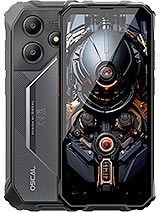
Marine 1
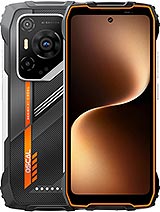
Pilot 1
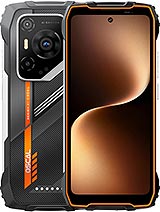
Pilot 3

Tiger 13

N6