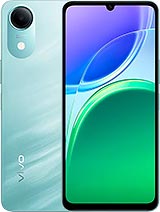
Oukitel C17 Mini review
This is for people who have already decided they want a sub-4-inch phone and accept the trade-offs in battery, speed, and display quality that come with it. Anyone else should look at a 5.5-inch budget phone instead, where the same price tag buys you a faster chip, longer battery life, and a screen that does not feel like a punishment."
This review is written with AI assistance from Oukitel’s published specifications and public benchmark data for the Oukitel C17 Mini, and the rating is spec-based. GoSolo does not physically test devices; where we estimate real-world behaviour such as battery life or charge time, we say so. How we rate phones.
Overview
The Oukitel C17 Mini is a tiny, light phone built for people who want to escape the smartphone slab—a rare 4-inch device at a budget price. But its entry-level chip, 2300mAh battery, and dim TFT screen mean you are paying for compactness, not capability.
Design & build
At 99.2 x 47.3 x 12.9 mm and 108 grams, this is the kind of phone that fits in a shirt pocket and disappears in your hand—a genuine minority position in 2026. The plastic back and frame with Panda Glass front feel assembled rather than seamless, but the thinness is real and the weight is honestly light. If you have spent the last five years fumbling with 160-plus-gram slabs, this will feel like a phone from another era. Dual nano-SIM is useful in regions where that still matters. The trade-off for this form factor is obvious: there is almost no room for a battery.
Display
A 4-inch TFT screen at 540 x 1172 resolution delivers 323 ppi, which is crisp on paper but dim and washed-out in reality. TFT panels in 2026 are a budget concession; OLED and IPS competitors at this price offer deeper blacks and wider viewing angles. The 19.5:9 aspect ratio is awkwardly tall for the width, squeezing already-small text. The 83.6% screen-to-body ratio is decent for a compact phone, but the overall experience is watching video and browsing on a device that feels like it belongs in a drawer, not in front of your eyes.
Performance
The Unisoc T610 is entry-level silicon, and it shows. The octa-core arrangement with two Cortex-A75 cores at 1.8 GHz and six A55 cores sounds balanced on paper, but in practice, app launches stutter, switching between tabs is sluggish, and any minor multitasking—email plus a browser window—reveals the chip is stretched. Gaming is a joke; even lightweight titles will choke. For calling, messaging, and light web browsing on someone's second phone or a minimalist carry, it is serviceable. For anything demanding, even light productivity, the slowness becomes the constant companion.
Camera
The 13MP main sensor with autofocus and LED flash is competent in daylight but produces soft, low-detail shots compared to rivals in this price tier. The 1/3.06" sensor is small, which hurts in dim light; the 5MP selfie camera is adequate for video calls but nothing more. 1080p@30fps video from both lenses is standard for budget phones, not a weakness, but the overall image quality is forgettable. This is a phone for people who barely take photos, not someone who relies on the camera.
Battery & charging
The 2300mAh battery is the Oukitel's most glaring limitation. In a phone this size, that is almost a necessity, but the real-world consequence is brutal: a full day of light use, and you will be hunting a charger by dinner. The spec sheet does not list charging wattage, which is either a mistake or a red flag that it is slower than competitors. For a device released in 2026, the lack of details here is disappointing. If fast charging is unspecified, assume it is mediocre.
Software & features
Android 16 is current and should mean a few years of updates, though Oukitel's track record on timely patches is spotty. The phone includes FM radio, GPS with GALILEO and BDS, and Bluetooth 5.2, which are solid touches for a budget device. Accelerometer and proximity sensor are the only motion sensors; there is no gyroscope for AR or tilt-based games. NFC is absent, which rules out contactless payments in markets that rely on it. The software experience itself will feel snappy compared to lower-end phones, but sluggish compared to anything running a faster chip.
Value & verdict
At about 130 EUR, the C17 Mini occupies a strange space: too underpowered to be a daily driver for most people, too small to be comfortable for long sessions, and too cheap to justify paying for compactness alone. It is a phone for someone who has already decided they want a 4-inch device and is willing to compromise on performance and battery life to get it. That person exists, but they are rare. If you are considering this because you think a smaller phone will reduce your screen time, a mid-range phone you actually find usable will do a better job. If you genuinely want to escape smartphone excess and do not mind the limitations, this delivers the size at the price—but the battery will punish you inside a week.
Verdict
This is for people who have already decided they want a sub-4-inch phone and accept the trade-offs in battery, speed, and display quality that come with it. Anyone else should look at a 5.5-inch budget phone instead, where the same price tag buys you a faster chip, longer battery life, and a screen that does not feel like a punishment."
- Genuinely compact and light: 4 inches, 108g, and 12.9mm thick—actual relief if you hate large modern phones
- Dual SIM with full 4G band support across major regions
- Android 16 out of the box on a budget device
- Type-C charging and Bluetooth 5.2, no cable or protocol tax
- 2300mAh battery will struggle past mid-afternoon under any real use
- Entry-level Unisoc T610 feels slow even for a small budget phone; multitasking and apps lag noticeably
- 540x1172 TFT display is dim and narrow, a step behind even other budget devices in clarity and color
Oukitel C17 Mini Key Specifications
The essentials at a glance. See the full spec sheet.
| Released | 2026, September 16 |
|---|---|
| Display | 4.0 inches, 39.2 cm2 (~83.6% screen-to-body ratio), TFT |
| Resolution | 540 x 1172 pixels, 19.5:9 ratio (~323 ppi density) |
| Chipset | Unisoc T610 (12 nm) |
| RAM & storage | 32GB 3GB RAM, 64GB 4GB RAM |
| Main camera | 13 MP, (wide), 1/3.06", AF |
| Selfie camera | 5 MP, (wide), 1/5.0" |
| Battery | 2300 mAh |
| Software | Android 16 |
| Dimensions | 99.2 x 47.3 x 12.9 mm (3.91 x 1.86 x 0.51 in) |
| Weight | 108 g (3.81 oz) |
| Build | Glass front (Panda Glass), plastic back, plastic frame |
| Network | GSM / HSPA / LTE |
| NFC | No |
| USB | USB Type-C, OTG |
Oukitel C17 Mini FAQ
Common questions, answered from the spec sheet.
Does the C17 Mini support 5G?
No. The C17 Mini tops out at GSM / HSPA / LTE, without 5G.
What chipset does the C17 Mini use?
The C17 Mini runs on the Unisoc T610 (12 nm).
What display does the C17 Mini have?
A 4.0 inches, 39.2 cm2 (~83.6% screen-to-body ratio) TFT, 540 x 1172 pixels, 19.5:9 ratio (~323 ppi density).
How big is the C17 Mini battery?
The C17 Mini has a 2300 mAh battery.
Does the C17 Mini have NFC?
No, the C17 Mini does not list NFC support.
Does the C17 Mini support a microSD card?
Yes, the C17 Mini supports expandable storage (Unspecified).
Alternatives to consider
If the C17 Mini isn’t quite right, these are the closest calls.
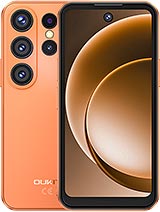
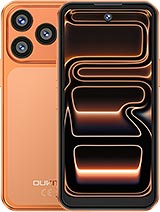
C26 Mini
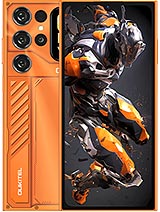
C62 GT
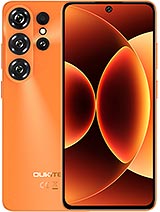
C26
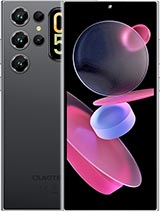
C62 Pro
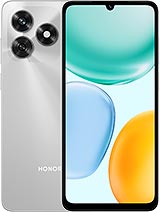
Play 70C