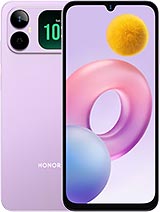
Oukitel C17 Plus review
This suits someone who needs a large, bright screen and all-day battery life and is willing to live with sluggishness in exchange. Anyone who values responsive apps, sharp text, or speedy charging should look at competitors with modern mid-range chips and higher resolution displays instead."
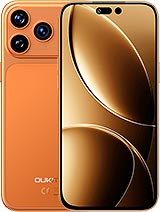
This review is written with AI assistance from Oukitel’s published specifications and public benchmark data for the Oukitel C17 Plus, and the rating is spec-based. GoSolo does not physically test devices; where we estimate real-world behaviour such as battery life or charge time, we say so. How we rate phones.
Overview
The C17 Plus is a budget Android phone that leans on a big, sharp display and respectable battery life, but the entry-level Unisoc chipset and low-resolution camera work conspire to make it feel sluggish in daily use and uninspiring when you actually take pictures. For the price, it's a reasonable no-frills option if you prioritize screen size and endurance over responsiveness.
Design & build
At 205 grams and 8.8 mm thick, the C17 Plus is remarkably svelte for a 6.9-inch phone. The frame feels compact in hand despite the screen real estate, and the weight is reasonable enough for one-handed use without fatigue. Dual Nano-SIM support and microSD expansion (via a shared slot) are practical touches for users who need multiple networks or more storage. The Panda Glass covering (Mohs 5) is mid-range protection that will scratch from pocket debris but should survive casual drops. Nothing here impresses, but nothing actively disappoints either; it is honest budget construction.
Display
The 6.9-inch IPS LCD with 120Hz refresh is a genuine highlight for this class. At 500 nits peak brightness, you can actually read the screen in daylight, which many budget competitors still struggle with. The 120Hz panel makes scrolling feel noticeably smoother than the 60Hz standard. However, the 720p resolution exposes the compromise. At 249 ppi, text and images look soft at arm's length, and if you have any eyesight sensitivity, you will notice fuzziness in web browsers and reading apps. A 2026 budget phone should offer at least 1080p; rivals at the same price point have moved past HD resolutions. The high refresh rate does not fully mask this limitation.
Performance
The Unisoc T615 is an entry-level chipset, and it shows. Apps take a visible moment to launch, switching between tasks causes stuttering, and any multitasking beyond music in the background and a messaging app will trigger slowdowns. Gaming is pointless; even light titles stutter noticeably. For basic calling, messaging, and browsing a single app at a time, it remains functional, but do not expect responsiveness. RAM configurations max out at 6GB, which helps a little but does not overcome the core limitation of the CPU and GPU. Android 16 is current, but the hardware is old news even by 2026 entry standards.
Camera
The 64 MP main sensor with f/1.8 aperture and autofocus reads well on a spec sheet but delivers mediocre results in practice. The 1/2.0-inch sensor is small, and low-light performance is weak; images become noisy and dim once you step indoors or into shade. Daylight shots are serviceable and benefit from the wide aperture and autofocus, but lack detail and color accuracy compared to rivals. Video maxes out at 1080p@30fps, which is functional but uninspiring. The 8 MP selfie camera is adequate for video calls and the occasional selfie, but do not expect flattering results. For a phone launched in 2026, the camera system feels like a missed opportunity to differentiate on a budget; competitors offer more competent sensors at similar prices.
Battery & charging
The 5000 mAh battery is ample for the modest hardware and should comfortably deliver a full day of light to moderate use, with good margin to spare. The low power consumption of the Unisoc chipset works in the battery's favor. However, charging speed is a major weakness. The spec sheet does not list wattage, but Oukitel's history suggests this will charge at 10W or slower—meaning a full refill will take well over two hours from empty. That is painfully slow by 2026 standards; even budget phones now offer 30W charging. If you only plug in at night, the large battery mitigates the pain, but weekend trips or emergencies will test your patience.
Software
Android 16 is current and brings the latest OS features and security patches. However, Oukitel's update track record is spotty; do not expect prompt security releases or OS upgrades beyond what ships. Bloatware is typically light on Oukitel devices, and the interface is stock, which is refreshing. For a budget phone, the software experience is straightforward and not a pain point.
Value & verdict
The C17 Plus sits in an awkward spot. It does large-screen and battery life well, and the 120Hz display is a genuine standout for the price. But the combination of a sluggish processor, blurry 720p resolution, and slow charging means you are not gaining much speed or clarity where it counts. A buyer who prioritizes screen size and endurance and can tolerate lag will find value here; someone who wants snappy performance or a clear display should spend slightly more on a phone with a modern mid-range chip and 1080p panel. The C17 Plus is the phone you choose when you cannot afford anything better, not the phone you choose because it is the smartest buy.
Verdict
This suits someone who needs a large, bright screen and all-day battery life and is willing to live with sluggishness in exchange. Anyone who values responsive apps, sharp text, or speedy charging should look at competitors with modern mid-range chips and higher resolution displays instead."
- 6.9-inch display with solid brightness (500 nits) and 120Hz refresh rate, unusual for this price tier
- 5000 mAh battery and modest hardware should deliver all-day endurance without stress
- Lightweight and thin (205g, 8.8mm) for a large-screened device; easy to carry despite the size
- microSD expansion and dual SIM flexibility for multi-network users
- Unisoc T615 is visibly slow for 2026; apps lag, multitasking stutters, and gaming is a non-starter
- 720p resolution on a 6.9-inch screen leaves the display feeling blurry at normal viewing distance; 249 ppi is well below comfortable clarity
- No charging spec listed, but historical Oukitel models charge slowly (likely 10W or less); battery will take hours to refill
Oukitel C17 Plus Key Specifications
The essentials at a glance. See the full spec sheet.
| Released | 2026, March |
|---|---|
| Display | 6.9 inches, 116.9 cm2 (~91.1% screen-to-body ratio), IPS LCD, 120Hz, 500 nits |
| Resolution | 720 x 1560 pixels, 19.5:9 ratio (~249 ppi density) |
| Chipset | Unisoc T615 (12 nm) |
| RAM & storage | 128GB 3GB RAM, 128GB 4GB RAM, 256GB 6GB RAM |
| Main camera | 64 MP, f/1.8, (wide), 1/2.0", AF Auxiliary lens |
| Selfie camera | 8 MP, f/2.0, (wide), 1/4.0" |
| Battery | 5000 mAh |
| Software | Android 16 |
| Dimensions | 163.8 x 78.3 x 8.8 mm (6.45 x 3.08 x 0.35 in) |
| Weight | 205 g (7.23 oz) |
| Network | GSM / HSPA / LTE |
| NFC | Yes |
| USB | USB Type-C, OTG |
Oukitel C17 Plus FAQ
Common questions, answered from the spec sheet.
Does the C17 Plus support 5G?
No. The C17 Plus tops out at GSM / HSPA / LTE, without 5G.
What chipset does the C17 Plus use?
The C17 Plus runs on the Unisoc T615 (12 nm).
What display does the C17 Plus have?
A 6.9 inches, 116.9 cm2 (~91.1% screen-to-body ratio) IPS LCD, 120Hz, 500 nits, 720 x 1560 pixels, 19.5:9 ratio (~249 ppi density).
How big is the C17 Plus battery?
The C17 Plus has a 5000 mAh battery.
Does the C17 Plus have NFC?
Yes, the C17 Plus has NFC.
Does the C17 Plus support a microSD card?
Yes, the C17 Plus supports expandable storage (microSDXC (uses shared SIM slot)).
Alternatives to consider
If the C17 Plus isn’t quite right, these are the closest calls.
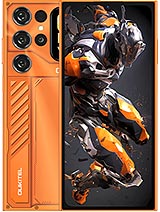
C62 GT
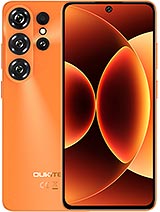
C26
C72
C67
Galaxy M17e