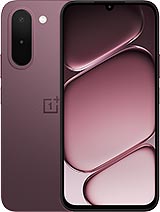
Oukitel C26 review
The C26 suits buyers who prioritize battery life and basic connectivity in regions where device cost is the sole concern. Anyone shopping in 2026 with even modest flexibility on price will find a phone with a sharper display and equal or better performance at the same cost, making this a compromise play rather than a clear winner in its class.
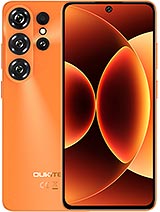
This review is written with AI assistance from Oukitel’s published specifications and public benchmark data for the Oukitel C26, and the rating is spec-based. GoSolo does not physically test devices; where we estimate real-world behaviour such as battery life or charge time, we say so. How we rate phones.
Overview
The Oukitel C26 is a straightforward budget phone with a large, low-resolution display and modest performance, aimed squarely at buyers in emerging markets who need basic connectivity and long battery life over speed. It is not cheap enough or distinctive enough to stand out in a crowded entry-level field, and its display resolution is too soft for comfortable daily use in 2026.
Design & Build
At 185 grams and 8.8 mm thick, the C26 is a solid, unremarkable slab of plastic. The weight is acceptable for a phone this size, and the proportions are sensible for a 6.63-inch display. The side-mounted fingerprint sensor is a practical touch for a budget device, avoiding the complexity of in-display alternatives. Panda glass is a generic scratch-resistant coating, not real Gorilla Glass, so the screen will show wear over time. Dual nano-SIM support is useful for dual-carrier or international users in regions where this matters, and the shared microSDXC slot means you can expand storage without sacrificing a SIM if you do not need both cards. The industrial design is competent but forgettable—no texture, no interesting finishes, just the essentials.
Display
A 6.63-inch IPS LCD at 576 x 1280 pixels and 212 ppi is uncomfortably soft by 2026 standards. For comparison, even budget phones routinely ship with 1080p panels now, and the jump from this resolution to that is noticeable in text clarity, web browsing, and app interfaces. The 20:9 aspect ratio is typical, and the 90 Hz refresh rate is a pleasant bonus at this price, though it will not transform the viewing experience when the underlying resolution is this low. The 400-nit brightness is adequate for indoors but not impressive for outdoor readability on a sunny day. The 86.2% screen-to-body ratio shows Oukitel has done the sensible work of minimizing bezels, but none of this compensates for the low pixel density, which is the real story here.
Performance
The Unisoc T615 is an entry-level chip from 2024, and it shows. Two Cortex-A75 cores and six A55 cores paired with a Mali-G57 MP1 GPU will handle calls, messages, light web browsing, and casual apps without strain, but do not expect smooth gaming, rapid photo processing, or any real multitasking muscle. Android 16 runs on this without drama, but the combination of modest RAM (4 GB or 6 GB) and a weak chipset means you will notice stutters in heavier apps and multitasking is not seamless. For a phone aimed at buyers in price-sensitive markets who want to check email, chat, and stream video, this is adequate. For anyone who expects responsiveness comparable to a midrange phone from 12 months ago, it will feel slow.
Software
Android 16 is current, which is a straightforward win for a budget device released in early 2026. Oukitel has not signaled its update policy clearly, so assume this phone will see one or two major Android versions before support trails off, which is standard for this tier. The software experience is clean—no bloat-heavy customization mentioned in the specs—and the basics work. Given the entry-level hardware, do not expect fast boot times or instant app launches, but the OS itself is not the bottleneck.
Camera
A 13 MP f/2.2 main sensor with autofocus and LED flash is minimalist and functional. The 1/3.06-inch sensor size is small, which means low light performance will be grainy and detail will be soft unless you have bright conditions. Video caps out at 1080p at 30 fps, which is standard for this class but not generous. The 5 MP selfie camera is basic but fine for video calls. There is no ultrawide, no depth sensor, no macro mode—Oukitel has stripped this down to the essentials. For casual snapshots, the camera will do the job; for anything beyond that, you are working within narrow limits.
Battery & Charging
The 5150 mAh battery is a genuine strength for a phone this size and weight. With an entry-level chipset and a 400-nit display, you can reasonably expect two days of moderate use, or a full day of heavier use with the 90 Hz display running. The spec sheet does not clearly specify charging speed—the battery type is listed as 10W in the product highlights, suggesting slow charging—so you will be waiting a while to refill. This is typical for ultra-budget devices, but it is a clear trade-off against phones at this price that push 30W or 33W. For buyers in regions with unstable power supply, the large battery is a real asset; for those who expect modern charging pace, it is a step back.
Value & Verdict Context
The Oukitel C26 exists in a crowded corner of the market: cheap enough to appeal to first-time smartphone users or as a backup phone, but not cheap enough to undercut rivals with better specs, and not distinguished enough to justify its asking price over a month-old Redmi or Samsung A-series model at the same price. In 2026, a budget phone needs to either be meaningfully affordable (which Oukitel does not consistently deliver) or offer a real strength (long battery life is the only contender here). The low display resolution is the most day-to-day letdown; the weak performance is a distant second. If you absolutely need maximum battery life and will tolerate a soft screen and slow phone, this is one option. Most buyers in this price band will find a device with a 1080p display and similar performance for the same money.
Verdict
The C26 suits buyers who prioritize battery life and basic connectivity in regions where device cost is the sole concern. Anyone shopping in 2026 with even modest flexibility on price will find a phone with a sharper display and equal or better performance at the same cost, making this a compromise play rather than a clear winner in its class.
- Large 5150 mAh battery delivers two-day endurance with measured use
- 90 Hz display and dual SIM with microSDXC support add practical flexibility for the price
- Current Android 16 and entry-level Unisoc chip run without crashes or heavy lag on basic tasks
- 576 x 1280 display at 212 ppi is noticeably soft and blurry by 2026 standards, even for a budget phone
- Unisoc T615 and 4–6 GB RAM make multitasking slow and heavy apps sluggish
- Unclear 10W charging is much slower than competing budget phones, making the large battery less convenient
Oukitel C26 Key Specifications
The essentials at a glance. See the full spec sheet.
| Released | 2026, January 15 |
|---|---|
| Display | 6.63 inches, 106.1 cm2 (~86.2% screen-to-body ratio), IPS LCD, 90Hz, 400 nits |
| Resolution | 576 x 1280 pixels, 20:9 ratio (~212 ppi density) |
| Chipset | Unisoc T615 (12 nm) |
| RAM & storage | 128GB 4GB RAM, 128GB 6GB RAM |
| Main camera | 13 MP, f/2.2, (wide), 1/3.06", AF |
| Selfie camera | 5 MP, f/2.2, (wide), 1/5.0" |
| Battery | 5150 mAh |
| Software | Android 16 |
| Dimensions | 164.5 x 74.8 x 8.8 mm (6.48 x 2.94 x 0.35 in) |
| Weight | 185 g (6.53 oz) |
| Network | GSM / HSPA / LTE |
| NFC | No |
| USB | USB Type-C 2.0, OTG |
Oukitel C26 FAQ
Common questions, answered from the spec sheet.
Does the C26 support 5G?
No. The C26 tops out at GSM / HSPA / LTE, without 5G.
What chipset does the C26 use?
The C26 runs on the Unisoc T615 (12 nm).
What display does the C26 have?
A 6.63 inches, 106.1 cm2 (~86.2% screen-to-body ratio) IPS LCD, 90Hz, 400 nits, 576 x 1280 pixels, 20:9 ratio (~212 ppi density).
How big is the C26 battery?
The C26 has a 5150 mAh battery.
Does the C26 have NFC?
No, the C26 does not list NFC support.
Does the C26 support a microSD card?
Yes, the C26 supports expandable storage (microSDXC (uses shared SIM slot)).
Alternatives to consider
If the C26 isn’t quite right, these are the closest calls.
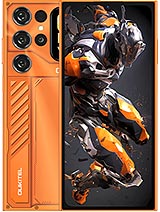
C62 GT
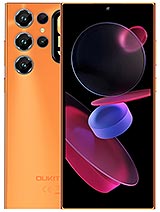
C72
C67
C17 Plus
Play20A