Oukitel C35 review
The C35 suits someone in a limited-electricity market or light user who would rather charge once every two days than twice a day, and who does not game or multitask heavily. Anyone who relies on fast charging or needs outdoor screen readability should look elsewhere, even at this price.
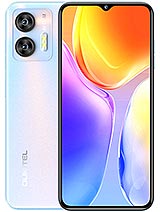
This review is based on Oukitel’s published specifications and public benchmark data for the Oukitel C35, and the rating is spec-based. GoSolo does not physically test devices; where we estimate real-world behaviour such as battery life or charge time, we say so. How we rate phones.
Overview
The Oukitel C35 is a bulky entry-level phone that leans on a large battery and low price to compete in emerging markets. It delivers acceptable basics—a roomy screen, light performance, and all-day battery—but stumbles on speed, brightness, and charging, making it a device for people who value endurance over responsiveness.
Design & build
At 199 grams and 9.2 mm thick, the C35 feels solid and comfortable to hold, neither light nor flagrantly heavy. The dimensions (163.8 x 75.4 mm) make it a true handful—not for pocket-carrying in many markets. Build is unspecified in the sheet, so assume a plastic chassis typical of this tier; the lack of any glass or premium materials is not a weakness here, just the norm. The design is functional and inoffensive, the kind of phone you buy because you need a phone, not because you want to show it off.
Display
The 6.56-inch IPS LCD delivers a generous viewing area, good for video calls and reading in indoor settings. At 267 ppi, text edges show visible pixelation at arm's length—not blurry, but noticeably softer than a 300+ ppi screen. The real limiter is brightness: 400 nits is dim for a 2023 LCD. Outdoor in bright sun, you will need to tilt the phone or cup your hand over it. For a phone at 190 EUR, an OLED is out of reach, but rivals have pushed LCD brightness to 500–600 nits in this category; Oukitel chose not to compete there.
Performance
The Unisoc Tiger T616 is a mid-2020s entry-level chip, respectable for messaging, social media, and light web browsing but nothing more. Paired with 12GB RAM (which is actually plentiful here), it handles everyday tasks without freezing. Switching between apps stays smooth. Gaming is off-limits; demanding 3D titles will drop frames immediately. Even light multitasking—say, four apps open—will cause occasional lag. This is a phone for people who do not use their device intensively. By 2023 standards, the T616 is a generation behind what mid-range phones offered; Oukitel saved costs where it mattered least.
Software
Android 13 is current for the launch date (August 2023) and no longer cutting-edge by mid-2026. Oukitel's track record on updates is weak; expect one major OS bump and two years of security patches at best. The interface is stock Android without heavy customization, which is a small mercy. No bloat-ware mentioned, so you should have a relatively clean drawer out of the box.
Camera
The 50MP primary sensor is a spec sheet win that translates to no real-world advantage. A single wide-angle lens with no ultrawide or telephoto is a limitation, though not unexpected at this price. Daylight stills are acceptable—the 50MP resolution captures detail—but low-light performance will be noisy and soft because the sensor lacks optical stabilization and relies on electronic processing. The 8MP selfie camera is adequate for video calls. Video tops out at 1080p 30fps, which is ordinary for entry-level phones but means no smooth slow-motion or 60fps recording. The lack of a secondary camera (telephoto, macro, or even a depth sensor) means you are stuck with the wide-angle view.
Battery & charging
The 5150 mAh battery is the phone's real selling point. On light use (messaging, light browsing, one hour of video), expect 1.5 to 2 days between charges. On moderate daily use—social media, calls, photos—you will reach 1 full day comfortably. Heavy video streaming will drain it in one day, but for the target market, this is excellent. Where the C35 falters is charging: 10W is ancient by 2026 standards. Even budget phones now do 65W or higher. A full charge from dead takes 2 to 2.5 hours minimum, and that assumes you leave it plugged in undisturbed. For a phone built on endurance, the charging speed feels like a missed opportunity.
Value & verdict
At 190 EUR, the C35 is not cheap, but it is not expensive either. For that price, you get a large screen, decent battery life, and enough RAM to avoid stutters. What you sacrifice is charging speed, outdoor visibility, and gaming capability. In markets with reliable electricity and 4G coverage, a 100 EUR mid-range phone with 65W charging might be the smarter pick—you lose a day or two of battery, but you spend less and charge in 30 minutes. The C35 makes sense in places where charging is intermittent or power is scarce, and where you value not thinking about the battery at all.
Verdict
The C35 suits someone in a limited-electricity market or light user who would rather charge once every two days than twice a day, and who does not game or multitask heavily. Anyone who relies on fast charging or needs outdoor screen readability should look elsewhere, even at this price.
- 5150 mAh battery lasts a full day on light to moderate use, a genuine advantage in markets with unreliable power
- Dedicated microSD slot means you can expand storage to 1TB without sacrificing a SIM, rare at this price
- 12GB RAM is generous for the class and helps the phone stay responsive despite the weak chipset
- Large 6.56-inch screen and thick 9.2 mm frame feel sturdy; no premium materials but it won't feel flimsy
- 10W charging is painfully slow; a full charge takes 2–2.5 hours, rivals at this price now do 65–100W
- 400 nits peak brightness makes the LCD hard to read outdoors in direct sun
- Unisoc T616 chipset is entry-level even for 2023; no gaming, stutters on multitasking, and lags behind last year's mid-range
Oukitel C35 Key Specifications
The essentials at a glance. See the full spec sheet.
| Released | 2023, August |
|---|---|
| Display | 6.56 inches, 103.9 cm2 (~84.1% screen-to-body ratio), IPS LCD, 400 nits |
| Resolution | 720 x 1600 pixels, 20:9 ratio (~267 ppi density) |
| Chipset | Unisoc Tiger T616 (12 nm) |
| RAM & storage | 256GB 12GB RAM |
| Main camera | 50 MP, (wide), AF Secondary unspecified camera |
| Selfie camera | 8 MP |
| Battery | 5150 mAh |
| Charging | 10W wired |
| Software | Android 13 |
| Dimensions | 163.8 x 75.4 x 9.2 mm (6.45 x 2.97 x 0.36 in) |
| Weight | 199 g (7.02 oz) |
| Network | GSM / HSPA / LTE |
| NFC | No |
| USB | USB Type-C 2.0, OTG |
Oukitel C35 FAQ
Common questions, answered from the spec sheet.
Does the C35 support 5G?
No. The C35 tops out at GSM / HSPA / LTE, without 5G.
What chipset does the C35 use?
The C35 runs on the Unisoc Tiger T616 (12 nm).
What display does the C35 have?
A 6.56 inches, 103.9 cm2 (~84.1% screen-to-body ratio) IPS LCD, 400 nits, 720 x 1600 pixels, 20:9 ratio (~267 ppi density).
How big is the C35 battery?
The C35 has a 5150 mAh battery. Charging is rated at 10W wired.
Does the C35 have NFC?
No, the C35 does not list NFC support.
Does the C35 support a microSD card?
Yes, the C35 supports expandable storage (microSDXC (dedicated slot)).
Does the C35 have a headphone jack?
Yes, the C35 has a 3.5mm headphone jack.
Alternatives to consider
If the C35 isn’t quite right, these are the closest calls.
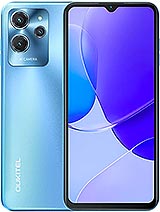
C32
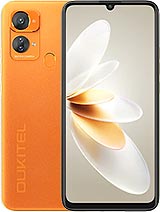
C33
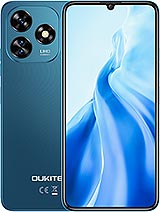
C51
C58
Galaxy A06