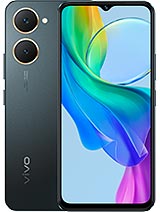
Oukitel C36 review
The C36 suits someone who reads, messages, and browses on a budget and treats their phone as a consumable they'll replace in a year or two. Anyone expecting performance, camera quality, or fast charging should look elsewhere in this price range, where competitors offer faster processors, better screens, and quicker top-ups for the same money.
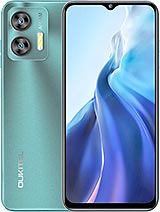
This review is based on Oukitel’s published specifications and public benchmark data for the Oukitel C36, and the rating is spec-based. GoSolo does not physically test devices; where we estimate real-world behaviour such as battery life or charge time, we say so. How we rate phones.
Overview
The C36 is a large-screen budget phone built for messaging and reading rather than gaming or demanding apps, with a 5150mAh battery and slow 10W charging. At €110, it delivers modest specs across the board—none standout, none embarrassing—but the low pixel density display and entry-level processor mean it feels a step behind rivals in its price bracket.
Design & Build
At 199g and 9.2mm thick, the C36 is genuinely light and compact for a 6.56-inch phone. That size-to-weight ratio helps in one hand, though a thicker bezel on a budget IPS LCD does make the phone feel less polished than a 2023 midrange handset should. The metal frame and plastic back are standard fare for this price, and there's little to distinguish it from dozens of other budget releases that year. The headphone jack presence is a point in its favor for audio users, and the side-mounted fingerprint sensor works without fuss, but the overall package feels assembled to spec rather than designed with any conviction.
Display
A 6.56-inch screen is generous for the €110 price, but 269 ppi with 720×1612 resolution means text and icons have visible pixelation at close range. The IPS LCD panel with 400 nits is usable indoors and in shade, but direct sunlight washes out contrast and readability suffers noticeably. For reading long articles or messaging, the size compensates somewhat for the low pixel density; for watching video or photo editing, the softness becomes apparent. This is not a display that impresses, only one that gets the job done in controlled light.
Performance
The Unisoc T606 with 4GB RAM is entry-level for 2023 and handles everyday tasks—messaging, social media, light browsing—at normal speeds. Opening multiple apps in the background will cause stalls, and anything graphics-heavy (games, video editing, heavy multitasking) will lag or stutter. For a user checking email and messaging throughout the day, it's adequate; for anyone routinely juggling apps or expecting smooth performance, expectations need resetting. The 128GB storage on eMMC is decent, but eMMC read-write speeds are slower than the UFS found on even mid-range phones, so app launch times feel draggy compared to slightly pricier rivals.
Software
Android 13 ships on the device with no word on update guarantees, which is typical for Oukitel's budget range and a real concern for longevity. By late 2025, a 2023 budget phone with unclear OS support might be stuck on Android 13 or 14 for its entire lifespan. For security patches and feature updates, treat this as a year or two of support at best, then accept stagnation. The OS itself runs stock and bloat-free, so there's no lag from skin customization, but the update question is worth considering if you plan to keep this phone beyond two years.
Camera
The 13MP f/2.2 main camera captures acceptable daylight photos with correct color and exposure, adequate for social media sharing. Zoom is handled by digital crop, so distant subjects look soft and grainy. Low-light shots introduce visible noise and lack detail, and 1080p video at 30fps is standard but uninspiring—no stabilization or high-speed options. The 5MP selfie is basic and softened by the low resolution. This is a camera for snapshots in good light, not one for serious photography or video work. The dual-LED flash helps in darkness but adds no creative control.
Battery & Charging
The 5150mAh battery easily reaches a full day with moderate use—email, messaging, some browsing—and comfortably lasts into an evening. Heavy video watching or constant gaming cuts that to an afternoon. The real pain point is 10W charging, which requires 2.5 to 3 hours for a full top-up. That's slow by even 2023 standards; rivals in this price tier had moved to 20W or 30W. Overnight charging is fine, but midday top-ups feel like forever, and the slowness will frustrate anyone accustomed to even a cheap Xiaomi or Realme of the same era.
Value & Verdict Context
At €110, the C36 occupies a crowded corner of the budget market. It offers a large screen and decent battery life, which suits users prioritizing reading, messaging, and casual browsing over performance or photography. The tradeoffs—soft display, slow charging, entry-level processor, unclear software support—are real, and competitors like the Poco C series or Redmi Note line offered better specifications for similar money. The C36 is not bad, but it asks you to accept multiple compromises without excelling at anything specific. It is best for someone who absolutely needs a big screen and reasonable battery endurance and has no interest in gaming or demanding apps.
Verdict
The C36 suits someone who reads, messages, and browses on a budget and treats their phone as a consumable they'll replace in a year or two. Anyone expecting performance, camera quality, or fast charging should look elsewhere in this price range, where competitors offer faster processors, better screens, and quicker top-ups for the same money.
- Large 6.56-inch screen and light 199g body make it easy to hold and read on for long sessions
- 5150mAh battery sustains a full day with moderate use without strain
- Dedicated microSD slot allows storage expansion without sacrificing a SIM
- Headphone jack and side-mounted fingerprint sensor add practical features many budget phones drop
- 10W charging is painfully slow, requiring 2.5 to 3 hours for a full charge—rivals moved to 20W+ by this price in 2023
- 269 ppi display is noticeably soft and pixelated; direct sunlight washes it out
- Entry-level Unisoc T606 processor stalls under multitasking or any graphics demand
Oukitel C36 Key Specifications
The essentials at a glance. See the full spec sheet.
| Released | 2023, September |
|---|---|
| Display | 6.56 inches, 103.4 cm2 (~83.7% screen-to-body ratio), IPS LCD, 400 nits |
| Resolution | 720 x 1612 pixels, 20:9 ratio (~269 ppi density) |
| Chipset | Unisoc T606 (12 nm) |
| RAM & storage | 128GB 4GB RAM |
| Main camera | 13 MP, f/2.2, (wide), 1/3.0", AF Secondary unspecified camera |
| Selfie camera | 5 MP, f/2.2, (wide), 1/5.0" |
| Battery | 5150 mAh |
| Charging | 10W wired |
| Software | Android 13 |
| Dimensions | 163.8 x 75.4 x 9.2 mm (6.45 x 2.97 x 0.36 in) |
| Weight | 199 g (7.02 oz) |
| Network | GSM / HSPA / LTE |
| NFC | No |
| USB | USB Type-C 2.0, OTG |
Oukitel C36 FAQ
Common questions, answered from the spec sheet.
Does the C36 support 5G?
No. The C36 tops out at GSM / HSPA / LTE, without 5G.
What chipset does the C36 use?
The C36 runs on the Unisoc T606 (12 nm).
What display does the C36 have?
A 6.56 inches, 103.4 cm2 (~83.7% screen-to-body ratio) IPS LCD, 400 nits, 720 x 1612 pixels, 20:9 ratio (~269 ppi density).
How big is the C36 battery?
The C36 has a 5150 mAh battery. Charging is rated at 10W wired.
Does the C36 have NFC?
No, the C36 does not list NFC support.
Does the C36 support a microSD card?
Yes, the C36 supports expandable storage (microSDXC (dedicated slot)).
Does the C36 have a headphone jack?
Yes, the C36 has a 3.5mm headphone jack.
Alternatives to consider
If the C36 isn’t quite right, these are the closest calls.
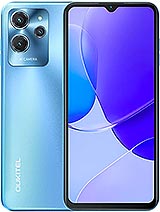
C32
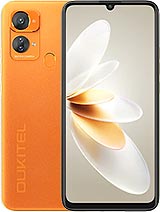
C33
C35
C51
Galaxy XCover 7