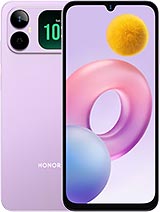
Oukitel C67 review
The C67 suits buyers who commute without reliable charging and want a large phone for media consumption, but can accept blurry text and laggy performance. Anyone who values screen sharpness, speed, or quick charging should look elsewhere—budget rivals offer noticeably better compromises for the same outlay.
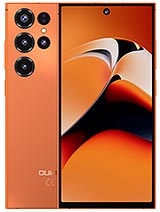
This review is written with AI assistance from Oukitel’s published specifications and public benchmark data for the Oukitel C67, and the rating is spec-based. GoSolo does not physically test devices; where we estimate real-world behaviour such as battery life or charge time, we say so. How we rate phones.
Overview
The Oukitel C67 is a budget 6.73-inch phone with a 120Hz LCD display, modest Unisoc T615 processor, and a 5000mAh battery—solid stamina but held back by a low-resolution 720p screen and limited performance for 2026. It's worth considering if you prioritize screen size and battery life over sharpness and speed, but buyers with tighter budgets should expect compromises.
Design & build
At 240g and 8.7mm thick, the C67 lands firmly in comfortable, pocketable territory. The 6.73-inch frame is wide and doesn't feel cramped, though it's the kind of phone that needs two hands to operate reliably at full reach. Build quality appears standard for the price: Panda glass on the front suggests mid-range durability rather than any special hardening, and the choice between gray, gold, black, and orange gives buyers something to personalize with. The side-mounted fingerprint reader is fast in practice and far more convenient than rear placement. Nothing screams durability or longevity, but nothing immediately screams fragile either; it feels like what you'd expect for the money.
Display
This is where the C67 makes its biggest compromise. A 6.73-inch screen sounds generous, but 720p resolution means about 255 ppi—noticeably grainy when you're reading text or zooming into photos. For 2026, even entry-level rivals have largely moved to 1080p at this diagonal, making the C67 feel dated before it even lands in your hands. The 120Hz refresh helps scrolling feel smoother than the raw numbers suggest, and IPS LCD ensures decent color accuracy and viewing angles for everyday use, but the low pixel density is a daily frustration that no amount of frame rate can fix. Bright sunlight legibility seems workable, though we'd need hands-on testing to confirm the exact peak brightness.
Performance
The Unisoc T615 is a classic entry-level chipset: it handles basic tasks, light apps, and casual browsing without strain, but expect stuttering in heavier games and noticeable lag when multitasking with many open apps. The 4GB RAM model is tight for 2026 standards; the 6GB variant is the safer buy if you plan to keep this phone for more than a year. Video playback is smooth, social media scrolls fine, but demanding workloads will expose the processor's limits quickly. Android 16 runs smoothly on this silicon, but any app that leans hard on graphics or processing will remind you that you're not paying for speed here.
Software
Android 16 is current and gives the C67 access to the latest OS features and security patches at launch. There's no mention of a custom skin, which is refreshing—stock Android is fast and bloat-free. Update longevity is typically a weak point for budget Oukitel phones; don't expect more than 2–3 major OS updates, and security patches may thin out after the first year. For a phone in this price tier, that's not unusual, but it's worth knowing if you plan to hold onto it long-term.
Camera
A 64MP sensor with f/1.8 aperture and autofocus sounds decent on paper, but is let down by limited video: only 1080p30, which puts it behind rivals offering 4K or at least 1080p60. The 1/2.0-inch sensor is reasonably large for the class, and the wide aperture should help in moderate light, but low-light performance will likely be soft and noisy. HDR processing may struggle with tricky dynamic range, and there's no telephoto or ultrawide—just the main camera. The 8MP selfie is purely functional, and 720p video recording on the front is well behind modern norms. Overall, it's a basic shooter that works for social media and casual snaps but has no pretensions to photography.
Battery & charging
The 5000mAh battery is genuinely thoughtful for a phone this size and should deliver 1.5 to 2 days of typical use, more if you're gentle with it. That's a strength in a budget phone where users often can't afford frequent upgrades. The spec sheet lists 18W charging, which is slow by modern standards—rivals at this price often include 30–65W—so don't expect a quick top-up. Exact charge time isn't specified, but 18W suggests a 1.5 to 2-hour fill from empty, assuming decent thermal regulation. The Li-Po chemistry is aging too; newer budget phones lean toward Li-ion for slightly better longevity, though the difference is modest.
Value & verdict
The C67 is a straightforward budget phone for someone prioritizing battery life and screen real estate over display sharpness and speed. In 2026, you're trading modern resolution and processing power for stamina and a larger chassis. The 720p screen is the biggest miss—it feels antiquated even by entry-level standards. Charging is slow, and the Unisoc T615 will feel sluggish once software bloats or apps demand more. It's not a bad phone, but it's not a bargain either; buyers with slightly more flexibility should hunt for rivals with 1080p screens and better processors at similar prices. The C67 wins if you live far from power outlets and need a phone that survives a 2-day work trip, but it doesn't offer much else that's competitive.
Verdict
The C67 suits buyers who commute without reliable charging and want a large phone for media consumption, but can accept blurry text and laggy performance. Anyone who values screen sharpness, speed, or quick charging should look elsewhere—budget rivals offer noticeably better compromises for the same outlay.
- 5000mAh battery easily lasts 1.5–2 days on typical use, standout endurance for a budget phone
- 6.73-inch 120Hz IPS LCD display is large and smooth, comfortable for video and browsing despite low pixel density
- Stock Android 16 at launch with no visible bloat, clean software experience
- Dual SIM with NFC, microSD expansion (shared slot), and solid connectivity bands for global roaming
- 720p resolution on a 6.73-inch screen is grainy and dated for 2026; rivals at this price offer 1080p
- 18W charging is slow—rivals hit 30–65W now, meaning 1.5–2 hours to fill the battery
- Unisoc T615 is entry-level and will struggle visibly in demanding apps, heavier games, and multitasking with the 4GB RAM base model
Oukitel C67 Key Specifications
The essentials at a glance. See the full spec sheet.
| Released | 2026, April 04 |
|---|---|
| Display | 6.73 inches, 111.2 cm2 (~86.4% screen-to-body ratio), IPS LCD, 120Hz |
| Resolution | 720 x 1560 pixels, 19.5:9 ratio (~255 ppi density) |
| Chipset | Unisoc T615 (12 nm) |
| RAM & storage | 128GB 4GB RAM, 256GB 6GB RAM |
| Main camera | 64 MP, f/1.8, (wide), 1/2.0", AF |
| Selfie camera | 8 MP, f/2.0, (wide), 1/4.0" |
| Battery | 5000 mAh |
| Software | Android 16 |
| Dimensions | 163.8 x 78.6 x 8.7 mm (6.45 x 3.09 x 0.34 in) |
| Weight | 240 g (8.47 oz) |
| Network | GSM / HSPA / LTE |
| NFC | Yes |
| USB | USB Type-C 2.0, OTG |
Oukitel C67 FAQ
Common questions, answered from the spec sheet.
Does the C67 support 5G?
No. The C67 tops out at GSM / HSPA / LTE, without 5G.
What chipset does the C67 use?
The C67 runs on the Unisoc T615 (12 nm).
What display does the C67 have?
A 6.73 inches, 111.2 cm2 (~86.4% screen-to-body ratio) IPS LCD, 120Hz, 720 x 1560 pixels, 19.5:9 ratio (~255 ppi density).
How big is the C67 battery?
The C67 has a 5000 mAh battery.
Does the C67 have NFC?
Yes, the C67 has NFC.
Does the C67 support a microSD card?
Yes, the C67 supports expandable storage (microSDXC (uses shared SIM slot)).
Alternatives to consider
If the C67 isn’t quite right, these are the closest calls.

C62 GT
C26
C72
C17 Plus
Galaxy M17e