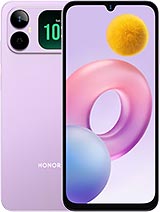
Oukitel C68 review
The C68 is for someone who watches videos, reads, and browses on a large display without needing to charge daily and does not mind a sluggish processor or soft screen. Anyone who games, takes photos seriously, or works with multiple apps should look elsewhere.
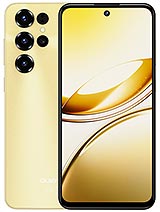
This review is written with AI assistance from Oukitel’s published specifications and public benchmark data for the Oukitel C68, and the rating is spec-based. GoSolo does not physically test devices; where we estimate real-world behaviour such as battery life or charge time, we say so. How we rate phones.
Overview
The Oukitel C68 is a 7.2-inch budget phablet built around stamina and screen real estate rather than power. A 6000 mAh battery and 120Hz LCD display make it appealing for media consumption and all-day use, but the entry-level Unisoc T615 and low-resolution screen hobble gaming and outdoor visibility.
Design & build
At 245 grams and 9.5 mm thick, the C68 is hefty by modern standards but not outlandish for a 7.2-inch device. The weight settles in the hand steadily, though one-handed use is a stretch for most. Panda Glass at Mohs 5 is the bare minimum for scratch resistance and offers zero real drop protection, a known limitation for budget devices in this range. The dual Nano-SIM slot shares real estate with microSD expansion, a typical compromise on budget phones that forces a choice between dual connectivity and extra storage unless you use eSIM (not mentioned here). Build materials are not detailed, but at this price the body is likely plastic throughout. For a phone aimed at users who prize battery life over portability, the bulk is acceptable trade-off.
Display
The 7.2-inch IPS LCD with 120Hz refresh is the standout here for a budget device. Scrolling and video playback feel responsive and smooth, a tangible step above the 60Hz baseline. The 500-nit peak brightness keeps text readable in indoor light, but outdoors in direct sun the combination of 720p resolution and mid-range brightness becomes a real limitation. At 239 ppi, the screen is noticeably soft; text has visible pixelation if you hold it at normal viewing distance, and fine details in photos or web content blur together. Rivals at similar prices now deliver 1440p or higher, which would transform this screen into something genuinely pleasant. For media consumption—videos, e-books, comics—the large format works well. For productivity or reading small print, you will notice the compromise.
Performance
The Unisoc T615 is entry-level silicon, adequate for messaging, light browsing, video playback, and casual social media, but it runs out of breath fast. Heavy gaming, photo editing, or running multiple demanding apps in the background triggers visible lag and app stuttering. For a phone aimed at users who prioritize battery endurance, this is fitting: you get a day or more between charges because the CPU draws minimal power, not because it is efficient at processing. The 4GB RAM base model is tight for modern Android 15 with background processes; jump to 8GB if you plan to use the phone as anything more than a media device. Compared to mid-range Helio or Snapdragon chips at slightly higher prices, the T615 is noticeably slower. It is the right choice for this device's mission, but do not expect snappy performance.
Software
Android 15 is current and welcomed here. Oukitel typically leaves stock Android relatively untouched on budget models, which means you get clean updates without heavy bloat. Long-term support is unclear from the spec sheet—budget brands often drop software patches after one or two years—so expect security updates to thin out faster than they would on a Samsung or Motorola equivalent. The OS runs without lag on the T615 for light tasks, though app load times are not instant. For users in markets where timely security patches matter but performance is not the priority, the software story is neutral rather than a selling point.
Camera
The 64 MP main sensor with f/1.8 aperture and autofocus is respectable on paper and delivers acceptable results in bright daylight. Photos are sharp in good light but lack dynamic range; shadows are crushed and highlights blow out easily. The 1080p video maxes out at 30 fps, a limitation for smooth motion capture compared to rivals that offer 60 fps at this price. The f/2.0 8 MP selfie camera handles video calls adequately but produces soft, flat portraits—no surprises for a budget device. There is no ultrawide or telephoto, which is standard trade-off at this price. For someone who takes occasional snapshots and posts to social media, this is functional. For any serious photography or video work, the C68 is a slow compromise.
Battery & charging
The 6000 mAh battery is the phone's strongest asset. On light use—browsing, messaging, video playback—you will easily stretch beyond a full day, and moderate users can approach two days. Heavy gaming or constant video recording will shrink that window, but the capacity is genuinely useful for travel or avoiding daily charging habits. The 18W charging speed is the weak point: refilling a 6000 mAh cell from empty takes 3-plus hours, which means if you run dry during the day, you cannot get a quick top-up like you would with 65W or 100W chargers now common at higher prices. This is not a deal-breaker for a phone designed to last, but it negates some of the stamina advantage in a pinch.
Value & verdict
The C68 suits someone who values a large screen and battery life over processing power, willing to trade smooth performance and camera sharpness for days between charges. It is a good fit for casual media consumption—reading, video, browsing—on a single charge. The huge storage options (up to 512 GB built-in) and microSD expansion remove friction for offline media libraries. However, if you need responsive performance, sharp images, or fast charging, look at mid-range Motorola or Nokia devices at comparable prices, which offer much better all-around balance. The soft 720p display and entry-level chipset make this a specialist device, not a generalist. It solves a specific problem—screen time on a single charge—and solves it well. It is not the phone for everyone.
Verdict
The C68 is for someone who watches videos, reads, and browses on a large display without needing to charge daily and does not mind a sluggish processor or soft screen. Anyone who games, takes photos seriously, or works with multiple apps should look elsewhere.
- 6000 mAh battery delivers 1.5 to 2 days of moderate use; heavy users will stretch beyond a full day without panic charging
- Large 7.2-inch display with 120Hz refresh smooths scrolling and video playback, genuine practical gain on a budget device
- Up to 512 GB internal storage plus microSD expansion (up to 1TB) removes the usual storage compromise at budget prices
- Dual SIM and side-mounted fingerprint sensor handle everyday needs without fuss
- 720p resolution on a 7.2-inch screen yields 239 ppi, visibly soft for reading text or viewing detail; rivals now push 1440p at similar prices
- 18W charging speed is slow for a 6000 mAh cell; a full charge takes 3+ hours, defeating much of the battery advantage in a pinch
- Unisoc T615 struggles with gaming and heavy multitasking; performance lag becomes obvious once you layer apps or attempt anything demanding
Oukitel C68 Key Specifications
The essentials at a glance. See the full spec sheet.
| Released | 2025, October |
|---|---|
| Display | 7.2 inches, 127.3 cm2 (~87.0% screen-to-body ratio), IPS LCD, 120Hz, 500 nits |
| Resolution | 720 x 1560 pixels, 19.5:9 ratio (~239 ppi density) |
| Chipset | Unisoc T615 (12 nm) |
| RAM & storage | 128GB 4GB RAM, 256GB 8GB RAM, 512GB 8GB RAM |
| Main camera | 64 MP, f/1.8 (wide), 1/2", AF Auxiliary lens |
| Selfie camera | 8 MP, f/2.0, (wide), 1/4.0" |
| Battery | 6000 mAh |
| Software | Android 15 |
| Dimensions | 176.2 x 83 x 9.5 mm (6.94 x 3.27 x 0.37 in) |
| Weight | 245 g (8.64 oz) |
| Network | GSM / HSPA / LTE |
| NFC | Yes (8GB RAM model only) |
| USB | USB Type-C |
Oukitel C68 FAQ
Common questions, answered from the spec sheet.
Does the C68 support 5G?
No. The C68 tops out at GSM / HSPA / LTE, without 5G.
What chipset does the C68 use?
The C68 runs on the Unisoc T615 (12 nm).
What display does the C68 have?
A 7.2 inches, 127.3 cm2 (~87.0% screen-to-body ratio) IPS LCD, 120Hz, 500 nits, 720 x 1560 pixels, 19.5:9 ratio (~239 ppi density).
How big is the C68 battery?
The C68 has a 6000 mAh battery.
Does the C68 have NFC?
Yes, the C68 has NFC.
Does the C68 support a microSD card?
Yes, the C68 supports expandable storage (microSDXC (uses shared SIM slot)).
Alternatives to consider
If the C68 isn’t quite right, these are the closest calls.
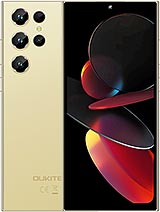
C61
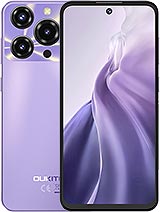
C69
C62 Pro
C65 Pro
Galaxy M17e