Oukitel G1 review
The G1 is purpose-built for outdoor workers, site crews, and anyone operating in dust and water who values days-long battery life over performance. Anyone else will find the weight, slow charging, dull display, and weak performance frustrating for the price.
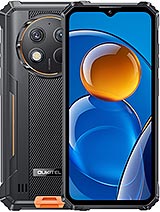
This review is based on Oukitel’s published specifications and public benchmark data for the Oukitel G1, and the rating is spec-based. GoSolo does not physically test devices; where we estimate real-world behaviour such as battery life or charge time, we say so. How we rate phones.
Overview
The G1 is a rugged phone built for outdoor work and harsh environments, with a gigantic battery and tough military-grade construction that justify its weight and thick profile. But the entry-level Unisoc T606 and bare-bones display mean it's strictly a workhorse, not a daily driver for anyone who cares about performance or screen quality.
Design & Build
At 373 grams and 17.4 mm thick, the G1 is built like a brick and feels every ounce. That heft serves a purpose: it's wrapped in military-grade toughness with IP68/IP69K certification, surviving water jets at high pressure and immersion to 1.5 meters for 30 minutes, plus drops up to 1.5 meters without protest. The MIL-STD-810H compliance is genuine, not window dressing. For an outdoor worker, site manager, or anyone operating in dust and water, this durability is the whole point. For a casual user, the weight and thickness are dead weight that will tire your wrist. The design is aggressively utilitarian; there is no pretense at thinness or lightness, and that honesty is refreshing.
Display
The 6.52-inch IPS LCD panel maxes out at 400 nits, which is barely adequate for indoor use and genuinely poor in sunlight. The 576 x 1280 resolution and 215 ppi density mean text is legible at arm's length but never sharp; compared to any modern mid-range phone, text rendering feels soft. The 20:9 aspect ratio is narrow by today's standards, squeezing content horizontally. Gorilla Glass 5 protects against scratches, not against the reality that this screen demands a comfortable indoors setting to be usable for long reading or video. For a phone aimed at outdoor work, a dimmer display is an odd compromise, especially at this price.
Performance
The Unisoc T606 is entry-level silicon designed for calls, messaging, and light browsing. Email, social media, and video streaming work smoothly on modest networks. Demanding games, video editing, or heavy multitasking will cause stuttering and slowdowns. The Mali-G57 MP1 GPU is not equipped for any serious graphics work. By 2024 standards, this chipset is behind peers at the same price; rivals often field Snapdragon or MediaTek chips with more grunt. It's honest to call this a workhorse processor rather than a performance chip—fine for its intended audience of field workers who need a phone that lasts days and survives abuse, not one that runs a second job as a content creation tool.
Software
Android 14 ships clean without the usual bloat, and 6 GB of RAM handles basic multitasking. The 256 GB of storage with microSD expansion provides practical headroom for photos and offline maps. UFS 2.1 speeds are sufficient for a phone of this class. No standout software story here—the OS works as expected for a no-frills workhorse.
Camera
The 48 MP main sensor with f/1.8 aperture and phase-detect autofocus captures sharp, well-exposed daytime photos. Low-light performance is acceptable thanks to the fast aperture, though noise creeps in faster than it would on a flagship. The 2 MP macro lens is a novelty. Video tops out at 1080p and 30 fps, so there's no slow-motion or 4K. The 5 MP selfie camera is adequate for video calls but weak for anything else. For casual documentation and site photos, the main camera delivers; for a phone sold at 160 EUR, it punches above its weight in daylight.
Battery & Charging
At 10600 mAh, the battery is enormous and will easily last 1.5 to 2 days with moderate use, or closer to one day if you're on the phone constantly. This is the phone's strongest draw for outdoor workers and remote locations. Charging, however, is slow: 18W over a 10600 mAh battery means a full charge takes about 60 to 90 minutes. In a world where 65W, 100W, and even 120W charging is common at this price, 18W feels outdated. The trade-off is real: you get days of battery life but pay for it in long recharge times if you need a quick top-up.
Connectivity & Value
LTE bands cover most of the globe and Wi-Fi 5 (802.11ac) is standard, but the absence of 5G means this phone is not future-proofed for networks rolling out fifth-gen coverage. NFC, FM radio, and Bluetooth 5.0 round out a workable suite. At around 160 EUR, the G1 is cheap for its durability and battery capacity, but those strengths are narrowly targeted. It's a tool for outdoor work and harsh conditions, not a smartphone for anyone expecting modern performance or a decent display. Competing rugged phones at this price either cut the battery smaller or the durability thinner; the G1 commits to both, which is its defining choice.
Verdict
The G1 is purpose-built for outdoor workers, site crews, and anyone operating in dust and water who values days-long battery life over performance. Anyone else will find the weight, slow charging, dull display, and weak performance frustrating for the price.
- 10600 mAh battery easily sustains 1.5 to 2 days of moderate use, making it genuinely useful in remote or offline work
- IP68/IP69K rating and MIL-STD-810H compliance mean it survives water immersion to 1.5m, high-pressure jets, and 1.5m drops without flinching
- 48 MP main camera with f/1.8 aperture and phase-detect autofocus captures sharp daytime shots and handles low light competently for the price
- 18W charging takes 60 to 90 minutes for a full charge, so even with a huge battery, any downtime is long
- Unisoc T606 stumbles on demanding apps and multitasking; this is a call-and-message phone, not a work laptop replacement
- 400-nit IPS display and 215 ppi density are dim and soft by 2024 standards; sunlight readability is poor and text lacks sharpness
Oukitel G1 Key Specifications
The essentials at a glance. See the full spec sheet.
| Released | 2024, September |
|---|---|
| Display | 6.52 inches, 102.6 cm2 (~71.6% screen-to-body ratio), IPS LCD, 400 nits |
| Resolution | 576 x 1280 pixels, 20:9 ratio (~215 ppi density) |
| Chipset | Unisoc T606 (12 nm) |
| RAM & storage | 256GB 6GB RAM |
| Main camera | 48 MP, f/1.8, (wide), 1/2.0", PDAF 2 MP (macro) |
| Selfie camera | 5 MP, f/2.2, (wide), 1/5.0" |
| Battery | 10600 mAh |
| Charging | 18W wired |
| Software | Android 14 |
| Dimensions | 174.2 x 82.3 x 17.4 mm (6.86 x 3.24 x 0.69 in) |
| Weight | 373 g (13.16 oz) |
| Durability | IP68/IP69K dust tight and water resistant (high pressure water jets; immersible up to 1.5m for 30 min) Drop resistant up to 1.5m MIL-STD-810H compliant |
| Network | GSM / HSPA / LTE |
| NFC | Yes |
| USB | USB Type-C 2.0, OTG |
Oukitel G1 FAQ
Common questions, answered from the spec sheet.
Does the G1 support 5G?
No. The G1 tops out at GSM / HSPA / LTE, without 5G.
What chipset does the G1 use?
The G1 runs on the Unisoc T606 (12 nm).
What display does the G1 have?
A 6.52 inches, 102.6 cm2 (~71.6% screen-to-body ratio) IPS LCD, 400 nits, 576 x 1280 pixels, 20:9 ratio (~215 ppi density).
How big is the G1 battery?
The G1 has a 10600 mAh battery. Charging is rated at 18W wired.
Does the G1 have NFC?
Yes, the G1 has NFC.
Is the G1 water resistant?
The G1 carries a IP68/IP69K dust tight and water resistant (high pressure water jets; immersible up to 1.5m for 30 min) Drop resistant up to 1.5m MIL-STD-810H compliant rating.
Does the G1 support a microSD card?
Yes, the G1 supports expandable storage (microSDXC).
Does the G1 have a headphone jack?
No, the G1 does not have a 3.5mm headphone jack.
Alternatives to consider
If the G1 isn’t quite right, these are the closest calls.
WP32 Pro
G2
G3
WP33 Pro
Galaxy M06 5G