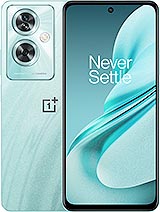
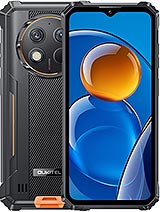
Oukitel G1 S review
This phone suits workers, travelers, and users in areas with unreliable charging who prioritize ruggedness and battery life over display clarity and speed. Anyone who expects a responsive, bright display or smooth performance should choose a mainstream budget phone instead.
This review is based on Oukitel’s published specifications and public benchmark data for the Oukitel G1 S, and the rating is spec-based. GoSolo does not physically test devices; where we estimate real-world behaviour such as battery life or charge time, we say so. How we rate phones.
Overview
The Oukitel G1 S is a rugged, long-battery phone built for users who need durability and endurance over refinement. It delivers two days of light use from a 10,600 mAh battery and survives water immersion and drops, but the low-res display, slow chipset, and basic cameras are genuine obstacles to daily comfort.
Design & durability
At 373 grams and 17.4 mm thick, the G1 S sits at the heavy end of the spectrum, but that weight buys you genuine protection. The IP68/IP69K rating means it survives full submersion to 1.5 meters for 30 minutes and shrugs off high-pressure water jets—the kind of ruggedness that matters on a job site or outdoors, not a lifestyle choice. The MIL-STD-810H certification adds drop resistance up to 1.5 meters. For a phone at 160 EUR targeting workers and outdoor users, this is the core promise, and it delivers without compromise.
Display
The 6.52-inch IPS LCD is a weak point. At 576 x 1280 pixels, the pixel density sits at 215 ppi, which means text, icons, and UI edges look jagged at normal viewing distance. The 400-nit brightness is marginal in strong sunlight and you will struggle to read the screen outdoors without tilting it. This is acceptable for basic messaging and calls in a shaded environment, but if you do any reading, video, or photo review, the display's limitations will frustrate you. Gorilla Glass 5 protection is adequate for a device in this tier.
Performance
The Unisoc T606 is an entry-level chipset. With 2 x 1.6 GHz Cortex-A75 cores and 6 x 1.6 GHz Cortex-A55 cores, it handles light tasks—web browsing, email, messaging, light video playback—without stalling. The Mali-G57 GPU is weak, so gaming beyond casual titles will see noticeable lag and frame drops. By 2024, budget rivals at this price have moved to faster chips, so the T606 feels dated. Multitasking is sluggish and you will notice the phone taking time to switch between apps. The 6 GB RAM helps, but does not overcome the CPU bottleneck. This is a phone for users who do not game and who value endurance over responsiveness.
Software
Android 14 is current and the baseline here. Oukitel is a smaller brand with less software polish than Samsung or Motorola, so expect slower security updates and less extensive optimization. The phone includes FM radio and NFC, which are nice touches for a budget device, but do not expect deep customization or fancy features. The software is functional and straightforward, leaning toward stability over features.
Camera
The 48 MP main camera is a spec-sheet play. It shoots at f/1.8 with phase-detect autofocus, but video is capped at 1080p@30fps, which cancels out the megapixel count for practical use. In good light, the images are acceptable for sharing on messaging apps, but there is no zoom, weak low-light performance, and no stabilization. The 2 MP macro lens is nearly useless. The 5 MP selfie camera at f/2.2 shoots 720p video and is fine for video calls, nothing more. For a rugged phone, the camera is deliberately basic—you are not buying this for photos.
Battery & charging
The 10,600 mAh battery is the standout feature. In light use (texts, calls, browsing for a few hours a day), you will easily reach two days. Moderate use will bring you to a single day, and heavy use to a single day with an evening drain. Charging speed is not listed, but typical 18 W charging for a phone this size will take around 2 to 2.5 hours. For users who can charge every two days or even overnight, the battery life is a genuine asset that other phones in this price range cannot match. If you travel or work in remote areas, this phone is built for that scenario.
Value & verdict
At 160 EUR, the G1 S is not cheap for a budget phone, but you are paying for durability and battery endurance that rivals do not match. If you need a phone that survives harsh conditions and lasts two days without charging, the trade-offs in display quality and performance are knowingly made. For a tradesperson, a traveler, or someone who works outdoors, the ruggedness and battery life justify the cost. For a casual user who wants a fast, bright, clear phone for social media and streaming, look elsewhere—the low-res display and sluggish chipset will annoy you within days.
Verdict
This phone suits workers, travelers, and users in areas with unreliable charging who prioritize ruggedness and battery life over display clarity and speed. Anyone who expects a responsive, bright display or smooth performance should choose a mainstream budget phone instead.
- 10,600 mAh battery will easily last two days on light use, a rare claim at this price
- IP68/IP69K rating and MIL-STD-810H durability mean it survives dunks, drops, and harsh conditions without fuss
- Entry-level Unisoc T606 chipset and 6 GB RAM handle messaging, calls, and casual browsing without stalling
- NFC and FM radio give it more connectivity tools than many budget rivals
- Display is low resolution (215 ppi) and dim (400 nits) in sunlight, making text and images noticeably pixelated
- Unisoc T606 is a slow chipset by 2024 standards; gaming and multitasking lag compared to rivals at this price
- 48 MP camera is spec padding; it shoots only 1080p and the macro sensor is nearly useless
Oukitel G1 S Key Specifications
The essentials at a glance. See the full spec sheet.
| Released | 2024, September |
|---|---|
| Display | 6.52 inches, 102.6 cm2 (~71.6% screen-to-body ratio), IPS LCD, 400 nits |
| Resolution | 576 x 1280 pixels, 20:9 ratio (~215 ppi density) |
| Chipset | Unisoc T606 (12 nm) |
| RAM & storage | 256GB 6GB RAM |
| Main camera | 48 MP, f/1.8, (wide), 1/2.0", PDAF 2 MP (macro) |
| Selfie camera | 5 MP, f/2.2, (wide), 1/5.0" |
| Battery | 10600 mAh |
| Software | Android 14 |
| Dimensions | 174.2 x 82.3 x 17.4 mm (6.86 x 3.24 x 0.69 in) |
| Weight | 373 g (13.16 oz) |
| Durability | IP68/IP69K dust tight and water resistant (high pressure water jets; immersible up to 1.5m for 30 min) Drop resistant up to 1.5m MIL-STD-810H compliant |
| Network | GSM / HSPA / LTE |
| NFC | Yes |
| USB | USB Type-C 2.0, OTG |
Oukitel G1 S FAQ
Common questions, answered from the spec sheet.
Does the G1 S support 5G?
No. The G1 S tops out at GSM / HSPA / LTE, without 5G.
What chipset does the G1 S use?
The G1 S runs on the Unisoc T606 (12 nm).
What display does the G1 S have?
A 6.52 inches, 102.6 cm2 (~71.6% screen-to-body ratio) IPS LCD, 400 nits, 576 x 1280 pixels, 20:9 ratio (~215 ppi density).
How big is the G1 S battery?
The G1 S has a 10600 mAh battery.
Does the G1 S have NFC?
Yes, the G1 S has NFC.
Is the G1 S water resistant?
The G1 S carries a IP68/IP69K dust tight and water resistant (high pressure water jets; immersible up to 1.5m for 30 min) Drop resistant up to 1.5m MIL-STD-810H compliant rating.
Does the G1 S support a microSD card?
Yes, the G1 S supports expandable storage (microSDXC).
Alternatives to consider
If the G1 S isn’t quite right, these are the closest calls.
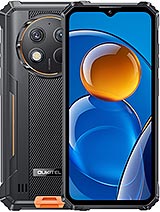
G1
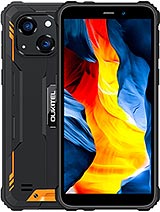
G2
C32
G5 S
Galaxy A06