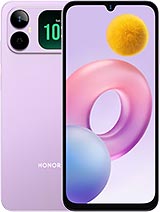
Oukitel G6 review
Buy this only if your work genuinely risks breaking a normal phone or if you need it to run for days between charges in places without power. For casual, urban, or desk-bound use, spend the same money on a lighter, faster, brighter phone from almost any other brand.
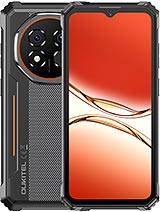
This review is written with AI assistance from Oukitel’s published specifications and public benchmark data for the Oukitel G6, and the rating is spec-based. GoSolo does not physically test devices; where we estimate real-world behaviour such as battery life or charge time, we say so. How we rate phones.
Overview
The Oukitel G6 is a rugged budget phone built to survive drops and submersion, with a heavy frame, dim low-res display, and anemic processor that struggles beyond basic tasks. It suits workers in tough environments or buyers who prioritize durability over usability; everyone else will find the performance and screen too compromised for daily use at this price point.
Design & Build
The Oukitel G6 wears its rugged mission plainly. At 373 grams and 17.4 mm thick, it is closer to a portable hard drive than a typical 6.5-inch phone—designed for survival, not comfort. The IP68/IP69K rating is genuine (waterproof to 1.5 m for 30 minutes, survives high-pressure jets) and the MIL-STD-810H compliance means it can handle 1.5 m drops onto concrete without flinching. Dragon Tracks glass at Mohs 7 is respectable for a budget device. Dual nano-SIM and a shared microSD slot add practicality for field work across different regions. This is a phone for construction sites, forestry, disaster response, or anyone whose job risks shattering ordinary devices. For the rest of us, the heft is a deal-breaker.
Display
The 6.52-inch IPS LCD is a weak point. Its 576×1280 resolution delivers about 215 ppi—visibly pixelated text and icons next to any modern phone. The 90 Hz refresh does help scrolling feel less janky, but 400 nits of brightness is a liability in daylight and barely adequate indoors. For outdoor work or sunny environments, this screen becomes hard to read without tilting or shading. Video playback and photos lack the clarity that users expect even at entry-level prices. The 20:9 aspect ratio is stretched and unusual, which adds to the awkward feel. If you spend any time outdoors or care about screen clarity, this display will frustrate you daily.
Performance
The Unisoc T615 is an entry-level 12 nm chip from 2024 paired with just 4 GB RAM. It handles basic calls, messaging, and web browsing, but stutters under any real load. Social media apps pause between taps, switching between apps is slow, and anything resembling a game or demanding app will lag visibly. The Mali-G57 MP1 GPU is capable of light tasks only. For casual users, this processor is behind what you'd expect even from a sub-$150 phone in 2026. Workers using simple apps like GPS, messaging, or photos will find it adequate; anyone else will feel the lag immediately. The choice of entry-level silicon on a weight-burdened device suggests engineering priorities lay entirely with durability over daily experience.
Software
Android 16 is current, and Oukitel's track record with updates is spotty at best. Expect one or two years of security patches if you're lucky, and major OS updates are rare on budget Oukitel devices. The software itself is stripped-down and bloat-free, which is a minor plus, but the lack of vendor commitment to long-term support is a real concern. Workers buying this to last years in the field should not assume software support will keep pace.
Camera
The 64 MP main sensor (f/1.8, 1/2.0 inch) sounds respectable on paper but produces soft, low-detail shots in dim light and washed-out colors in bright conditions. Autofocus helps in theory, but processing is slow and unrefined. Video maxes at 1080p@30 fps, which is functional but not sharp. The 8 MP selfie camera is basic and suited only to video calls. For a rugged phone, the camera is adequate—capture what matters, move on. But compared to any mid-range device at a similar price, the image quality lags. Panorama and HDR are present but unreliable.
Battery & Charging
The 10,600 mAh capacity is exceptional and will easily deliver 2 to 3 days of moderate use, possibly more if you stick to basic tasks. The spec sheet lists 18W charging, which is slow by 2026 standards but acceptable for such a large battery (expect about 2.5 to 3 hours to full). In the field, this phone can be your last device standing when others have died. The large capacity is one of the few genuine advantages Oukitel has engineered here. Battery longevity over years of heavy use in harsh conditions is likely solid, though field repair and replacement are easier than on sealed flagships.
Value & Verdict Context
The Oukitel G6 is a specialist device for a narrow audience: construction workers, emergency responders, remote site personnel, and anyone whose work genuinely risks destroying a typical phone. Its ruggedness is real and its battery is a lifeline. At its price point (likely under $250), it costs more than an ordinary budget phone but less than a true flagship. The problem is that everyone else—casual users, students, urban workers—will hate the weight, the dim grainy screen, the sluggish processor, and the overall brick-like feel. For its niche, the durability and battery justify the compromises. For everyone else, a lighter, faster, brighter mainstream budget phone is a far better choice. Oukitel knows who this is for and has executed that mission without distraction.
Verdict
Buy this only if your work genuinely risks breaking a normal phone or if you need it to run for days between charges in places without power. For casual, urban, or desk-bound use, spend the same money on a lighter, faster, brighter phone from almost any other brand.
- Genuine MIL-STD-810H toughness plus IP68/IP69K rating—survives 1.5m drops and high-pressure water jets, rare even in rugged phones at this price
- 10,600 mAh battery should deliver 2+ days of moderate use, a real advantage for workers in remote or harsh conditions
- Dual SIM and microSD expansion (shared slot) plus FM radio offer practical flexibility for global markets and offline scenarios
- Side-mounted fingerprint and core sensors present; NFC for tap payments where available
- Unisoc T615 is 2024-era entry-level silicon paired with only 4GB RAM—app switching is sluggish, gaming and multitasking struggle noticeably
- 576×1280 display at 215 ppi on a 6.52-inch screen feels grainy; 400 nits is dim indoors and unusable in sunlight
- 373 grams and 17.4 mm thick makes this a brick; the weight alone rules it out for casual users, pocket carry, or extended one-handed use
Oukitel G6 Key Specifications
The essentials at a glance. See the full spec sheet.
| Released | 2026 |
|---|---|
| Display | 6.52 inches, 102.6 cm2 (~71.6% screen-to-body ratio), IPS LCD, 90Hz, 400 nits |
| Resolution | 576 x 1280 pixels, 20:9 ratio (~215 ppi density) |
| Chipset | Unisoc T615 (12 nm) |
| RAM & storage | 256GB 4GB RAM |
| Main camera | 64 MP, f/1.8, (wide), 1/2.0", AF |
| Selfie camera | 8 MP, f/2.0, (wide), 1/4.0" |
| Battery | 10600 mAh |
| Software | Android 16 |
| Dimensions | 174.2 x 82.3 x 17.4 mm (6.86 x 3.24 x 0.69 in) |
| Weight | 373 g (13.16 oz) |
| Durability | IP68/IP69K dust tight and water resistant (high pressure water jets; immersible up to 1.5m for 30 min) Drop resistant up to 1.5m MIL-STD-810H compliant |
| Network | GSM / HSPA / LTE |
| NFC | Yes |
| USB | USB Type-C 2.0, OTG |
Oukitel G6 FAQ
Common questions, answered from the spec sheet.
Does the G6 support 5G?
No. The G6 tops out at GSM / HSPA / LTE, without 5G.
What chipset does the G6 use?
The G6 runs on the Unisoc T615 (12 nm).
What display does the G6 have?
A 6.52 inches, 102.6 cm2 (~71.6% screen-to-body ratio) IPS LCD, 90Hz, 400 nits, 576 x 1280 pixels, 20:9 ratio (~215 ppi density).
How big is the G6 battery?
The G6 has a 10600 mAh battery.
Does the G6 have NFC?
Yes, the G6 has NFC.
Is the G6 water resistant?
The G6 carries a IP68/IP69K dust tight and water resistant (high pressure water jets; immersible up to 1.5m for 30 min) Drop resistant up to 1.5m MIL-STD-810H compliant rating.
Does the G6 support a microSD card?
Yes, the G6 supports expandable storage (microSDXC (uses shared SIM slot)).
Alternatives to consider
If the G6 isn’t quite right, these are the closest calls.
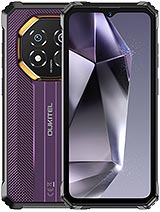
G7
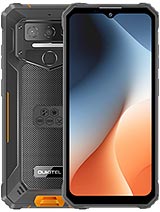
WP23S
C62 GT
C26
Galaxy M17e