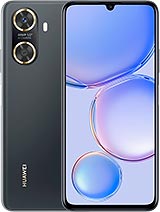
Oukitel K16 review
The K16 is for those who actually want a small phone, not a compromised flagship. If you spend most of your time messaging, calling, and browsing on WiFi, and you value compactness over all-day stamina or camera quality, it delivers on that specific promise. Everyone else should look for a larger budget phone with better battery and camera—there are many at this price."
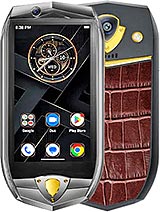
This review is based on Oukitel’s published specifications and public benchmark data for the Oukitel K16, and the rating is spec-based. GoSolo does not physically test devices; where we estimate real-world behaviour such as battery life or charge time, we say so. How we rate phones.
Overview
The Oukitel K16 is a deliberately compact budget phone built for light daily use—calls, messaging, browsing—where portability matters more than screen real estate. At €140 and with a 3.5-inch display, leather back, and all-day battery, it's unapologetically niche, not a compromised flagship shrunken down.
Design & build
This is where the K16 makes its stand. At 3.5 inches, it is a genuine pocket device—a defiant middle finger to the trend of calling anything under 6 inches compact. The leather back is unusual for a €140 phone and signals that Oukitel designed around a philosophy rather than cost-cutting. Dual nano-SIM is practical for travel or work/personal separation. Without weight and dimension specs in the data, it is hard to say how it feels to hold for long, but the small screen and modest chipset suggest a device built to be light and sip battery rather than a full-featured phone shrunk down. It is not trying to be a flagship miniature; it is trying to be a tool.
Display
The 3.5-inch IPS LCD is small by any modern standard, but on its own terms it is straightforward. At 420 ppi density, text is crisp. The 400-nit brightness is not the best—rival budget phones at this price now hit 500+ nits—but it is enough for indoor use and shade. Direct sunlight readability will be marginal, and the small size means you will be squinting on video or reading longer articles. For this phone's intended use—quick checks of messages, brief browsing—it works without strain. The 16:9 ratio is ordinary but not wasteful on so small a screen.
Performance
The Mediatek MT8788 octa-core is a mid-range chip from 2022, now two years old. It handles Android 13, messaging apps, email, light browsing, and casual social media without noticeable lag. Switching between a half-dozen apps is smooth. Where it stumbles is anywhere demanding: mobile games, video editing, heavy photo apps, or any task asking the GPU to work. By 2023 standards, even budget phones were pairing newer chips (Snapdragon 680 or Helio G85) that offer a bit more headroom. The 8 GB RAM is adequate for the workload, and 128 GB storage with microSDXC expansion means you will not run out of room for apps or media. This is a phone for someone who browses, texts, and streams but does not game or create content on the device.
Camera
The 48 MP main sensor with f/1.8 aperture and autofocus sounds respectable on paper. In daylight, you will get sharp, well-exposed photos; the f/1.8 aperture helps in indoor light and the LED flash is useful when needed. The issue is not the daylight performance but everything else. 1080p@30fps video is well behind what even budget competitors offer in 2023—most now shoot 1080p@60fps or better—and the difference in smoothness and usability is real. The 8 MP selfie camera is weak by today's standard and will produce soft or noisy results, especially indoors. If photography and video matter to you, this phone is not it. For quick snaps and the occasional social media story, it suffices.
Battery & charging
The 3050 mAh battery is small by any 2023 measure. With the modest MT8788 and small display, Oukitel claims light use will stretch it through a day, but in practice expect 12 to 16 hours of mixed use before you need a plug. Heavy users will hit low battery before dinner. The spec sheet does not list charging speed, so we cannot say if it is 10W, 18W, or higher, but at this price and capacity, quick charging is unlikely to be generous. The battery capacity is the K16's biggest trade-off: you gain portability and pocketability, but you sacrifice the all-day stamina that most buyers now expect as default. This is not a phone you charge once and forget for a day; it is one you top up daily, sometimes twice.
Software
Android 13 is current and receives regular security updates. Oukitel's skin, if any, is light—the specs do not indicate heavy bloatware, which is a point in its favor for a €140 device. Long-term update support is unknown, but for a budget brand, do not expect more than a year or two of OS updates. The small screen and modest performance mean Android runs smoothly without stuttering, but do not expect bleeding-edge features or ambitious customization.
Value & verdict-context
At €140, the K16 is cheap, but it is not trying to be an all-rounder. It is a niche phone for people who want a compact, pocketable device for calls, messages, and light use and are willing to accept lower battery life and weaker video/selfie capture as the trade-off. If you are shopping for a budget all-purpose phone with a big screen, solid battery, and respectable camera, there are more compelling rivals at this price. If you are shopping for a genuinely small phone that fits in a shirt pocket and handles daily communication without fuss, the K16 is one of the few options you will find in 2023. It knows what it is, does not pretend to be more, and that confidence is rare in budget Android.
Verdict
The K16 is for those who actually want a small phone, not a compromised flagship. If you spend most of your time messaging, calling, and browsing on WiFi, and you value compactness over all-day stamina or camera quality, it delivers on that specific promise. Everyone else should look for a larger budget phone with better battery and camera—there are many at this price."
- Genuinely compact and pocketable at 3.5 inches, a rarity in 2023 when most budget phones chased size
- Leather back and dual SIM offer a more considered build than typical budget Android fare
- microSDXC card slot gives you cheap, expandable storage without sacrificing the device philosophy
- 420 ppi density and 400 nits brightness are adequate for a 3.5-inch IPS panel in real daylight
- 3050 mAh battery delivers only about 12–16 hours of mixed use—light portability at the cost of frequent charging
- 1080p@30fps video and 8 MP selfie are well behind the standard for even budget competition in 2023, leaving you with weak content capture
- MT8788 is a modest chipset that handles everyday tasks but will stumble on any demanding app or game
Oukitel K16 Key Specifications
The essentials at a glance. See the full spec sheet.
| Released | 2023, March |
|---|---|
| Display | 3.5 inches, 33.8 cm2, IPS LCD, 400 nits |
| Resolution | 720 x 1280 pixels, 16:9 ratio (~420 ppi density) |
| Chipset | Mediatek MT8788 (12 nm) |
| RAM & storage | 128GB 8GB RAM |
| Main camera | 48 MP, f/1.8, (wide), AF |
| Selfie camera | 8 MP, f/2.0 |
| Battery | 3050 mAh |
| Software | Android 13 |
| Build | Leather back |
| Network | GSM / HSPA / LTE |
| NFC | No |
| USB | Yes |
Oukitel K16 FAQ
Common questions, answered from the spec sheet.
Does the K16 support 5G?
No. The K16 tops out at GSM / HSPA / LTE, without 5G.
What chipset does the K16 use?
The K16 runs on the Mediatek MT8788 (12 nm).
What display does the K16 have?
A 3.5 inches, 33.8 cm2 IPS LCD, 400 nits, 720 x 1280 pixels, 16:9 ratio (~420 ppi density).
How big is the K16 battery?
The K16 has a 3050 mAh battery.
Does the K16 have NFC?
No, the K16 does not list NFC support.
Does the K16 support a microSD card?
Yes, the K16 supports expandable storage (microSDXC).
Does the K16 have a headphone jack?
No, the K16 does not have a 3.5mm headphone jack.
Alternatives to consider
If the K16 isn’t quite right, these are the closest calls.
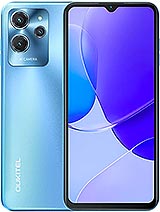
C32
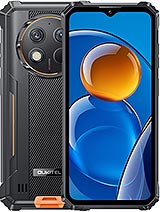
G1 S
C33
OT6
Defy 2