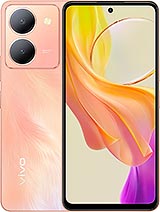
Oukitel OT5 review
The OT5 suits someone who values a large, slim, all-day tablet for reading, note-taking, and light media over brightness and speed. Skip it if you need a sharp display, rapid charging, or sustained gaming performance—the hardware corners are real, and there are more rounded alternatives at the same price in most markets.
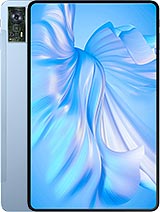
This review is based on Oukitel’s published specifications and public benchmark data for the Oukitel OT5, and the rating is spec-based. GoSolo does not physically test devices; where we estimate real-world behaviour such as battery life or charge time, we say so. How we rate phones.
Overview
The OT5 is a 12-inch budget tablet pitched for reading, note-taking, and light streaming—a sensible large canvas at the price, but held back by a dim display, modest GPU, and slow charging. It's a solid choice for someone who values screen real estate over brightness or performance, though it's not a bargain compared to larger Android tablets in mature markets.
Design & build
At 560g and 7.5mm thick, the OT5 is remarkably slim for a 12-inch tablet and genuinely pocketable if you're willing to carry a large bag. The Gorilla Glass 5 front will resist everyday scratches and light drops, and the frame feels sturdy without being heavy. That said, holding it one-handed for extended reading sessions will fatigue your wrist; the weight is not negligible, and you'll likely want a stand or case for sustained use. For a budget tablet, the industrial design doesn't pretend to be premium—it's functional and forgettable, which is fine at this price.
Display
The 12-inch IPS LCD ticks the box for a large canvas, and the 5:3 aspect ratio is genuinely useful for documents without the tight cropping you'd get on 16:9 widescreen tablets. The problem is the 300-nit brightness ceiling, which falls short in sunlit rooms or outdoors; a decent iPad or Samsung Galaxy Tab at this price offers 400–500 nits. At 194 ppi density, text is readable but not crisp—if you spend hours reading or editing, the lack of sharpness becomes tedious. The IPS viewing angles are wide, so sharing the screen is painless. Overall, it's a workable display for indoor use and note-taking, but sun visibility and text clarity are real limitations.
Performance
The Helio G99 is a capable mid-range processor for its era, handling Android 13 smoothly and running apps like Spotify, YouTube, and office suites without hiccup. Gaming is feasible at modest settings—Genshin Impact at low frames, Call of Duty at medium—but expect throttling after 20–30 minutes if you push it; the Mali-G57 GPU and 12GB RAM keep things stable in daily use. Video playback is fluid, and multitasking (browser, email, messaging) won't stutter. If you're after a workhorse for email, note-taking, and casual browsing, the OT5 delivers; if you need sustained gaming or video editing, you're asking too much of the hardware.
Software
Android 13 ships clean and uncluttered; Oukitel doesn't appear to layer heavy skin on top, so you get close to stock behavior. Updates are unlikely to be frequent from this maker, so don't expect security patches as promptly as Samsung or Apple would offer. The stylus support is a software promise that works for note apps, but there's no built-in stylus or pressure-sensitive OS shortcuts—you're just using a third-party capacitive stylus or Bluetooth pen. That's a practical limitation for artists or heavy note-takers who might expect tighter integration.
Camera
The 16MP main camera with f/2.2 lens and 1/3.1" sensor is adequate for snapshots and document scanning but nothing more. Low-light shots will be soft and color-washed; the 2MP macro is essentially a gimmick. The 8MP selfie camera is fine for video calls. Video maxes out at 1080p@30fps, which is acceptable for casual clips but behind the curve for 2023—many rivals now offer 4K even at this price. If photography matters at all to you, the OT5 is not the tablet to buy; it's purely for occasional docs or reference snaps.
Battery & charging
The 11,000 mAh battery is capacious and translates to roughly 10–12 hours of mixed use (email, web, light streaming), or a full day of moderate work without hunger for the outlet. Gaming will halve that; continuous playback might stretch to 14 hours. The 18W wired charging is leisurely by 2026 standards—budget tablets from other makers often hit 30W or more—so a full top-up takes about 2.5 hours, and a 50 percent boost takes roughly 45 minutes. If you need rapid refills, you'll be disappointed. The upside is the battery resilience; a large canvas and efficient LCD mean you're rarely chasing the charger through the day, as long as your use stays moderate.
Value & verdict
At roughly 200 EUR, the OT5 occupies an odd niche. It undercuts many 12-inch tablets but doesn't deliver enough brightness, charging speed, or gaming muscle to feel like a no-brainer bargain. It shines for a specific buyer: someone who wants a large, light, long-lasting canvas for reading, note-taking, and email, and doesn't mind dim screens or slow charging in exchange for portability and size. If you need a productivity tablet for a developing market with spotty electricity or for extended travel where a large display is worth the trade-offs, it makes sense. If you're comparing it to an iPad or Galaxy Tab in a mature market, the diminished display and charging will sting. It's a decent machine for its class, but not a steal.
Verdict
The OT5 suits someone who values a large, slim, all-day tablet for reading, note-taking, and light media over brightness and speed. Skip it if you need a sharp display, rapid charging, or sustained gaming performance—the hardware corners are real, and there are more rounded alternatives at the same price in most markets.
- Large 12-inch display with 5:3 aspect ratio and stylus support, well-suited to documents and note-taking without cropping
- 11,000 mAh battery delivers a solid 10–12 hours of mixed use; all-day endurance even with casual gaming
- Slim and light at 7.5mm and 560g for a 12-incher, making it genuinely portable compared to thicker rivals
- Dual-SIM and expandable storage via microSDXC, plus FM radio and 3.5mm jack—practical connectivity many budget tablets still omit
- 300-nit LCD is dim for outdoor use or bright indoor rooms; text and fine details lack the sharpness of higher-ppi displays at this price
- 18W charging takes roughly 2.5 hours to full; rivals often hit 30–50W in the same price bracket
- Helio G99 GPU throttles after 20–30 minutes of sustained gaming; sustained demanding work (video editing, high-refresh gaming) will stall
Oukitel OT5 Key Specifications
The essentials at a glance. See the full spec sheet.
| Released | 2023, October |
|---|---|
| Display | 12.0 inches, 409.9 cm2 (~84.6% screen-to-body ratio), IPS LCD, 300 nits |
| Resolution | 1200 x 2000 pixels, 5:3 ratio (~194 ppi density) |
| Chipset | Mediatek Helio G99 (6 nm) |
| RAM & storage | 256GB 12GB RAM |
| Main camera | 16 MP, f/2.2, (wide), 1/3.1", AF 2 MP (macro) |
| Selfie camera | 8 MP, f/2.2, (wide), 1/4.0" |
| Battery | 11000 mAh |
| Charging | 18W wired |
| Software | Android 13 |
| Dimensions | 278.5 x 174 x 7.5 mm (10.96 x 6.85 x 0.30 in) |
| Weight | 560 g (1.23 lb) |
| Durability | Stylus support |
| Network | GSM / HSPA / LTE |
| NFC | No |
| USB | USB Type-C 2.0, OTG |
Oukitel OT5 FAQ
Common questions, answered from the spec sheet.
Does the OT5 support 5G?
No. The OT5 tops out at GSM / HSPA / LTE, without 5G.
What chipset does the OT5 use?
The OT5 runs on the Mediatek Helio G99 (6 nm).
What display does the OT5 have?
A 12.0 inches, 409.9 cm2 (~84.6% screen-to-body ratio) IPS LCD, 300 nits, 1200 x 2000 pixels, 5:3 ratio (~194 ppi density).
How big is the OT5 battery?
The OT5 has a 11000 mAh battery. Charging is rated at 18W wired.
Does the OT5 have NFC?
No, the OT5 does not list NFC support.
Is the OT5 water resistant?
The OT5 carries a Stylus support rating.
Does the OT5 support a microSD card?
Yes, the OT5 supports expandable storage (microSDXC (uses shared SIM slot)).
Does the OT5 have a headphone jack?
Yes, the OT5 has a 3.5mm headphone jack.
Alternatives to consider
If the OT5 isn’t quite right, these are the closest calls.
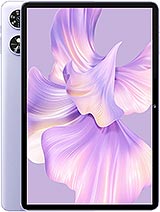
OT6
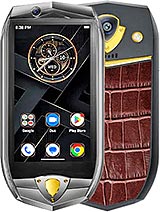
K16
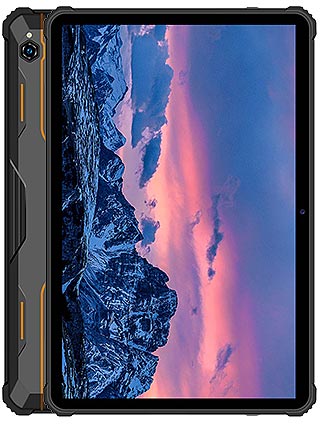
RT5
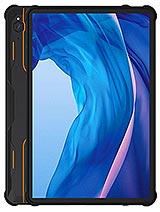
RT6
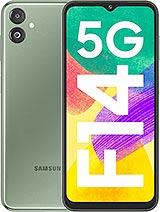
Galaxy F14