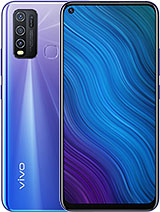
Oukitel OT8 review
The OT8 suits anyone who wants a large, light tablet for reading, browsing, and media without spending big; a student with heavy note-taking or a creator demanding video editing should skip it. The 11-inch screen and long battery life are its true calling card; everything else is competent but forgettable, and the entry-level chip and slow charging feel dated for 2024.
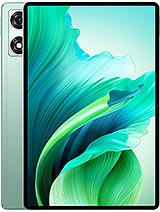
This review is based on Oukitel’s published specifications and public benchmark data for the Oukitel OT8, and the rating is spec-based. GoSolo does not physically test devices; where we estimate real-world behaviour such as battery life or charge time, we say so. How we rate phones.
Overview
The OT8 is a large, light tablet aimed at readers and casual web users, not power users. For the price and release year, it delivers what it promises: all-day battery and a sprawling 11-inch screen, but the entry-level chip and basic cameras make it strictly a consumption device.
Design & Build
At 515 grams and 7.8 mm thick, the OT8 is lean for an 11-inch tablet. It sits comfortably on a lap without cradling, and the metal frame with Gorilla Glass 5 front feels solid rather than flimsy. The trade-off is that the lightweight design and thin chassis mean rigidity takes a hit compared to chunkier competitors; daily carry absolutely needs a case. Stylus support is listed but no pen ships in the box, so that is an added cost if drawing or note-taking matters to you.
Display
The 1200 by 1920 IPS LCD is squarely adequate for its price and year. At 206 ppi on an 11-inch panel, text stays sharp for extended reading, and the 16:10 aspect ratio suits documents and ebooks. Where it falters is brightness: 350 nits looks fine indoors and in soft daylight, but direct sunlight washes it out significantly. For a tablet released in early 2024, this is a step behind rivals that push 450 to 500 nits at similar prices. Color accuracy is ordinary; do not expect the pop of OLED or high-end IPS, but it is consistent enough for photos and web.
Performance
The Unisoc T606 is entry-tier silicon, and the OT8 makes no apologies for it. Browsing, email, document editing, and video streaming all work without hiccup. Switching between 5 to 10 apps in memory feels smooth. The moment you ask for more—even casual 3D games or basic video editing—frame rates tank and the device feels sluggish. The Mali-G57 MP1 GPU is a single-core design, which matters when competitors at this price have moved to dual-core alternatives. For a tablet sold in 2024, this is a year or two behind the curve, but it remains honest-to-goodness competent for its intended audience of readers and office workers, not creators or gamers.
Software
Android 13 is respectable for January 2024, though the device launched without the security patches most rivals shipped. Oukitel does not guarantee long update cycles; expect 2 to 3 years of major OS support and annual security patches at best. The interface is clean with minimal bloat, so it does not feel neutered by the weak chip. Out-of-the-box, the experience is usable, but long-term software support is a question mark.
Camera
The 13 MP main camera and 8 MP selfie are functional for video calls and casual document scanning, nothing more. Daylight photos are acceptable on a tablet screen but fall apart in low light—grain dominates, and the small f/2.2 aperture does not help. Video caps at 1080p/30fps, which is fine for streaming a call but underwhelming for storing memories. For a consumption device, the camera is forgettable, and most buyers will rarely use it.
Battery & Charging
The 8800 mAh cell pushes an 11-inch LCD for about 10 to 12 hours of mixed use—web, video, office—before needing power. That earns the OT8 genuine all-day stamina, which is exactly what buyers in this segment want. The problem is charging: 18W wired means roughly 2 to 3 hours from empty, which is acceptable for overnight top-ups but tedious if you need the tablet in a few hours. Rivals have jumped to 30W and beyond at the same price, so this feels lazy in 2024. There is no wireless charging, which is normal here, but the slower wired speed is a real lag.
Connectivity & Value
The tablet handles current 4G networks across common bands and dual-band Wi-Fi 5 (802.11ac). Bluetooth 5.0 pairs reliably with headphones and speakers. There is no 5G and no NFC, which does not hurt for the intended use case but note it if mobile payments or future-proofing matter. At about €170, the OT8 costs less than many 10-inch rivals and significantly less than 11-inch tablets from Samsung or Apple. The value proposition is simple: you are paying for screen real estate and battery life, not performance or camera prowess. For students, readers, or office workers who need a large, light second device for consumption, it makes sense. For anyone hoping to do more than web and video, look elsewhere.
Verdict
The OT8 suits anyone who wants a large, light tablet for reading, browsing, and media without spending big; a student with heavy note-taking or a creator demanding video editing should skip it. The 11-inch screen and long battery life are its true calling card; everything else is competent but forgettable, and the entry-level chip and slow charging feel dated for 2024.
- 11-inch IPS display with 206 ppi keeps text sharp for long reading sessions
- 8800 mAh battery easily stretches to a full day of mixed use without drama
- Slim 7.8 mm profile and 515g weight make it genuinely lap-friendly compared to heavier tablets
- 4 stereo speakers and a 3.5mm jack appeal to media consumption without forcing Bluetooth
- Entry-level Unisoc T606 stumbles beyond browsing and office apps; no gaming or video editing without patience
- 18W charging takes 2 to 3 hours, lagging rivals that now hit 30W even at this price point
- 350 nits brightness struggles in direct sunlight despite Gorilla Glass 5 protection
Oukitel OT8 Key Specifications
The essentials at a glance. See the full spec sheet.
| Released | 2024, January 06 |
|---|---|
| Display | 11.0 inches, 350.9 cm2 (~81.2% screen-to-body ratio), IPS LCD, 350 nits |
| Resolution | 1200 x 1920 pixels, 16:10 ratio (~206 ppi density) |
| Chipset | Unisoc T606 (12 nm) |
| RAM & storage | 256GB 6GB RAM |
| Main camera | 13 MP, f/2.2, (wide), 1/3.06", AF |
| Selfie camera | 8 MP, f/2.2, (wide), 1/4.0" |
| Battery | 8800 mAh |
| Charging | 18W wired |
| Software | Android 13 |
| Dimensions | 256.8 x 168.3 x 7.8 mm (10.11 x 6.63 x 0.31 in) |
| Weight | 515 g (1.14 lb) |
| Durability | Stylus support |
| Network | GSM / HSPA / LTE |
| NFC | No |
| USB | USB Type-C 2.0 |
Oukitel OT8 FAQ
Common questions, answered from the spec sheet.
Does the OT8 support 5G?
No. The OT8 tops out at GSM / HSPA / LTE, without 5G.
What chipset does the OT8 use?
The OT8 runs on the Unisoc T606 (12 nm).
What display does the OT8 have?
A 11.0 inches, 350.9 cm2 (~81.2% screen-to-body ratio) IPS LCD, 350 nits, 1200 x 1920 pixels, 16:10 ratio (~206 ppi density).
How big is the OT8 battery?
The OT8 has a 8800 mAh battery. Charging is rated at 18W wired.
Does the OT8 have NFC?
No, the OT8 does not list NFC support.
Is the OT8 water resistant?
The OT8 carries a Stylus support rating.
Does the OT8 support a microSD card?
Yes, the OT8 supports expandable storage (microSDXC (uses shared SIM slot)).
Does the OT8 have a headphone jack?
Yes, the OT8 has a 3.5mm headphone jack.
Alternatives to consider
If the OT8 isn’t quite right, these are the closest calls.
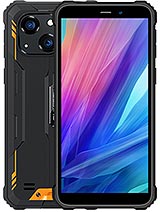
WP32 Pro
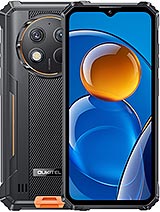
G1
G2
WP28 E
Galaxy M06 5G