Oukitel P1 Pro review
This phone suits someone who spends most time indoors or in shade, who charges at night without fuss, and who wants to store media locally rather than in the cloud. Anyone who games seriously, shoots photos in bright daylight, or needs a fast charge during the day should look elsewhere.
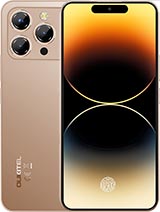
This review is based on Oukitel’s published specifications and public benchmark data for the Oukitel P1 Pro, and the rating is spec-based. GoSolo does not physically test devices; where we estimate real-world behaviour such as battery life or charge time, we say so. How we rate phones.
Overview
The Oukitel P1 Pro is a large-screen budget phone built around a 5150mAh battery and expandable storage, trading performance and brightness for longevity. It suits someone willing to accept a mid-range processor and dim display in return for two days of light use and room to grow storage.
Design & build
At 186.8g and 8.2mm thin, the P1 Pro feels light in hand for its 6.7-inch frame, making it comfortable for extended use despite the large screen. The dual nano-SIM slot with shared microSD access follows the budget norm, though it forces a choice between a second SIM or expanded storage. No material or durability details leak from the spec sheet, so expect plastic construction typical of this price tier. The form factor itself is sensible—tall but not unwieldy—and the three colour options (black, white, purple) are serviceable.
Display
A 1080p AMOLED panel at 6.7 inches delivers the 120Hz smoothness Oukitel promised, and on paper the 394ppi density is acceptable for text and photos at arm's length. The real drawback is brightness: 500 nits peak is dim by 2025 standards, and outdoor readability suffers in sunlight. The 20:9 aspect ratio and 87% screen-to-body ratio are industry standard now, so neither adds or subtracts value. For messaging and video indoors, the display does its job; take it into bright daylight and you'll feel the compromise.
Performance
The Helio G100 is a mid-range chip that handles daily tasks—messaging, web browsing, social media—without stutter. Light gaming and turn-based apps run fine, but sustained demands like 3D games on high settings or video editing will expose its limits. With 4GB or 8GB RAM, the phone manages multitasking for casual use, though RAM-hungry apps may cause occasional slowdown. This is not a phone for power users or mobile gamers; it is squarely aimed at people who want reliability for everyday work without paying for overkill.
Software
Android 15 arrives fresh out of the box, which is timely for a July 2025 launch. Oukitel's track record on timely updates is mixed, so don't expect years of guaranteed patches, but you start with current software. For the budget segment, this is adequate; it means access to the full Google Play ecosystem and modern Android features without bloat from a manufacturer skin.
Camera
The 50MP main sensor with f/1.9 aperture and optical stabilisation is the phone's strongest point. It captures detail in well-lit scenes and performs reasonably in low light thanks to the wide aperture. The 2MP macro auxiliary lens is filler—a gimmick that rarely improves real shots—and you won't miss it. Video tops out at 4K 30fps, which is adequate but not a standout; 1080p is where the camera truly excels. The 32MP selfie camera is standard fare for video calls and casual selfies. Overall, the main camera is capable within its limits, which means good results for social media but not for demanding photo work or print.
Battery & charging
The 5150mAh battery is genuinely large and delivers real endurance: on light use—mostly standby, messaging, and light browsing—expect comfortably past a full day, even approaching two days on minimal screen time. Mixed use (messaging, some video, apps) lands you at a full day without strain. Heavy use (games, constant video, long calls) eats deeper, but rarely will you die before evening. Charging is the catch: 18W is slow for a battery this size, taking roughly 90 to 120 minutes for a full charge. That's manageable overnight but frustrating if you need a quick top-up during the day—a 45-minute half-charge gives you room to limp through a day, not to fully revive the phone in a break.
Value & verdict context
At around €230, the P1 Pro is priced as a budget-conscious large-screener in a market crowded with similar offerings. The combination of a big battery, expandable storage, and a dim but functional AMOLED screen appeals to users who value offline resilience and long intervals between charging over processing power or outdoor visibility. The Helio G100 is the limiting factor; for the same price, you might find rivals with newer chipsets, brighter screens, or faster charging. But if your priority is time away from an outlet and room for files, this phone makes a logical choice. It is not a jack-of-all-trades; it is built for a specific buyer.
Verdict
This phone suits someone who spends most time indoors or in shade, who charges at night without fuss, and who wants to store media locally rather than in the cloud. Anyone who games seriously, shoots photos in bright daylight, or needs a fast charge during the day should look elsewhere.
- 5150mAh battery stretches a full day on mixed use and past that on light duty, reducing charging anxiety.
- microSD expansion slot lets you add storage for media and files without relying on cloud services.
- 50MP main camera with f/1.9 aperture captures usable stills in varied light, with optical stabilisation and 4K video at 30fps.
- 6.7-inch AMOLED display with 120Hz refresh feels smooth for scrolling and messaging, despite modest brightness.
- Helio G100 is firmly mid-range; it handles casual apps and light games but falters under sustained demands like video editing or 3D gaming.
- 500-nit peak brightness struggles in direct sunlight, making the display hard to read outdoors compared to rivals.
- 18W charging is slow for a 5150mAh battery—expect roughly 90 to 120 minutes for a full charge, so quick top-ups are limited.
Oukitel P1 Pro Key Specifications
The essentials at a glance. See the full spec sheet.
| Released | 2025, July |
|---|---|
| Display | 6.7 inches, 108.0 cm2 (~87.3% screen-to-body ratio), AMOLED, 120Hz, 500 nits |
| Resolution | 1080 x 2412 pixels, 20:9 ratio (~394 ppi density) |
| Chipset | Mediatek Helio G100 (6 nm) |
| RAM & storage | 256GB 4GB RAM, 512GB 8GB RAM |
| Main camera | 50 MP, f/1.9 (wide), 1/1.56", PDAF 2 MP (macro) Auxiliary lens |
| Selfie camera | 32 MP, f/2.2, (wide), 1/2.74" |
| Battery | 5150 mAh |
| Charging | USB Power Delivery up to 18 W |
| Software | Android 15 |
| Dimensions | 162.4 x 76.2 x 8.2 mm (6.39 x 3.00 x 0.32 in) |
| Weight | 186.8 g (6.60 oz) |
| Network | GSM / CDMA / HSPA / CDMA2000 / LTE |
| NFC | Yes |
| USB | USB Type-C, OTG |
Oukitel P1 Pro FAQ
Common questions, answered from the spec sheet.
Does the P1 Pro support 5G?
No. The P1 Pro tops out at GSM / CDMA / HSPA / CDMA2000 / LTE, without 5G.
What chipset does the P1 Pro use?
The P1 Pro runs on the Mediatek Helio G100 (6 nm).
What display does the P1 Pro have?
A 6.7 inches, 108.0 cm2 (~87.3% screen-to-body ratio) AMOLED, 120Hz, 500 nits, 1080 x 2412 pixels, 20:9 ratio (~394 ppi density).
How big is the P1 Pro battery?
The P1 Pro has a 5150 mAh battery. Charging is rated at USB Power Delivery up to 18 W.
Does the P1 Pro have NFC?
Yes, the P1 Pro has NFC.
Does the P1 Pro support a microSD card?
Yes, the P1 Pro supports expandable storage (microSDXC (uses shared SIM slot)).
Alternatives to consider
If the P1 Pro isn’t quite right, these are the closest calls.
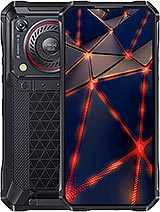
WP33 Pro
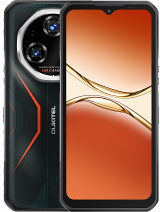
WP55 Pro
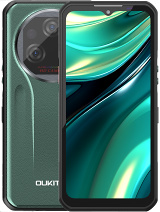
WP39 Pro
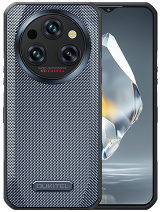
WP35 Pro
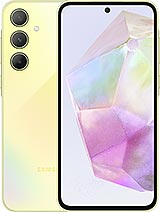
Galaxy A35 5G