Oukitel RT3 Pro review
This tablet is purpose-built for work in harsh conditions—construction sites, field surveys, outdoor logistics—where durability and weather resistance matter more than speed or screen quality. Anyone working in an office or relying on heavy multitasking should look at more capable tablets; anyone chasing the cheapest 8-incher will find faster options at a similar price without the rugged build.
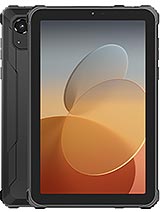
This review is based on Oukitel’s published specifications and public benchmark data for the Oukitel RT3 Pro, and the rating is spec-based. GoSolo does not physically test devices; where we estimate real-world behaviour such as battery life or charge time, we say so. How we rate phones.
Overview
The Oukitel RT3 Pro is a rugged 8-inch tablet built for field work and outdoor use, with IP68/IP69K durability and a 5,150 mAh battery. The Helio G81 chipset handles everyday tasks fine, but the 10W charging is slow and the display density is a step behind modern tablets for its size.
Design & build
This tablet is built to survive neglect. At 538 grams and 13.9 mm thick, it is chunky but not unwieldy for one-handed reading or jobsite use. The IP68/IP69K rating means it shrugs off dust, rain, and accidental submersion up to 1.5 meters for half an hour. The MIL-STD-810H compliance and 1.5-meter drop resistance add credibility—these are not just marketing badges but real durability standards. The Gorilla Glass 5 screen will resist casual scratches. This is not a tablet you baby; it is one you throw in a rucksack on a construction site.
Display
The 8-inch IPS LCD with 600 nits is bright enough to read outdoors in strong sunlight, a practical win for field use. The 16:10 aspect ratio suits document reading and web browsing. However, the 189 ppi density is noticeably coarser than modern phones or mid-range tablets. Text and small icons show visible pixels if you hold the screen at a normal viewing distance—not a deal-breaker for work tasks like viewing spreadsheets or PDFs, but it will remind you this is not a premium display. Older chipset and lower refresh rate mean you won't see smooth scrolling like newer tablets offer.
Performance
The Helio G81 with Mali-G52 GPU and 4GB RAM is entry-level mobile silicon, even by 2024 standards. Apps open and websites load without obvious stalls, and everyday tasks—email, messaging, light browsing, document editing—run smoothly. Heavy multitasking or background app churn will cause lag and slower app switching. Gaming is possible but unambitious; 3D titles will run at lower settings or drop frames. For field work, site inspections, and data entry, it is fit for purpose. For anything requiring sustained performance or many open apps, it will feel constraining.
Software
Android 14 is current and brings the expected privacy controls, Material 3 polish, and app compatibility. No signs of bloatware or heavy custom skins. The tablet includes FM radio, NFC, and dual Nano-SIM slots, offering options for older networks and offline connectivity that mainstream tablets have dropped. The shared SIM/microSDXC slot means you choose between mobile data and storage expansion, a minor inconvenience but worth knowing if you plan to add a memory card.
Camera
The 16MP main camera with f/2.0 and PDAF is adequate for photographing documents, job-site conditions, and video calls, but it is not a strength. Low-light photos will be noisy, and the 1080p@30fps video caps at a decade-old standard. The 8MP front camera handles basic video calls. For a rugged tablet aimed at work use, the camera is functional but unremarkable—sufficient for filling in a timesheet with a snapshot but not for creative photography or high-quality video.
Battery & charging
The 5,150 mAh battery translates to about 8 to 10 hours of moderate screen time, enough for a working day without panic. Heavy video streaming or sustained app use will drain it faster. The real friction point is the 10W charging, which requires 3 to 4 hours from empty. This is slow for 2024; rivals at this price offer 30W or faster. If your work takes you away from power, you will want to charge overnight or during a long break, not grab a quick top-up between jobs. The slow charge speed is the tablet's biggest daily inconvenience.
Connectivity & value
The tablet maxes out at LTE (no 5G) but covers a wide range of LTE bands and older 3G frequencies, useful in regions where 5G coverage is sparse or where networks still rely on older technology. Wi-Fi ac and Bluetooth 5.0 are current enough. At about 180 EUR, the RT3 Pro is competing in the budget rugged tablet segment. You are paying for durability and field-readiness, not processing power or cutting-edge features. For a construction worker, surveyor, or outdoor enthusiast who values a screen that survives rain and drops over pure performance, the value calculus makes sense. For anyone else, this is overkill.
Verdict
This tablet is purpose-built for work in harsh conditions—construction sites, field surveys, outdoor logistics—where durability and weather resistance matter more than speed or screen quality. Anyone working in an office or relying on heavy multitasking should look at more capable tablets; anyone chasing the cheapest 8-incher will find faster options at a similar price without the rugged build.
- IP68/IP69K certified plus MIL-STD-810H compliance and 1.5m drop rating—genuinely useful if you work outdoors or in rough conditions
- Dual Nano-SIM and dual-band Wi-Fi on Android 14, with FM radio, NFC, and full GPS suite for navigation
- 8-inch IPS screen with 600 nits brightness is readable in direct sunlight and adequate for field documentation
- 5,150 mAh battery supports a full working day of moderate use without needing to hunt for a charger
- 10W charging takes 3 to 4 hours from empty, too slow for a quick midday top-up if you rely on the tablet for work
- 4GB RAM and Helio G81 are entry-level even for 2024; expect slower app switching and heavy multitasking will lag
- 189 ppi pixel density shows visible grain at normal reading distance, a step down from what you get on phones or newer tablets in this size class
Oukitel RT3 Pro Key Specifications
The essentials at a glance. See the full spec sheet.
| Released | 2024, October |
|---|---|
| Display | 8.0 inches, 185.6 cm2 (~66.9% screen-to-body ratio), IPS LCD, 600 nits |
| Resolution | 800 x 1280 pixels, 16:10 ratio (~189 ppi density) |
| Chipset | Mediatek Helio G81 (12 nm) |
| RAM & storage | 128GB 4GB RAM |
| Main camera | 16 MP, f/2.0, (wide), 1/3.06", PDAF Auxiliary lens |
| Selfie camera | 8 MP, f/2.0, (wide), 1/4.0" |
| Battery | 5150 mAh |
| Charging | 10W wired |
| Software | Android 14 |
| Dimensions | 207 x 134 x 13.9 mm (8.15 x 5.28 x 0.55 in) |
| Weight | 538 g (1.19 lb) |
| Durability | IP68/IP69K dust tight and water resistant (high pressure water jets; immersible up to 1.5m for 30 min) Drop resistant up to 1.5m MIL-STD-810H compliant |
| Network | GSM / HSPA / LTE |
| NFC | Yes |
| USB | USB Type-C 2.0, OTG |
Oukitel RT3 Pro FAQ
Common questions, answered from the spec sheet.
Does the RT3 Pro support 5G?
No. The RT3 Pro tops out at GSM / HSPA / LTE, without 5G.
What chipset does the RT3 Pro use?
The RT3 Pro runs on the Mediatek Helio G81 (12 nm).
What display does the RT3 Pro have?
A 8.0 inches, 185.6 cm2 (~66.9% screen-to-body ratio) IPS LCD, 600 nits, 800 x 1280 pixels, 16:10 ratio (~189 ppi density).
How big is the RT3 Pro battery?
The RT3 Pro has a 5150 mAh battery. Charging is rated at 10W wired.
Does the RT3 Pro have NFC?
Yes, the RT3 Pro has NFC.
Is the RT3 Pro water resistant?
The RT3 Pro carries a IP68/IP69K dust tight and water resistant (high pressure water jets; immersible up to 1.5m for 30 min) Drop resistant up to 1.5m MIL-STD-810H compliant rating.
Does the RT3 Pro support a microSD card?
Yes, the RT3 Pro supports expandable storage (microSDXC (uses shared SIM slot)).
Does the RT3 Pro have a headphone jack?
No, the RT3 Pro does not have a 3.5mm headphone jack.
Alternatives to consider
If the RT3 Pro isn’t quite right, these are the closest calls.
WP32 Pro
RT9
OT6 Pro
C62 Pro
Galaxy M06 5G