Oukitel RT5 review
The RT5 suits field workers, outdoor contractors, and organizations that need a rugged all-day tablet at a practical cost. Skip it if you want speed, cutting-edge performance, or a device to use at home; a mainstream tablet at the same price will serve you better for media and casual work.
This review is based on Oukitel’s published specifications and public benchmark data for the Oukitel RT5, and the rating is spec-based. GoSolo does not physically test devices; where we estimate real-world behaviour such as battery life or charge time, we say so. How we rate phones.
Overview
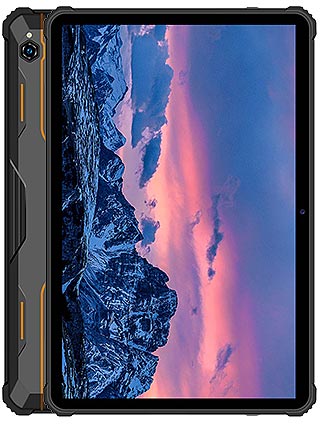
The Oukitel RT5 is a rugged 10.1-inch tablet built for field work and outdoor sites, with IP68/IP69K and MIL-STD-810G certification that lets it survive drops and submersion where standard tablets fail. Its MT8788 chipset and 10000mAh battery handle a full workday without fuss, but the charging is slow and performance is baseline—it is not for gaming or heavy lifting, only for jobs that prioritize durability and all-day stamina over speed.
Design & Build
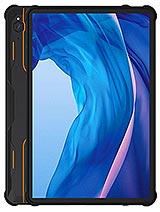
At 860 grams and 14.2mm thick, the RT5 is neither light nor thin, but that mass and rigidity are deliberate. The IP68/IP69K rating means it survives submersion to 1.5 meters for 30 minutes and withstands high-pressure water jets without water ingress—a spec sheet few tablets match. MIL-STD-810G compliance and 1.5-meter drop resistance add real peace of mind on a farm, construction site, or wet environment where a standard iPad would die. Dual nano-SIM and stylus support round out the field-work intent. For anybody who needs a tablet that works in mud, dust, and spray, this design is not a compromise; it is the point.
Display
The 10.1-inch IPS LCD delivers 1200 by 1920 pixels at 224 ppi—adequate pixel density for text at arm's length, though not sharp enough to rival flagship tablets. At 400 nits brightness, it handles indoor reading and bright daylight without washing out, which matters on job sites with open sunlight. The 16:10 aspect ratio is well-suited to documents, spreadsheets, and time-keeping apps that field workers rely on. This is not a movie screen and does not pretend to be; it is functional, not flashy, which is exactly right for a rugged work tablet.
Performance
The MT8788 is a 2022-era mid-range chipset, and by 2026 standards it feels aged. Octa-core at 2.0GHz with a Mali-G72 MP3 GPU, it handles everyday apps, light multitasking, and 1080p video smoothly without stutter. Gaming and 3D work are out of scope; heavy image editing or running 10+ browser tabs will show lag. For the RT5's actual use case—forms, email, navigation, photos, job-site notes, and streaming video—it has enough grunt. The 14GB RAM helps keep apps in memory across a workday without constant reloads.
Battery & Charging
The 10000mAh battery is the standout. Real-world screen time ranges from about 8 to 10 hours depending on brightness and app load; a heavy workday or two shifts on light use gets done without searching for a charger. Charging, however, is the weak link. At 18W over USB Type-C, a full zero-to-100 charge takes 60 to 90 minutes—slow by modern tablet standards and impractical if you need a quick top-up between jobs. For overnight or midday charging at base, it is fine; for field crews that need to swap tablets fast, it stings.
Camera
Both the 16MP main camera (f/2.2, 1/3.1" sensor, LED flash) and 16MP front (f/2.0, 1/2.8") cameras are adequate rather than impressive. Main camera video caps at 1080p@30fps. In daylight and bright conditions, they capture acceptable stills and video for site documentation, before-and-after shots, and incident records. Low light is where they falter; the sensor sizes and lack of optical stabilization mean shadow work looks flat and noisy. For video calls, the front camera is competent but not beautiful. This is not a camera tablet; it is a documentation tool.
Software
The RT5 ships with Android (version unspecified in the spec sheet), and given the May 2023 release, it likely boots Android 12 or 13. For a rugged device, software updates and long-term OS support are rarely a strong suit; Oukitel typically delivers security patches in fits and starts. The lack of NFC and the reliance on LTE rather than 5G mean this is not built for cutting-edge mobile payments or future-proofing. However, for field-work applications like work order management apps, mapping tools, and offline data collection, the basics are there.
Value & Verdict
At roughly 270 EUR, the RT5 is a focused device. You are paying for durability and stamina, not performance or polish. A mainstream 10-inch tablet at the same price would have a faster chipset and snappier charging, but would shatter on a 1.5-meter drop onto concrete or survive five minutes in a water jet. The RT5 is built for jobs where failure means lost productivity or safety risk—field surveys, outdoor service calls, farm operations, disaster-response work. If you need a tablet to survive rough handling and wet conditions, this is a sensible buy. If you want a general-purpose media tablet or productivity machine, a standard brand at this price will feel snappier and more future-proof.
Verdict
The RT5 suits field workers, outdoor contractors, and organizations that need a rugged all-day tablet at a practical cost. Skip it if you want speed, cutting-edge performance, or a device to use at home; a mainstream tablet at the same price will serve you better for media and casual work.
- IP68/IP69K and MIL-STD-810G durability; survives 1.5m drops and high-pressure water jets without a case
- 10000mAh battery lasts about 8–10 hours of real screen time, enough for two full field shifts with modest use
- Bright 10.1-inch IPS display at 400 nits; readable outdoors and suited to documents and spreadsheets at tablet distance
- 14GB RAM and 256GB storage with microSD expansion; enough headroom for work apps and offline files on a rugged device at this price
- 18W charging is slow; expect 60–90 minutes to full, making it impractical to top up quickly between jobs
- MT8788 chipset is four years old by 2026 and shows; handles everyday apps and video but lags in multitasking and any graphics-heavy work
- 1080p cameras are basic; acceptable for site documentation and video calls but weak in low light and produce dull color
Oukitel RT5 Key Specifications
The essentials at a glance. See the full spec sheet.
| Released | 2023, May |
|---|---|
| Display | 10.1 inches, 295.8 cm2 (~69.3% screen-to-body ratio), IPS LCD, 400 nits |
| Resolution | 1200 x 1920 pixels, 16:10 ratio (~224 ppi density) |
| Chipset | Mediatek MT8788 (12 nm) |
| RAM & storage | 256GB 14GB RAM |
| Main camera | 16 MP, f/2.2, (wide), 1/3.1", AF |
| Selfie camera | 16 MP, f/2.0, (wide), 1/2.8" |
| Battery | 10000 mAh |
| Charging | 18W wiredReverse wired |
| Software | Android |
| Dimensions | 251.2 x 170 x 14.2 mm (9.89 x 6.69 x 0.56 in) |
| Weight | 860 g (1.90 lb) |
| Durability | IP68/IP69K dust tight and water resistant (high pressure water jets; immersible up to 1.5m for 30 min) Drop resistant up to 1.5m MIL-STD-810G compliant Stylus support |
| Network | GSM / HSPA / LTE |
| NFC | No |
| USB | USB Type-C 2.0, OTG |
Oukitel RT5 FAQ
Common questions, answered from the spec sheet.
Does the RT5 support 5G?
No. The RT5 tops out at GSM / HSPA / LTE, without 5G.
What chipset does the RT5 use?
The RT5 runs on the Mediatek MT8788 (12 nm).
What display does the RT5 have?
A 10.1 inches, 295.8 cm2 (~69.3% screen-to-body ratio) IPS LCD, 400 nits, 1200 x 1920 pixels, 16:10 ratio (~224 ppi density).
How big is the RT5 battery?
The RT5 has a 10000 mAh battery. Charging is rated at 18W wiredReverse wired.
Does the RT5 have NFC?
No, the RT5 does not list NFC support.
Is the RT5 water resistant?
The RT5 carries a IP68/IP69K dust tight and water resistant (high pressure water jets; immersible up to 1.5m for 30 min) Drop resistant up to 1.5m MIL-STD-810G compliant Stylus support rating.
Does the RT5 support a microSD card?
Yes, the RT5 supports expandable storage (microSDXC).
Does the RT5 have a headphone jack?
No, the RT5 does not have a 3.5mm headphone jack.
Alternatives to consider
If the RT5 isn’t quite right, these are the closest calls.
K16
WP22

RT7 Titan 4G
RT6
Enjoy 60