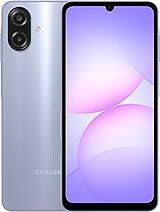
Oukitel RT8 review
The Oukitel RT8 is built for work crews and outdoor professionals who value durability and battery endurance over performance or polish. Anyone shopping for a consumer tablet or expecting flagship gaming and multitasking should skip it; anyone equipping fieldwork teams or needing a tablet that survives rain, mud, and drops should take it seriously.
This review is based on Oukitel’s published specifications and public benchmark data for the Oukitel RT8, and the rating is spec-based. GoSolo does not physically test devices; where we estimate real-world behaviour such as battery life or charge time, we say so. How we rate phones.
Overview
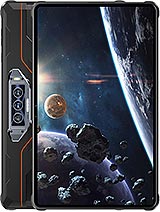
The Oukitel RT8 is a tough, mission-built 11-inch tablet designed for field workers and outdoor crews rather than general consumers. Its main draw is the rugged durability (IP68/IP69K, MIL-STD-810H) and three-day battery life; the Helio G99 chipset and modest 206 ppi screen keep it firmly in the work-tablet lane.
Design & Build
This is a rugged tool, not a lifestyle tablet. At 997 grams, it is heavier than most 11-inch rivals, but that mass buys you a chassis tough enough for a construction site. The IP68/IP69K rating—immersible to 1.5 meters for 30 minutes, resistant to high-pressure water jets—means mud, dust, and accidental dunks are not showstoppers. MIL-STD-810H compliance adds drop and thermal shock protection. Gorilla Glass 5 is standard for this class. The 15.1 mm thickness is chunky but proportional to the battery and reinforcement. Dual nano-SIM slots let field teams stay on two networks, a practical touch. If you are buying this to look sleek at a café, you will regret it; if you are equipping a utility company, emergency response team, or fieldwork crew, the durability is the whole point.
Display
The 11-inch IPS LCD is a solid working screen. At 1200×1920 pixels and 206 ppi density, it lands in the adequate-for-office zone: text is readable, photos are clear enough, and spreadsheets are not a strain. 500 nits brightness handles moderate daylight, though direct sun will cause glare and wash out contrast. The 74.9% screen-to-body ratio is reasonable for a rugged device. For the Oukitel's purpose—field documentation, remote instruction, video calls over LTE—this screen does the job without fuss. Nobody buying a work tablet is expecting tablet-grade color or refresh rates, and this delivers neither, but it does not need to.
Performance
The Mediatek Helio G99 is a mid-range mobile processor: capable enough for apps, browsing, email, and light office work, but not designed for heavy lifting. With 6 GB RAM and UFS 2.2 storage, opening multiple apps or switching between documents will expose its limits. Gaming is restricted to casual titles; any graphically intensive app will stutter. For a field tablet that runs maps, communication apps, document viewers, and the occasional video conference, it is adequate. For multitasking on a large screen or running professional software, you will feel the constraints. Paired with Android 13, it handles day-to-day field operations without lag, but do not expect the snappiness of a higher-end chipset.
Camera
The triple rear setup is quirky and mission-focused. The 48 MP main sensor with f/1.8 and PDAF captures decent detail in daylight; the 20 MP infrared night vision camera with built-in lights is the real differentiator, letting crews inspect dark sites, survey damage, or work at night without a separate flashlight. The 5 MP macro rounds out the set. Video tops out at 1440p/30 fps—adequate for documentation but not broadcast-grade. The 32 MP selfie handles video calls on the 11-inch screen without obvious pixelation. In summary, these cameras are practical and fit the fieldwork use case; they are not a creative asset.
Battery & Charging
The 20000 mAh cell is the main reason to consider this tablet for fieldwork. Expect two to three days of moderate daily use (email, browsing, calls, light document editing) before hunting for a plug. Three-day field trips without access to power are now realistic. Reverse charging is a bonus: the Oukitel can top up phones or other devices, valuable when your crew does not have a power bank. The downside is charging speed: 33W wired charging takes roughly two to three hours from empty to full, depending on use during charging. By 2024 standards, this is leisurely; rivals are now reaching 65–100W. If you need the tablet topped up quickly between shifts, bring a faster charger or build in extra time.
Software
Android 13 is current but not cutting-edge for a 2024 device; Android 14 became the norm mid-2023. The Oukitel ships with what appears to be a stock or near-stock Android build, which is practical for a field tool—fewer bloat apps, more predictable behavior. No information suggests aggressive customization or a slow update cadence, but this is Oukitel, not a mainstream brand, so support timelines are unclear. For work-tablet purposes, the operating system is invisible as long as it does not crash; Android 13 is stable and sufficient.
Value & Verdict
At about 280 EUR, the Oukitel RT8 is not cheap, but it is not competing with consumer tablets. It competes with other rugged work tablets in the field-services space. For that niche—surveyors, utility crews, emergency responders, construction foremen—the IP68/IP69K durability, three-day battery, infrared night camera, and mil-spec build justify the price. A consumer 11-inch tablet at the same price will have a faster chip and sharper screen but will break if dropped from a scaffolding or left in the rain. The Oukitel will survive. If you need a general-purpose tablet for media, games, or productivity at home, look elsewhere. If you need a field workhorse that does not require babying, this makes sense.
Verdict
The Oukitel RT8 is built for work crews and outdoor professionals who value durability and battery endurance over performance or polish. Anyone shopping for a consumer tablet or expecting flagship gaming and multitasking should skip it; anyone equipping fieldwork teams or needing a tablet that survives rain, mud, and drops should take it seriously.
- 20000 mAh battery runs 2–3 days of moderate use, plus reverse charging means it can top up other devices in the field
- IP68/IP69K and MIL-STD-810H compliance survive submersion, high-pressure jets, and drops without babying
- 11-inch 1200×1920 screen is a practical size for documents, maps, and remote work; 500 nits is usable in daylight
- Dual rear cameras (48MP wide + 20MP infrared night vision) handle both daylight and pitch-black fieldwork without switching devices
- Helio G99 struggles with heavy multitasking or any graphically demanding apps; this is a light-duty work tablet, not a content-creation or gaming machine
- 206 ppi density on an 11-inch screen is adequate but not sharp; text and photos lack the crispness of higher-end tablets
- 33W charging is slow by 2024 standards; rivals in this space are crossing 65–100W, so full charge takes 2–3 hours
Oukitel RT8 Key Specifications
The essentials at a glance. See the full spec sheet.
| Released | 2024, March |
|---|---|
| Display | 11.0 inches, 350.9 cm2 (~74.9% screen-to-body ratio), IPS LCD, 500 nits |
| Resolution | 1200 x 1920 pixels, 16:10 ratio (~206 ppi density) |
| Chipset | Mediatek Helio G99 (6 nm) |
| RAM & storage | 256GB 6GB RAM |
| Main camera | 48 MP, f/1.8, (wide), 1/2", PDAF 20 MP, f/1.8, (night vision), 1/2.78", AF, infrared night vision lights 5 MP (macro) |
| Selfie camera | 32 MP, f/2.2, (wide), 1/2.8" |
| Battery | 20000 mAh |
| Charging | 33W wiredReverse wired |
| Software | Android 13 |
| Dimensions | 265.1 x 176.7 x 15.1 mm (10.44 x 6.96 x 0.59 in) |
| Weight | 996.7 g (2.20 lb) |
| Durability | IP68/IP69K dust tight and water resistant (high pressure water jets; immersible up to 1.5m for 30 min) MIL-STD-810H compliant |
| Network | GSM / CDMA / HSPA / LTE |
| NFC | Yes |
| USB | USB Type-C 2.0, OTG |
Oukitel RT8 FAQ
Common questions, answered from the spec sheet.
Does the RT8 support 5G?
No. The RT8 tops out at GSM / CDMA / HSPA / LTE, without 5G.
What chipset does the RT8 use?
The RT8 runs on the Mediatek Helio G99 (6 nm).
What display does the RT8 have?
A 11.0 inches, 350.9 cm2 (~74.9% screen-to-body ratio) IPS LCD, 500 nits, 1200 x 1920 pixels, 16:10 ratio (~206 ppi density).
How big is the RT8 battery?
The RT8 has a 20000 mAh battery. Charging is rated at 33W wiredReverse wired.
Does the RT8 have NFC?
Yes, the RT8 has NFC.
Is the RT8 water resistant?
The RT8 carries a IP68/IP69K dust tight and water resistant (high pressure water jets; immersible up to 1.5m for 30 min) MIL-STD-810H compliant rating.
Does the RT8 support a microSD card?
Yes, the RT8 supports expandable storage (microSDXC (uses shared SIM slot)).
Does the RT8 have a headphone jack?
No, the RT8 does not have a 3.5mm headphone jack.
Alternatives to consider
If the RT8 isn’t quite right, these are the closest calls.
P1 Pro
WP36
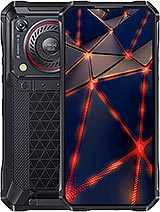
WP33 Pro
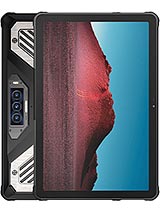
RT10
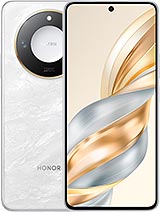
X60