Oukitel WP26 review
The WP26 is for field workers, emergency responders, and remote-area professionals who live outside the charging ecosystem. Everyone else should look to mainstream brands; the dated chipset and 1080p screen become frustrating when you are not using the infrared night vision or the two-day battery to its fullest.
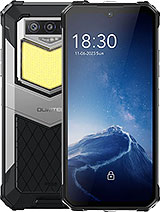
This review is based on Oukitel’s published specifications and public benchmark data for the Oukitel WP26, and the rating is spec-based. GoSolo does not physically test devices; where we estimate real-world behaviour such as battery life or charge time, we say so. How we rate phones.
Overview
The WP26 is a rugged field phone built around a 10000 mAh battery and infrared night vision, not raw speed. It survives water, dust, and drops better than mainstream rivals, but the 2019 Helio P90 chipset and 1080p screen mark it as a workhorse tool rather than an all-rounder.
Design & build
Oukitel does not release exact dimensions or weight, which is a red flag for a rugged phone—buyers in this category want to know if it fits a pocket or pack. The IP68/IP69K rating and MIL-STD-810H compliance are real achievements: the phone survives high-pressure water jets, fresh-water immersion to 1.5 meters for half an hour, and drops from the same height. That is well above what mainstream brands claim. A 1200-lumen flashlight is useful for field work, though a comparison with rivals' actual output would matter here. No weight spec makes it hard to judge whether it balances ruggedness with portability—a known trade-off in this category.
Display
The 6.58-inch IPS LCD runs 1080 by 2408 pixels, delivering about 401 ppi. At that density on a screen this large, text and icons carry a visible pixelation that rivals with 1440p or higher would not. The 480-nit peak brightness is solid for outdoor use in direct sun; it is not exceptional but handles the job. The 20:9 aspect ratio stretches the frame vertically, which suits field work (more room for logs or maps) but feels lanky for everyday video and photos. This is not a screen you stare at for leisure; it is a tool.
Performance
The Helio P90 is a 2019 chipset clocked at 2.2 GHz with six efficiency cores at 2.0 GHz and 16 GB of RAM. It handles email, messaging, navigation, and routine apps without stutter. Light gaming (older PUBG or Fortnite at reduced settings) runs, but demanding titles and heavy multitasking—say, video editing or running fieldwork apps alongside maps and photo capture—will cause lag and frame drops. By 2023 standards, this is entry-level silicon; it does not compare to what you get at similar prices in mainstream phones. That is a deliberate trade-off: Oukitel spent the budget on the chassis and battery, not the processor.
Camera
The main setup splits across a 48 MP f/1.8 wide lens with PDAF and a dedicated 20 MP night-vision module flanked by four infrared lights. In daylight, the 48 MP sensor captures detail-rich shots, though the f/1.8 aperture and lack of optical stabilization mean low-light stills can be shaky. The night-vision module is the real differentiator: it records grayscale video in pitch-black conditions without needing an external torch, a genuine asset for security work, rescue, or remote inspections. A 2 MP macro rounds out the rear. The 16 MP selfie camera is ordinary. Video maxes out at 1080p at 30 fps; for a 2023 phone, even at this price, 4K recording is now standard, so this is a notable gap.
Battery & charging
The 10000 mAh battery is the phone's headline strength. In mixed daylight use (screen on intermittently, navigation, comms, photos), you can expect about 1.5 to 2 days before the battery drops below 20 percent. Charge specs are not listed, so actual charge time is unknown; with USB Type-C 2.0 and no fast-charging mention, assume 3 to 4 hours from empty. For field workers and emergency responders who cannot charge daily, this is a major advantage over mainstream phones that need a socket every 24 hours.
Software
Android 13 ships out of the box, which is current for a mid-2023 release. Oukitel's skin is light; the phone runs close to stock Android. Update policy and long-term support are typical of the rugged-phone tier: usually two years of OS updates and security patches if you are lucky. For a workhorse device, software is not the priority; stability and app compatibility matter more than the latest features.
Value & verdict-context
At roughly 280 EUR, the WP26 sits at the upper end of the rugged-phone market. For that money, you are paying for durability, battery endurance, and infrared night vision, not performance. A mainstream phone at the same price delivers faster chips and brighter screens, but it will not survive a 1.5-meter drop onto concrete or see in total darkness. The choice hinges on your life: office worker or outdoor technician. If you spend your day on a construction site, in rescue work, or doing remote infrastructure checks, the trade-off makes sense. If you are a city user who needs good battery and occasional durability, a mainstream phone with 4000 to 5000 mAh and an IP rating will cost less and feel snappier.
Verdict
The WP26 is for field workers, emergency responders, and remote-area professionals who live outside the charging ecosystem. Everyone else should look to mainstream brands; the dated chipset and 1080p screen become frustrating when you are not using the infrared night vision or the two-day battery to its fullest.
- 10000 mAh battery delivers about two days of real-world use, rare in this durability class
- IP68/IP69K + MIL-STD-810H rating and 1.5m drop resistance target actual field damage, not just marketing
- Dedicated 20MP infrared night-vision camera with four built-in lights sees in complete darkness without an external lamp
- 1200-lumen flashlight and dual SIM routing real utility over trendy specs
- Helio P90 from 2019 is dated for 2023; heavy games and intense multitasking stumble noticeably
- 1080p screen on a 6.58-inch panel feels grainy for text-heavy work over long shifts
- Only 1080p video recording with no 4K option, limiting what you can capture in the field
Oukitel WP26 Key Specifications
The essentials at a glance. See the full spec sheet.
| Released | 2023, June |
|---|---|
| Display | 6.58 inches, 104.3 cm2, IPS LCD, 480 nits |
| Resolution | 1080 x 2408 pixels, 20:9 ratio (~401 ppi density) |
| Chipset | Mediatek MT6779 Helio P90 (12 nm) |
| RAM & storage | 256GB 16GB RAM |
| Main camera | 48 MP, f/1.8, (wide), PDAF 20 MP, (night vision), 4 infrared night vision lights 2 MP (macro) |
| Selfie camera | 16 MP |
| Battery | 10000 mAh |
| Software | Android 13 |
| Durability | IP68/IP69K dust tight and water resistant (high pressure water jets; immersible up to 1.5m for 30 min) Drop resistant up to 1.5m MIL-STD-810H compliant Flashlight (1200 lumens) |
| Network | GSM / HSPA / LTE |
| NFC | Yes |
| USB | USB Type-C 2.0, OTG |
Oukitel WP26 FAQ
Common questions, answered from the spec sheet.
Does the WP26 support 5G?
No. The WP26 tops out at GSM / HSPA / LTE, without 5G.
What chipset does the WP26 use?
The WP26 runs on the Mediatek MT6779 Helio P90 (12 nm).
What display does the WP26 have?
A 6.58 inches, 104.3 cm2 IPS LCD, 480 nits, 1080 x 2408 pixels, 20:9 ratio (~401 ppi density).
How big is the WP26 battery?
The WP26 has a 10000 mAh battery.
Does the WP26 have NFC?
Yes, the WP26 has NFC.
Is the WP26 water resistant?
The WP26 carries a IP68/IP69K dust tight and water resistant (high pressure water jets; immersible up to 1.5m for 30 min) Drop resistant up to 1.5m MIL-STD-810H compliant Flashlight (1200 lumens) rating.
Does the WP26 support a microSD card?
Yes, the WP26 supports expandable storage (microSDXC (uses shared SIM slot)).
Does the WP26 have a headphone jack?
No, the WP26 does not have a 3.5mm headphone jack.
Alternatives to consider
If the WP26 isn’t quite right, these are the closest calls.
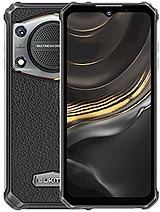
WP22
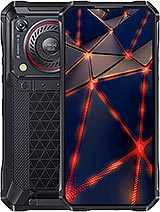
WP33 Pro

WP35
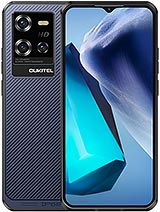
WP50
Galaxy M15 5G