Oukitel WP36 review
A genuine rugged phone for outdoor trades and harsh environments, not a pretend tough device. Look elsewhere if you prioritize display clarity, fast charging, or gaming—pick a standard budget phone instead and baby it more carefully.
This review is based on Oukitel’s published specifications and public benchmark data for the Oukitel WP36, and the rating is spec-based. GoSolo does not physically test devices; where we estimate real-world behaviour such as battery life or charge time, we say so. How we rate phones.
Overview
The Oukitel WP36 is a rugged workhorse built for outdoor trades and harsh conditions, with genuine IP68/IP69K durability and a two-day battery—but its 720p display and slow charging are outdated compromises at this price point.
Design & durability
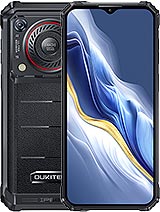
At 393.7g and 19.1mm thick, the WP36 feels like a tool, not a fashion accessory. The weight and bulk are earned: IP68/IP69K certification means it survives full submersion to 1.5 meters for half an hour, plus high-pressure water jets that would wreck most phones. Military durability (MIL-STD-810H) and 1.5-meter drop resistance round out the package. For construction workers, warehouse staff, or anyone who spends time in wet or dusty environments, this is not marketing fluff—these are real survival credentials tested to standards. The trade-off is unmistakable: you carry a brick, but it will still work after you've dropped it, dunked it, or blasted it with a hose.
Display
The 6.52-inch LCD runs at 720p (269ppi) with 400 nits brightness. In sunlight it is legible, and the size suits video and web browsing. But the pixel density is noticeably soft compared to the 1080p displays that have become standard on budget and mid-range phones by 2024. Text at normal viewing distance lacks sharpness, and icons appear slightly fuzzy. For someone on a job site checking emails or watching instruction videos, it is acceptable. For anyone who reads small text often, the dullness accumulates. The 400-nit peak helps outdoors, but rivals offer the same brightness at higher resolution.
Performance
The Mediatek MT8788 with Mali-G72 MP3 GPU and 8GB RAM is a mid-tier 2023-era chipset now two years old. Multitasking and switching between apps works smoothly, and turn-based games or lightweight 3D titles run without stutter. Demand anything heavier—modern 3D games, complex AR features, heavy photo editing—and frame rates dip. For a rugged phone at 190 EUR, the chip matches the positioning: adequate for work calls, navigation, and casual leisure. It is not a gaming device, and marketing would not pretend it is. The 8GB RAM keeps things responsive.
Camera
The main camera is 13MP at f/2.2, paired with a 2MP macro. In daylight it captures acceptable wide-angle shots suitable for documentation on job sites or casual social sharing; low light is grainy and soft, typical for this resolution and aperture. Video maxes out at 1080p@30fps. The 5MP front camera handles video calls at 1080p. None of this is compelling, but none of it is broken. A rugged phone in this tier is rarely chosen for its camera; that said, rivals offer 48MP main sensors at the same price, so there is a case that Oukitel is choosing durability over imaging.
Battery & charging
The 10,600mAh battery delivers approximately 1.5–2 days of mixed use or 8–10 hours of continuous screen time. For a phone marketed to outdoor workers who may not charge daily, this longevity is a real advantage. Charging is the weak point: 15W wired speed will fully recharge the battery in 2–3 hours. That is painfully slow by 2024 standards; phones at this price commonly charge at 30W, 65W, or higher. Reverse wired charging exists but operates at the same glacial 15W, so topping up another device is not a quick rescue. The slow charging feels like an unnecessary compromise, perhaps tied to cooling limits in the thick, rugged chassis.
Software & connectivity
Android 13 is two major versions behind the latest, but security and feature parity is reasonable for a January 2024 launch. Dual Nano-SIM and NFC enable mobile payments and two numbers on one device. LTE bands are globally broad (no 5G, which is fine at this price tier). Wi-Fi ac and Bluetooth 4.2 cover everyday connectivity. The inclusion of FM radio and microSD expansion (via shared SIM slot) appeals to users in regions where these are not yet obsolete. USB Type-C 2.0 is standard and supports OTG for peripheral charging and data transfers.
Value & verdict
At around 190 EUR, the WP36 is pitched squarely at outdoor workers and people who need a phone that survives neglect. Its durability credentials are genuine and well-tested. Compared to mainstream budget phones at the same price, you are trading screen sharpness, charging speed, and processing power for a device that will live through conditions that would totalize most rivals. If your phone routinely encounters water, dust, or hard impacts, this trade is sound. If you are a casual user picking an affordable phone, a standard device offers better displays, faster charging, and fresher software at the same outlay. The WP36 is purpose-built, not a generalist bargain.
Verdict
A genuine rugged phone for outdoor trades and harsh environments, not a pretend tough device. Look elsewhere if you prioritize display clarity, fast charging, or gaming—pick a standard budget phone instead and baby it more carefully.
- IP68/IP69K plus MIL-STD-810H durability means it survives job sites, not just the occasional splash—tested for high-pressure jets, 1.5m submersion, and equivalent drops without drama
- 10,600mAh battery lasts about two days on light use, aligned with the phone's rugged positioning rather than chasing thinness
- Dual SIM, NFC, FM radio, and microSD expansion (shared slot) cover practical needs for workers or frequent travelers in areas where these matter
- 15W charging fills the 10,600mAh battery in 2–3 hours, noticeably slower than rivals at this price hitting 30W or more
- 720p display at 269ppi is soft and dated; even budget phones now start at 1080p for sharper text and web browsing
- MT8788 and Mali-G72 handle light apps and casual gaming but lag on demanding tasks; 2024 rugged phones at this price often pair durability with better chips
Oukitel WP36 Key Specifications
The essentials at a glance. See the full spec sheet.
| Released | 2024, January 06 |
|---|---|
| Display | 6.52 inches, 102.6 cm2 (~73.9% screen-to-body ratio), IPS LCD, 400 nits |
| Resolution | 720 x 1600 pixels, 20:9 ratio (~269 ppi density) |
| Chipset | Mediatek MT8788 (12 nm) |
| RAM & storage | 128GB 8GB RAM |
| Main camera | 13 MP, f/2.2, (wide), 1/3.1", AF 2 MP (macro) |
| Selfie camera | 5 MP, f/2.2, (wide), 1/5.0" |
| Battery | 10600 mAh |
| Charging | 15W wiredReverse wired |
| Software | Android 13 |
| Dimensions | 172.2 x 80.7 x 19.1 mm (6.78 x 3.18 x 0.75 in) |
| Weight | 393.7 g (13.90 oz) |
| Durability | IP68/IP69K dust tight and water resistant (high pressure water jets; immersible up to 1.5m for 30 min) Drop resistant up to 1.5m MIL-STD-810H compliant |
| Network | GSM / CDMA / HSPA / LTE |
| NFC | Yes |
| USB | USB Type-C 2.0, OTG |
Oukitel WP36 FAQ
Common questions, answered from the spec sheet.
Does the WP36 support 5G?
No. The WP36 tops out at GSM / CDMA / HSPA / LTE, without 5G.
What chipset does the WP36 use?
The WP36 runs on the Mediatek MT8788 (12 nm).
What display does the WP36 have?
A 6.52 inches, 102.6 cm2 (~73.9% screen-to-body ratio) IPS LCD, 400 nits, 720 x 1600 pixels, 20:9 ratio (~269 ppi density).
How big is the WP36 battery?
The WP36 has a 10600 mAh battery. Charging is rated at 15W wiredReverse wired.
Does the WP36 have NFC?
Yes, the WP36 has NFC.
Is the WP36 water resistant?
The WP36 carries a IP68/IP69K dust tight and water resistant (high pressure water jets; immersible up to 1.5m for 30 min) Drop resistant up to 1.5m MIL-STD-810H compliant rating.
Does the WP36 support a microSD card?
Yes, the WP36 supports expandable storage (microSDXC (uses shared SIM slot)).
Does the WP36 have a headphone jack?
No, the WP36 does not have a 3.5mm headphone jack.
Alternatives to consider
If the WP36 isn’t quite right, these are the closest calls.
WP33 Pro
WP32 Pro
WP28 E

OT6
Galaxy XCover 7 Pro