Oukitel WP53 review
This phone is built for fieldwork, remote sites, and anyone who prioritizes durability and battery endurance over screen quality and raw speed. If you need a phone that will survive drops, water, and dirt while staying charged for days, the WP53 delivers. If you want a responsive everyday phone that also happens to be rugged, mainstream alternatives will frustrate you less.
This review is based on Oukitel’s published specifications and public benchmark data for the Oukitel WP53, and the rating is spec-based. GoSolo does not physically test devices; where we estimate real-world behaviour such as battery life or charge time, we say so. How we rate phones.
Overview
The WP53 is a rugged workhorse built for fieldwork, with military-grade durability and an 11000mAh battery that easily lasts two days. The trade-off is an entry-level chipset and a low-density display that shows pixelation, making it unsuitable for those who want a responsive everyday phone.
Design & build
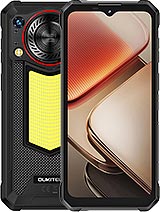
At 388.7 grams and 18.5mm thick, the WP53 is genuinely heavy and chunky—but that bulk serves a purpose. The phone is IP68/IP69K certified (survives submersion to 1.5 metres for 30 minutes and high-pressure water jets), MIL-STD-810H compliant, and rated for 1.5-metre drops. It also carries a dedicated flood flashlight and side-mounted fingerprint sensor. For construction workers, utility crews, or anyone working outdoors, this durability is the entire point; for an office user, it's overkill and will feel like carrying a brick.
Display
The 6.52-inch IPS LCD is large but underdone. At 215 ppi pixel density, text and icons show visible pixelation—not dramatic, but noticeable if you spend hours reading. At 400 nits peak brightness, it's adequate indoors but struggles in direct sunlight or reflective surfaces. The 20:9 aspect ratio is standard for this class, and the 74% screen-to-body ratio is reasonable given the rugged bezel needed for impact protection. The Dragontrail glass is sturdy and rated Mohs level 5, practical rather than premium.
Performance
The Unisoc T615 with Mali-G57 is entry-level silicon. It handles calls, messaging, email, and light social media without fuss; YouTube and basic navigation run smoothly. Demanding games, intensive photo editing, or heavy multitasking trigger stutters and throttling. The 8GB RAM helps but cannot disguise a chipset that prioritizes power efficiency over speed. If your workday is fieldwork and connectivity rather than performance, this suffices; if you swap between a dozen apps or play 3D games, you will notice the sluggishness.
Software
Android 15 is current. Oukitel's skin appears minimal based on the spec sheet, and there is nothing listed that suggests bloat or severe customization. The side-mounted fingerprint sensor works reliably for quick unlocking. One advantage in industrial or outdoor use is the included FM radio—genuinely useful when cellular data is absent or unreliable.
Camera
The 13MP main camera with f/2.2 aperture and fixed autofocus is basic. It captures daylight shots adequately but struggles in low light and lacks zoom. Video maxes out at 1080p/30fps, which is functional but not impressive. The 5MP selfie is similarly modest. For a rugged phone aimed at fieldwork, the camera is an afterthought; if photography matters at all to you, look elsewhere.
Battery & charging
The 11000 mAh battery is the WP53's real strength. In mixed use (calls, messages, some video), expect two to three days between charges; light use (mostly calling and messaging) stretches closer to three to four days. Heavy users will see around 15 to 18 hours of screen-on time. The 18W charging, however, is the catch: recharging from empty takes roughly 60 to 90 minutes, which is slow for a battery this large and partly negates the durability advantage if you are constantly hunting for a charger on a long shift.
Value & verdict-context
The WP53 is a purpose-built phone for specific use cases: construction sites, emergency services, outdoor fieldwork, or users who need a phone that survives neglect and harsh conditions. At its June 2025 launch price, it undercuts most ruggedized flagships and offers no pretense of being a performance or camera workhorse. If your priority is durability, battery life, and simplicity, the trade-offs in display quality and processing power are acceptable. If you are shopping for an everyday phone that happens to be tough, mainstream alternatives offer better screens and performance at comparable cost. Oukitel's target is clear: users for whom the phone is a tool, not a status symbol.
Verdict
This phone is built for fieldwork, remote sites, and anyone who prioritizes durability and battery endurance over screen quality and raw speed. If you need a phone that will survive drops, water, and dirt while staying charged for days, the WP53 delivers. If you want a responsive everyday phone that also happens to be rugged, mainstream alternatives will frustrate you less.
- 11000 mAh battery delivers genuinely two-plus days of mixed use; fewer charging stops on job sites or outdoor trips
- IP68/IP69K certification plus MIL-STD-810H compliance and 1.5m drop resistance; survives what mainstream phones cannot
- Dual SIM, NFC, FM radio, and a 128dB loudspeaker with flood flashlight—practical tools for remote work or emergency situations
- Unisoc T615 struggles with anything beyond basic messaging, calling, and social media; gaming and heavy apps stutter noticeably
- Display's 215 ppi density shows visible pixelation on text and graphics; 400 nits feels dim in bright sunlight
- 18W charging is slow for an 11000 mAh battery; expect 60 to 90 minutes from empty, negating some of the endurance advantage
Oukitel WP53 Key Specifications
The essentials at a glance. See the full spec sheet.
| Released | 2025, June |
|---|---|
| Display | 6.52 inches, 102.6 cm2 (~74.0% screen-to-body ratio), IPS LCD, 400 nits |
| Resolution | 576 x 1280 pixels, 20:9 ratio (~215 ppi density) |
| Chipset | Unisoc T615 (12 nm) |
| RAM & storage | 128GB 8GB RAM |
| Main camera | 13 MP, f/2.2, (wide), 1/2.5", AF Auxiliary lens |
| Selfie camera | 5 MP, f/2.2, (wide) |
| Battery | 11000 mAh |
| Charging | 18W wired |
| Software | Android 15 |
| Dimensions | 172.2 x 80.5 x 18.5 mm (6.78 x 3.17 x 0.73 in) |
| Weight | 388.7 g (13.72 oz) |
| Durability | IP68/IP69K dust tight and water resistant (high pressure water jets; immersible up to 1.5m for 30 min) Drop resistant up to 1.5m MIL-STD-810H compliant Dedicated flood flashlight |
| Network | GSM / HSPA / LTE |
| NFC | Yes |
| USB | USB Type-C 2.0 |
Oukitel WP53 FAQ
Common questions, answered from the spec sheet.
Does the WP53 support 5G?
No. The WP53 tops out at GSM / HSPA / LTE, without 5G.
What chipset does the WP53 use?
The WP53 runs on the Unisoc T615 (12 nm).
What display does the WP53 have?
A 6.52 inches, 102.6 cm2 (~74.0% screen-to-body ratio) IPS LCD, 400 nits, 576 x 1280 pixels, 20:9 ratio (~215 ppi density).
How big is the WP53 battery?
The WP53 has a 11000 mAh battery. Charging is rated at 18W wired.
Does the WP53 have NFC?
Yes, the WP53 has NFC.
Is the WP53 water resistant?
The WP53 carries a IP68/IP69K dust tight and water resistant (high pressure water jets; immersible up to 1.5m for 30 min) Drop resistant up to 1.5m MIL-STD-810H compliant Dedicated flood flashlight rating.
Does the WP53 support a microSD card?
Yes, the WP53 supports expandable storage (microSDXC (uses shared SIM slot)).
Does the WP53 have a headphone jack?
No, the WP53 does not have a 3.5mm headphone jack.
Alternatives to consider
If the WP53 isn’t quite right, these are the closest calls.
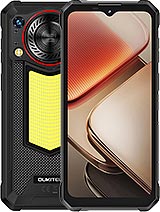
WP53 S
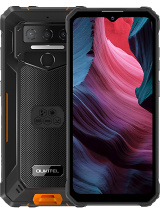
WP23 Plus
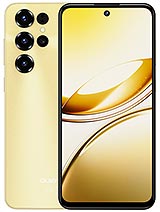
C68

C61
Galaxy M17e