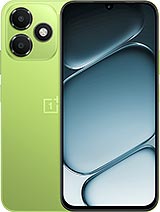
Oukitel WP63 review
This phone suits outdoor workers, rescue teams, and off-grid users who need days of battery life and genuine durability in harsh conditions. Anyone else—professionals who want a tough phone but still use it as a daily driver, casual users, or anyone who cares about display sharpness or video quality—should look elsewhere.
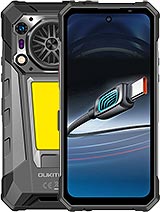
This review is written with AI assistance from Oukitel’s published specifications and public benchmark data for the Oukitel WP63, and the rating is spec-based. GoSolo does not physically test devices; where we estimate real-world behaviour such as battery life or charge time, we say so. How we rate phones.
Overview
The WP63 is a rugged workhorse with a 20,000 mAh battery and genuine durability credentials (IP68/IP69K, drop-tested, infrared night vision), but the 720p display, entry-level chipset, and slow 1080p video recording hold it back from being more than a specialized tool for outdoor workers and off-grid users.
Design & build
The WP63 is a tank. At 629 grams and 27mm thick, it's heavier and chunkier than any mainstream phone, but that heft serves a purpose. The IP68/IP69K rating (immersible to 1.5m for 30 minutes, surviving high-pressure jets) is legitimate, not marketing fluff, and MIL-STD-810H compliance means it has been drop-tested to military standards at 1.5m. The dedicated flood flashlight with an igniter is a detail that signals this phone was built for rescue workers, engineers, and people who spend days away from mains power in harsh terrain. Gorilla Glass 5 is basic by 2026 standards, but on a rugged device, tempered edges matter more than glass generation. The triple SIM option (two nano slots plus eSIM) caters to remote workers who need coverage across regions. The trade-off is obvious: you are buying a tool, not a pocket-friendly device. The design unapologetically prioritizes survival over elegance.
Display
The 6.67-inch IPS LCD panel operates at 120Hz and 480 nits, which should handle sunlight reasonably well for outdoor use. However, the 720 x 1600 resolution (263 ppi) is the real problem. By 2026, even budget rugged competitors are shipping 1080p or better, and 263 ppi in a 6.67-inch phone means text and icons look soft at arm's length. A 74% screen-to-body ratio is fair for a rugged frame, but the low pixel density undercuts the otherwise solid brightness and refresh rate. For fieldwork like reading maps, blueprints, or inspection reports, this display feels like a step backward. The 120Hz refresh helps with scrolling smoothness, but you are still working with a sub-HD canvas that squints your eyes.
Performance
The Unisoc T8200 (6nm, octa-core with two 2.3GHz A76 and six 2.1GHz A55 cores) is an entry-level chip by 2026 standards. Paired with 8GB RAM and UFS 2.2 storage, it runs Android 16 and everyday apps (email, maps, productivity tools, calls) without stalling. Do not expect gaming, video editing, or heavy multitasking to feel snappy. The Mali-G57 MC2 GPU will struggle with 3D workloads. For the intended audience—fieldworkers, surveyors, rescue crews—this is adequate. These users are not installing the latest games; they need a device that answers calls, logs data, and stays alive for days. The chipset hits that target squarely, but does not exceed it. It is honest-to-goodness entry-level compute wrapped in a rugged shell.
Camera
The dual rear setup is unconventional and purpose-built. The 64MP f/1.8 wide lens (1/2.0" sensor) handles daylight capture and offers autofocus, which is the core shooter. More interesting is the 8MP night-vision camera with four infrared LEDs, a feature borrowed from rescue and inspection work. In low light with the IR lamps active, this camera can reveal details humans cannot see, invaluable for search-and-rescue, electrical inspection, or checking for heat loss. The 20MP selfie camera is competent enough. The glaring weakness is video: 1080p at 30fps is slow and visibly dated in 2026, when rivals now routinely offer 4K or at least 1080p at 60fps. For quick field documentation or emergency footage, this limitation stings. The LED flash and HDR modes are standard. The infrared novelty aside, the main camera is ordinary; the video recording is genuinely poor.
Battery & charging
The 20,000 mAh battery is the headline. For a phone this size and weight, it is realistic to achieve 3 to 4 days of light-to-moderate use, or 1.5 to 2 days of heavy work (navigation, radio, constant calls and data). In remote fieldwork where charging stations are a luxury, this longevity is the WP63's strongest card. The spec sheet lists 33W charging, which is modest by today's standards (most flagships hit 60W to 120W), so a full recharge from empty will take about 1.5 to 2 hours. For a phone aimed at users who work outdoors for days, fast charging is not a priority; capacity matters far more. The battery chemistry and thermal management are not detailed, but the sheer mAh count is the point here.
Software & features
Android 16 is current and the WP63 ships with it fresh. Side-mounted fingerprint, GPS/GALILEO/GLONASS/BDS positioning, NFC, FM radio, Bluetooth 5.0, and Wi-Fi ac round out the basics. The FM radio is a quirk; most modern flagships dropped it, but it is handy in regions where mobile networks fail. Dual-band Wi-Fi and NFC for contactless payments or data transfer are welcome. The software experience is not detailed in the spec, but stock Android on entry-level hardware typically means minimal bloat and straightforward updates. For a fieldwork phone, clean software that stays out of the way is the right approach.
Value & verdict-context
The WP63 is not a value phone in the sense of 'bang for buck' in the mainstream market. It is a specialist tool priced for a niche: outdoor workers, rescue teams, remote surveyors, and people living off-grid. If you are shopping for a regular smartphone, the 720p display, weak video recording, entry-level performance, and 629g weight will frustrate you. But if you genuinely work in the field, depend on a phone for days without power, or need infrared night vision, the rugged build, 20,000 mAh battery, and purpose-built cameras justify the heft and the compromises. Expect to pay a rugged-phone premium; durability and bespoke hardware cost more than plastic and glass. The benchmark is other rugged phones (Caterpillar, JCB, etc.), not mainstream flagships or budget handsets. Against that bar, the WP63 holds its own, though the 720p display lags even specialist rivals.
Verdict
This phone suits outdoor workers, rescue teams, and off-grid users who need days of battery life and genuine durability in harsh conditions. Anyone else—professionals who want a tough phone but still use it as a daily driver, casual users, or anyone who cares about display sharpness or video quality—should look elsewhere.
- 20,000 mAh battery with real multi-day endurance for fieldwork
- IP68/IP69K rating plus MIL-STD-810H compliance and dedicated flood flashlight make it genuinely rugged
- Dual thermal and night-vision cameras (64MP main + 8MP IR) are rare in consumer phones and useful for rescue, inspection, and low-light work
- Unisoc T8200 with 8GB RAM handles Android 16 and everyday apps without stalling
- 720p display at 263 ppi is dim and dated even for a 2026 rugged phone; rivals now offer 1080p or better
- 1080p video at 30fps is severely limiting for any content creation or modern documentation
- 629g weight and 27mm thickness make it a pocket anchor; far bulkier than non-rugged phones of the same era
Oukitel WP63 Key Specifications
The essentials at a glance. See the full spec sheet.
| Released | 2026, September |
|---|---|
| Display | 6.67 inches, 107.4 cm2 (~74.1% screen-to-body ratio), IPS LCD, 120Hz, 480 nits |
| Resolution | 720 x 1600 pixels, 20:9 ratio (~263 ppi density) |
| Chipset | Unisoc T8200 (6 nm) |
| RAM & storage | 256GB 8GB RAM |
| Main camera | 64 MP, f/1.8, (wide), 1/2.0", AF 8 MP, f/2.0, (night vision), 4 infrared night vision lights |
| Selfie camera | 20 MP, f/2.0, (wide), 1/2.78" |
| Battery | 20000 mAh |
| Software | Android 16 |
| Dimensions | 174.7 x 83 x 27 mm (6.88 x 3.27 x 1.06 in) |
| Weight | 629 g (1.39 lb) |
| Durability | IP68/IP69K dust tight and water resistant (high pressure water jets; immersible up to 1.5m for 30 min) Drop resistant up to 1.5m MIL-STD-810H compliant Dedicated flood flashlight built-in igniter |
| Network | GSM / HSPA / LTE / 5G |
| NFC | Yes |
| USB | USB Type-C 2.0, OTG |
Oukitel WP63 FAQ
Common questions, answered from the spec sheet.
Does the WP63 support 5G?
Yes. The WP63 supports 5G networks.
What chipset does the WP63 use?
The WP63 runs on the Unisoc T8200 (6 nm).
What display does the WP63 have?
A 6.67 inches, 107.4 cm2 (~74.1% screen-to-body ratio) IPS LCD, 120Hz, 480 nits, 720 x 1600 pixels, 20:9 ratio (~263 ppi density).
How big is the WP63 battery?
The WP63 has a 20000 mAh battery.
Does the WP63 have NFC?
Yes, the WP63 has NFC.
Is the WP63 water resistant?
The WP63 carries a IP68/IP69K dust tight and water resistant (high pressure water jets; immersible up to 1.5m for 30 min) Drop resistant up to 1.5m MIL-STD-810H compliant Dedicated flood flashlight built-in igniter rating.
Does the WP63 support a microSD card?
Yes, the WP63 supports expandable storage (microSDXC (uses shared SIM slot)).
Alternatives to consider
If the WP63 isn’t quite right, these are the closest calls.
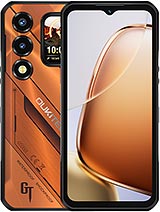
WP66
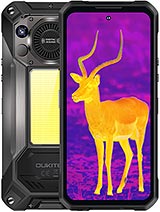
WP61 Ultra
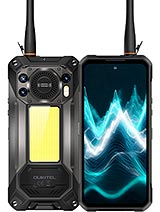
WP61 Plus
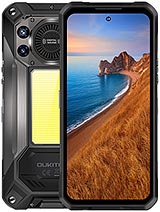
WP61
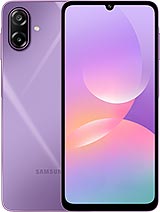
Galaxy M17e