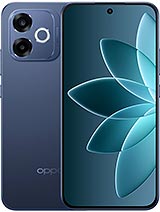
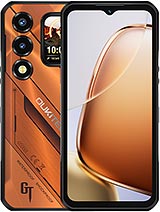
Oukitel WP66 review
The WP66 suits anyone who actually works outdoors or in harsh environments and values durability over speed; it's honest about its trade-offs and delivers reliable long battery life. If you want a fast phone with quick charging and flagship features, look elsewhere—a standard midrange phone will beat it on every metric except ruggedness and battery endurance.
This review is written with AI assistance from Oukitel’s published specifications and public benchmark data for the Oukitel WP66, and the rating is spec-based. GoSolo does not physically test devices; where we estimate real-world behaviour such as battery life or charge time, we say so. How we rate phones.
Overview
The Oukitel WP66 is a rugged phone with a rear screen and genuine durability credentials: IP68/IP69K, MIL-STD-810H, and a 11,000 mAh battery. It sacrifices charging speed and raw performance for long use and serious drop/water protection—a solid choice for outdoor workers, but the weak processor and slow charging hold it back at this price.
Design & build
At 359 grams and 15.8 mm thick, the WP66 is unapologetically chunky. That mass is earned: IP68/IP69K rating withstands high-pressure water jets and submersion to 1.5 metres for 30 minutes, plus MIL-STD-810H compliance means it survives drops up to 1.5 metres. The rear 1.81-inch display is a neat touch—a quick-glance screen for time, notifications, or a camera preview without unfolding or waking the main panel. The design caters to field work and outdoor use, not pocket aesthetics. If you need a phone that survives jobsites and doesn't break in a backpack, the weight and thickness are justified. If you want a sleek daily carry, this is the wrong path.
Display
The 6.6-inch IPS LCD delivers 1080 by 2408 pixels at 20:9, which works out to 400 ppi. At arm's length, text and icons are sharp enough; side by side with rivals' OLED screens, it looks flat and dim. The 450 nits brightness handles outdoor glare acceptably, and 120Hz refresh is smooth for scrolling, but the LCD panel ages worse than OLED under the sun. For a $410 phone in 2026, a 1080p LCD is serviceable but not a strength. The rear screen's 240 by 284 resolution is purely functional—useful for notifications and quick info, not for any real task beyond that.
Performance
The Mediatek Dimensity 7025 is mainstream midrange: it handles daily apps, messaging, video, and light work without lag. Gaming and heavy multitasking will stutter. The octa-core setup (two A78 cores at 2.5 GHz, six A55 cores at 2.0 GHz) is efficient rather than fast. 12 GB RAM is ample for most users, and 256 GB storage is more than enough; the microSD slot lets you add more if needed. For someone checking email, browsing, and using maps, this chip works fine. For content creators or players of demanding games, it will feel slow. It's exactly what you should expect at this price and durability tier.
Software
Android 15 ships here as standard. Oukitel's customizations are light, which is welcome—you get close to stock Android without bloat. Updates will likely be sporadic, as is typical for the brand; don't count on years of OS upgrades. For day-to-day use, Android 15 feels complete and responsive.
Camera
The main sensor is a 108 MP, f/1.9 wide camera with PDAF on a 1/1.8-inch sensor. In good light, it captures sharp detail and the wide aperture helps in dusk. Indoors or at night, the large sensor helps but cannot fully compensate for a modest processor and lack of night mode computational support. The 2 MP macro is a throwaway. The 32 MP selfie is adequate for video calls and the rare selfie. Video tops out at 1440p 30fps, which is acceptable but not impressive. For a phone marketed toward outdoor work, the camera is secondary; it takes usable photos in daylight and video calls work, but don't expect flagship-level shots.
Battery & charging
The 11,000 mAh battery is the standout. In mixed use, you'll comfortably get two days, and light users will stretch that further. On paper, 33W charging sounds adequate, but rivals now offer 65W to 120W at similar prices, and 33W means nearly two hours to fully charge from empty. That slowness is the trade-off for durability and battery size. If you're on a jobsite without easy access to power, the long battery life is your salvation. If you charge daily anyway, the slow charger will frustrate you.
Value & verdict
At $410, the WP66 is a competent rugged phone for someone who needs genuine durability and doesn't prioritize speed or camera quality. The real-world battery life is a genuine win, and the durability certifications are not marketing—IP69K and MIL-STD-810H are expensive to achieve. The rear screen is a nice feature that justifies the extra thickness. The weak spots are the slow charger and midrange processor, both of which are acceptable if your priority is outdoor use and reliability. For office work and typical daily use, rival non-rugged phones at the same price will feel faster and charge quicker. For field workers, delivery drivers, construction crews, and anyone who destroys phones through drops and dust, the WP66 makes sense.
Verdict
The WP66 suits anyone who actually works outdoors or in harsh environments and values durability over speed; it's honest about its trade-offs and delivers reliable long battery life. If you want a fast phone with quick charging and flagship features, look elsewhere—a standard midrange phone will beat it on every metric except ruggedness and battery endurance.
- 11,000 mAh battery and modest hardware deliver 2 days of real use without stretching claims
- Genuinely rugged: IP69K water jets, 1.5m drop rating, MIL-STD-810H certified, rear screen for quick glance without pocket damage
- Dual SIM, microSD expansion, FM radio, and 5G bands cover most carriers and regions
- At $410, solid value for someone who actually needs durability over speed
- 33W charging is slow even for 2026 standards; rivals in this bracket now hit 65W or higher
- Dimensity 7025 is mainstream midrange—handles apps and video fine but struggles with demanding games and heavy multitasking
- 120Hz 1080p LCD feels ordinary for this price; many rivals offer OLED or higher refresh
Oukitel WP66 Key Specifications
The essentials at a glance. See the full spec sheet.
| Released | 2026, January 15 |
|---|---|
| Display | 6.6 inches, 104.9 cm2 (~75.2% screen-to-body ratio), IPS LCD, 120Hz, 450 nits |
| Resolution | 1080 x 2408 pixels, 20:9 ratio (~400 ppi density) |
| Chipset | Mediatek Dimensity 7025 (6 nm) |
| RAM & storage | 256GB 12GB RAM |
| Main camera | 108 MP, f/1.9, (wide), 1/1.8", PDAF 2 MP (macro) |
| Selfie camera | 32 MP, f/2.2, (wide), 1/2.74" |
| Battery | 11000 mAh |
| Software | Android 15 |
| Dimensions | 172.2 x 81 x 15.8 mm (6.78 x 3.19 x 0.62 in) |
| Weight | 359 g (12.66 oz) |
| Durability | IP68/IP69K dust tight and water resistant (high pressure water jets; immersible up to 1.5m for 30 min) Drop resistant up to 1.5m MIL-STD-810H compliant |
| Network | GSM / HSPA / LTE / 5G |
| NFC | Yes |
| USB | USB Type-C 2.0, OTG |
Oukitel WP66 FAQ
Common questions, answered from the spec sheet.
Does the WP66 support 5G?
Yes. The WP66 supports 5G networks.
What chipset does the WP66 use?
The WP66 runs on the Mediatek Dimensity 7025 (6 nm).
What display does the WP66 have?
A 6.6 inches, 104.9 cm2 (~75.2% screen-to-body ratio) IPS LCD, 120Hz, 450 nits, 1080 x 2408 pixels, 20:9 ratio (~400 ppi density).
How big is the WP66 battery?
The WP66 has a 11000 mAh battery.
Does the WP66 have NFC?
Yes, the WP66 has NFC.
Is the WP66 water resistant?
The WP66 carries a IP68/IP69K dust tight and water resistant (high pressure water jets; immersible up to 1.5m for 30 min) Drop resistant up to 1.5m MIL-STD-810H compliant rating.
Does the WP66 support a microSD card?
Yes, the WP66 supports expandable storage (microSDXC (uses shared SIM slot)).
Alternatives to consider
If the WP66 isn’t quite right, these are the closest calls.
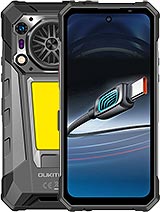
WP63
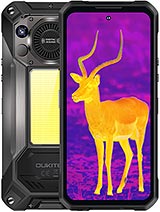
WP61 Ultra
WP61 Plus
WP61

Galaxy A18 4G