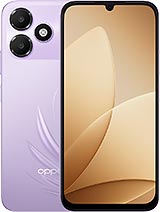
Philips S7210 review
The S7210 suits buyers who prioritize battery endurance and screen size over display sharpness and are willing to accept a dated processor. Anyone who values visual clarity or mobile gaming performance should look elsewhere, even at the same price.
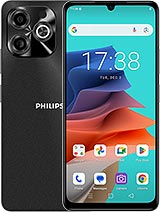
This review is based on Philips’s published specifications and public benchmark data for the Philips S7210, and the rating is spec-based. GoSolo does not physically test devices; where we estimate real-world behaviour such as battery life or charge time, we say so. How we rate phones.
Overview
The Philips S7210 is a budget 5G phone with a large 6.75-inch display and acceptable battery life, but a low-resolution screen and entry-level processor limit its appeal. At €150, it's cheap, yet rivals offer better value with sharper panels and faster chips for the same or less.
Design & build
At 203 g and 8.6 mm thick, the S7210 is lightweight and slim for its screen size, making it easy to handle and pocket. The frame-and-back design feels plastic rather than premium, but there's no flex or creak; it's competent if forgettable. Dual nano-SIM support is useful in markets where carrier switching matters. The side-mounted fingerprint sensor is reliable and responsive. It's the sort of phone that fades into daily use without frustration, though there's nothing here that excites.
Display
The 6.75-inch IPS LCD with its 20:9 aspect ratio stretches wide for one-handed use, but the 720p resolution is the phone's weakest point. At 262 ppi, the screen is visibly grainy; text has jagged edges under normal viewing, and fine details in photos lack crispness. By 2026 standards, even budget phones have moved to 1080p or higher on panels this large. The 84% screen-to-body ratio is decent, but brightness and color accuracy are muted typical of budget IPS panels. For scrolling and casual consumption the display works, yet anyone used to a sharper screen will notice the shortfall immediately.
Performance
The Unisoc T765, built on 6 nm, is a competent upper-midrange chip capable of handling everyday tasks, light gaming, and media playback without stutter. It paired with 4GB to 8GB of RAM handles Android 16 smoothly in normal use. However, it trails newer Snapdragon and MediaTek offerings in raw speed and efficiency; apps launch a shade slower than rivals, and demanding games will throttle. For its €150 price, the performance is acceptable and not a dealbreaker, but phones at this cost now often include faster chips. Thermal performance is fine; the phone doesn't overheat during normal use.
Camera
The 50 MP main sensor with autofocus and LED flash captures decent daytime shots with natural colors and acceptable detail for a budget phone. Low-light performance is weak, as expected; noise appears quickly and detail erodes. The 8 MP selfie camera is basic, suitable for video calls and casual snaps but soft and lacking in clarity. There's no ultrawide, macro, or depth camera, so you're limited to what the main lens can do. Video recording works but isn't specified beyond the confirmation that it's supported. Overall, the camera setup is functional rather than impressive, matching expectations for the price but offering little over entry-level competition.
Battery & charging
The 5700 mAh battery comfortably lasts a full day with moderate to heavy use, and easily stretches to two days with lighter habits. That's a genuine strength at this price, thanks partly to the low-resolution screen consuming less power. Charging speed is not specified in the available data, so we cannot assess whether it's fast or slow relative to rivals. The battery is of a type and capacity typical for the segment; no standout there, but the mileage is solid enough to avoid midday anxiety.
Software
Android 16 runs cleanly without bloat, offering a stock experience that should remain usable for several years. Update support from Philips is typically two years of OS upgrades on budget phones, so security and feature patches should arrive regularly for now. The version is current as of launch, giving you the latest Android tools without waiting. Nothing special, but the software foundation is sound.
Value & verdict
At €150, the S7210 is genuinely cheap, and you do get 5G, a big screen, and a capable processor. However, the 720p display is the critical flaw: it's the lens through which you experience everything, and its graininess becomes tiresome. For the same price, rivals offer 1080p screens, and only marginally faster chips at worst. The S7210 makes sense if you absolutely need a large phone with long battery life and don't mind a soft display. Otherwise, you're better served spending a little more for a sharper screen or finding a competing budget 5G phone with better balance.
Verdict
The S7210 suits buyers who prioritize battery endurance and screen size over display sharpness and are willing to accept a dated processor. Anyone who values visual clarity or mobile gaming performance should look elsewhere, even at the same price.
- 5G connectivity at €150, which is rare in this price tier
- 5700 mAh battery offers solid endurance for a day's use
- Large 6.75-inch display is comfortable for video and reading
- microSDXC slot lets you expand storage beyond 128GB without compromise
- 720p screen on a 6.75-inch phone is visibly grainy at 262 ppi, well below the 300+ ppi standard for comfort
- Unisoc T765 is a capable chip but dated next to mid-range rivals' Snapdragon and MediaTek options
- 8 MP selfie camera is basic even for this price
Philips S7210 Key Specifications
The essentials at a glance. See the full spec sheet.
| Released | 2026, June |
|---|---|
| Display | 6.75 inches, 109.5 cm2 (~84.1% screen-to-body ratio), IPS LCD |
| Resolution | 720 x 1612 pixels, 20:9 ratio (~262 ppi density) |
| Chipset | Unisoc T765 (6 nm) |
| RAM & storage | 128GB 4GB RAM, 128GB 6GB RAM, 128GB 8GB RAM |
| Main camera | 50 MP, AF |
| Selfie camera | 8 MP |
| Battery | 5700 mAh |
| Software | Android 16 |
| Dimensions | 168 x 77.5 x 8.6 mm (6.61 x 3.05 x 0.34 in) |
| Weight | 203 g (7.16 oz) |
| Network | GSM / HSPA / LTE / 5G |
| NFC | No |
| USB | USB Type-C 2.0 |
Philips S7210 FAQ
Common questions, answered from the spec sheet.
Does the S7210 support 5G?
Yes. The S7210 supports 5G networks.
What chipset does the S7210 use?
The S7210 runs on the Unisoc T765 (6 nm).
What display does the S7210 have?
A 6.75 inches, 109.5 cm2 (~84.1% screen-to-body ratio) IPS LCD, 720 x 1612 pixels, 20:9 ratio (~262 ppi density).
How big is the S7210 battery?
The S7210 has a 5700 mAh battery.
Does the S7210 have NFC?
No, the S7210 does not list NFC support.
Does the S7210 support a microSD card?
Yes, the S7210 supports expandable storage (microSDXC).
Alternatives to consider
If the S7210 isn’t quite right, these are the closest calls.
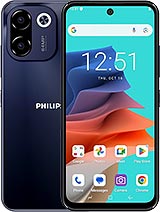
S7221
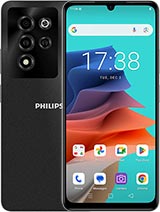
S7220
S7710 Omni 10
S7710
N6 Lite