Realme C51s review
The C51s suits users who prioritize battery life and a large screen for media over display sharpness and gaming performance, particularly in regions where charging is unreliable. Anyone who games regularly, edits video, or demands a sharp display should spend a bit more on a 1080p phone or a faster chipset.
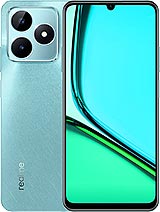
This review is based on Realme’s published specifications and public benchmark data for the Realme C51s, and the rating is spec-based. GoSolo does not physically test devices; where we estimate real-world behaviour such as battery life or charge time, we say so. How we rate phones.
Overview
The Realme C51s is a large, heavy phone built for all-day battery life on a tight budget—its 5000mAh cell and 33W charging are its main pulls, but the 720p display and entry-level Unisoc chipset mean you are trading screen sharpness and gaming speed for longevity. At around 100 EUR, it suits users who live in regions with unreliable power and need a phone that simply lasts, rather than impresses.
Design & build
The C51s is hefty and tall. At 182g and 167.2mm, it occupies a lot of pocket real estate, and the 6.74-inch screen only amplifies that sprawl. Glass front with plastic frame and back feels economical, but the IP54 dust and splash rating is a genuine addition for a 100 EUR phone—it will survive a rinse or brief rain without drama. The weight and thickness are not penalties for the price; they are consequences of fitting a 5000mAh battery into a thin frame. Side-mounted fingerprint is responsive and a practical choice when the phone is this wide.
Display
The 6.74-inch IPS LCD is punchy at 90Hz but hampered by 720p resolution. At 260 ppi, small text feels soft compared to a 1080p screen at the same size, and web browsing exposes the lack of sharpness—UI elements are legible but lack finesse. The 560-nit peak brightness is adequate for indoor and midday outdoor use. The 90Hz refresh smooths scrolling noticeably and makes the interface feel more fluid than a 60Hz budget phone, which is one of the few areas where Realme did not compromise. For video playback and media consumption, the size is the real strength; for reading or detail work, you will notice the resolution limit.
Performance
The Unisoc Tiger T612 is built for efficiency, not speed. It handles messaging, email, social media, and light browsing without stuttering, and the dual-SIM setup works smoothly. Demanding 3D games or video editing will cause frame drops and lag—this is not a gaming phone. Video playback and streaming apps run fine at 1080p, and multitasking with a handful of apps stays responsive. For everyday work and light productivity, the 6GB RAM and 128GB storage (with microSD expansion) are sufficient. Anyone expecting console-grade gaming or heavy multitasking should look elsewhere.
Software
Android 13 with Realme UI runs as expected on entry-level hardware. Updates and long-term support are not Realme's strong suit at this price tier, so expect one or two Android version bumps over the phone's life, then security patches. The interface is cluttered with pre-installed apps and bloatware, which can bog down the limited storage and RAM if you do not clean it up. Disabling or uninstalling unnecessary apps is essential to keep performance snappy.
Camera
The 50MP main camera sensor is modest. It shoots decent daylight photos at f/1.8 with PDAF, but the small 0.64µm pixels and basic processor mean dynamic range is flat and low-light detail is thin. HDR helps but does not rescue shadow recovery. The 5MP selfie camera is strictly functional for video calls and social media. Video is capped at 1080p 30fps, which is standard for this class but feels dated in 2024 when mid-range competitors offer 60fps. The camera performs its job on a sunny afternoon; do not expect results that rival mid-range phones.
Battery & charging
The 5000mAh cell is the phone's defining strength. Light use—email, messaging, web browsing—easily lasts two days. Heavy streaming or gaming drains it to evening on a single charge, which is still solid for this class. The 33W SuperVOOC charging is respectable for the price and fills the battery in roughly 45 to 60 minutes. A 20-minute charge brings you from empty to half full, useful for quick top-ups before leaving the house. This combination of large battery and decent charging speed is why the phone appeals to regions where power access is inconsistent or unreliable.
Value & verdict-context
At 100 EUR, the C51s is competing with other budget entry-level phones that cut corners on display or CPU. The choice here is clear: screen sharpness and gaming power versus battery endurance and size. For users in markets where a phone must survive two to three days between charges and where large screens are prized for media consumption, the C51s makes sense. It is not a flagship killer, nor does it try to be. It is a practical machine for work, messaging, and streaming, not a daily creative tool or gaming device. The microSD slot and NFC are welcome perks, and the IP54 rating adds durability without inflating the price. Those seeking a sharper display or faster performance at the same price should cross-shop rivals with 1080p screens or MediaTek chips, but they will sacrifice battery life to get there.
Verdict
The C51s suits users who prioritize battery life and a large screen for media over display sharpness and gaming performance, particularly in regions where charging is unreliable. Anyone who games regularly, edits video, or demands a sharp display should spend a bit more on a 1080p phone or a faster chipset.
- 5000mAh battery delivers two days on light use and supports the selling point of all-day endurance
- 33W SuperVOOC charging fills the cell in roughly 45–60 minutes, practical for quick top-ups
- 6.74-inch large screen with 90Hz refresh makes scrolling fluid and media consumption immersive for the price
- IP54 dust and splash resistance is a real feature for 100 EUR, not a given at this price
- 720p resolution on a 6.74-inch display leaves text and UI elements noticeably softer than 1080p rivals in the same price range
- Unisoc T612 chipset stumbles with gaming and heavy multitasking; demanding apps lag visibly
- Heavy at 182g and tall, making it unwieldy for single-hand use and tricky for smaller pockets
Realme C51s Key Specifications
The essentials at a glance. See the full spec sheet.
| Released | 2024, March 15 |
|---|---|
| Display | 6.74 inches, 109.7 cm2 (~85.5% screen-to-body ratio), IPS LCD, 90Hz, 560 nits (peak) |
| Resolution | 720 x 1600 pixels, 20:9 ratio (~260 ppi density) |
| Chipset | Unisoc Tiger T612 (12 nm) |
| RAM & storage | 128GB 6GB RAM |
| Main camera | 50 MP, f/1.8, 27mm (wide), 1/2.76", 0.64µm, PDAF Auxiliary lens |
| Selfie camera | 5 MP, f/2.2, 28mm (wide), 1/5.0", 1.12µm |
| Battery | 5000 mAh |
| Charging | SuperVOOC up to 33 W |
| Software | Android 13, Realme UI |
| Dimensions | 167.2 x 76.7 x 7.5 mm (6.58 x 3.02 x 0.30 in) |
| Weight | 182 g (6.42 oz) |
| Build | Glass front, plastic frame, plastic back |
| Durability | IP54 dust protected and water resistant (water splashes) |
| Network | GSM / HSPA / LTE |
| NFC | Yes, 360˚ (market/region dependent) |
| USB | USB Type-C |
Realme C51s FAQ
Common questions, answered from the spec sheet.
Does the C51s support 5G?
No. The C51s tops out at GSM / HSPA / LTE, without 5G.
What chipset does the C51s use?
The C51s runs on the Unisoc Tiger T612 (12 nm).
What display does the C51s have?
A 6.74 inches, 109.7 cm2 (~85.5% screen-to-body ratio) IPS LCD, 90Hz, 560 nits (peak), 720 x 1600 pixels, 20:9 ratio (~260 ppi density).
How big is the C51s battery?
The C51s has a 5000 mAh battery. Charging is rated at SuperVOOC up to 33 W.
Does the C51s have NFC?
Yes, the C51s has NFC.
Is the C51s water resistant?
The C51s carries a IP54 dust protected and water resistant (water splashes) rating.
Does the C51s support a microSD card?
Yes, the C51s supports expandable storage (microSDXC (dedicated slot)).
Alternatives to consider
If the C51s isn’t quite right, these are the closest calls.

Note 50

C65s

14x 5G

Narzo 70x
Galaxy M06 5G