Realme C53 review
The C53 suits someone who spends hours reading, browsing, and messaging on a phone and rarely plugs in midday; it also fits travellers and people in regions where the headphone jack and dual SIM matter. Skip it if you care about video recording, responsive gaming, fast charging, or processing speed—the ageing chipset and limited video chops are deliberate corners cut to keep the price low, and no amount of battery capacity makes up for that."

This review is based on Realme’s published specifications and public benchmark data for the Realme C53, and the rating is spec-based. GoSolo does not physically test devices; where we estimate real-world behaviour such as battery life or charge time, we say so. How we rate phones.
Overview
The Realme C53 is a 2023 budget phone built around a large 6.74-inch display and 5000mAh battery, aimed at users who value screen real estate and endurance over raw power. It delivers solid everyday performance and a decent main camera, but the aging chipset, sluggish video recording, and slower charging reflect its entry-level positioning.
Design & build
The C53 is a tall, slim slab at 7.5mm thick and 182g, with a glass front but plastic frame and back—the kind of construction you expect at this price. It lands as neither light nor heavy by 2023 standards, though the plastic rear will attract fingerprints and flex slightly if you press the edges. The side-mounted fingerprint sensor and dual SIM tray are practical additions. Nothing here stands out as a strength or a glaring weakness; it is simply a budget phone that feels like a budget phone.
Display
The 6.74-inch screen is the star. At 1080p resolution and 390ppi, sharpness is adequate for a device this size; text reads cleanly and photos don't look grainy. The 90Hz refresh rate—twice the standard 60Hz—makes scrolling feel smoother than most rivals in this tier, a small but noticeable step up for browsing and social media. The IPS panel is not as vivid or bright as OLED, and 560 nits peak brightness means glare in direct sunlight, but it handles outdoor reading in normal light without issue. For a budget buyer prioritizing screen space over colour punch, this is a genuine win.
Performance
The Unisoc Tiger T612 is a 2021-era chip that slots below entry-level flagships and even some older mid-rangers. Email, messaging, YouTube, and light web browsing run without stutters, and it handles day-to-day app switching without dramatic lag. Push it toward demanding 3D games, photo editing, or sustained multitasking and you will feel the ceiling; demanding games may drop frames or demand compromise graphics settings. By 2023, this chipset was already dated for a phone costing €170, but it is not so weak as to be unusable. If your use is light to moderate, you will not often notice the limitation. If you plan to record video while gaming or juggle five apps at once, this is not the phone for you.
Camera
The 50MP main sensor with f/1.8 aperture and phase-detect autofocus captures well-lit scenes with solid detail and colour reproduction. Autofocus snaps fast in bright conditions, and the wide field of view suits everyday snapshots. The lack of a zoom lens or ultra-wide is not a dealbreaker at this price, but it does limit creative framing. The 8MP selfie camera is adequate for video calls and social posts, nothing more. The real limiter is video: 1080p at 30fps only, with no stabilization, no 4K, no slow-motion. If video recording is even a secondary interest, this camera will disappoint. For still photos on a sunny day, it punches above its weight; for anything else, manage expectations.
Battery & charging
The 5000mAh cell is a genuine strength for the price. Moderate daily use—light browsing, social media, messaging, some video—stretches past 24 hours. Heavy streaming or gaming cuts that closer to a full day, but you will not wake up to a dead phone after overnight standby. The 33W charging speed is respectable but increasingly mid-pack: rivals now push 65-100W at similar prices, so a full charge takes about an hour from empty instead of 20 to 30 minutes. The 50% milestone in 31 minutes is handy for a quick top-up before leaving home, but this is not a phone that gets you back to full in a hurried break. For a budget device, the battery endurance is the main draw; the charging speed is the compromise.
Software & connectivity
Android 13 with Realme's UI overlay is functional but unremarkable—no major bloat, though a few pre-installed Realme apps clutter the home screen. Updates are likely, given Realme's track record, though you should not expect years of support on a budget C-series phone. Connectivity is 4G LTE only; no 5G, and no NFC for mobile payments. Wi-Fi ac and Bluetooth 5.0 are modern standards, and dual-band Wi-Fi is useful. The USB Type-C 2.0 port is slower than current standards, though that rarely matters in practice unless you transfer large photo files frequently. The inclusion of a 3.5mm headphone jack is rare and welcome, especially in emerging markets where wired audio is still common.
Value & verdict context
At €170, the C53 competes in the entry-level space where storage, battery, and screen size matter more than raw speed or camera versatility. The large display and 5000mAh battery are genuine strengths that justify the asking price if you value endurance and screen real estate. The camera is solid for daylight stills, and the microSD slot lets you expand storage cheaply. Where the C53 falters is speed (the chipset is visibly dated by 2023), charging (rivals are now faster), and video recording (1080p 30fps is a hard ceiling). If your main concern is scrolling through social media on a large screen without constantly hunting for a charger, the C53 delivers. If you record video, play games, or need a zippy interface, look elsewhere.
Verdict
The C53 suits someone who spends hours reading, browsing, and messaging on a phone and rarely plugs in midday; it also fits travellers and people in regions where the headphone jack and dual SIM matter. Skip it if you care about video recording, responsive gaming, fast charging, or processing speed—the ageing chipset and limited video chops are deliberate corners cut to keep the price low, and no amount of battery capacity makes up for that."
- 5000mAh battery comfortably stretches past a full day on moderate use, and the dedicated microSD slot lets you hoard photos without filling internal storage
- 6.74-inch 90Hz IPS display is unusually large for the price, with 560-nit peak brightness enough for outdoor use and smooth scrolling
- 50MP main camera with f/1.8 aperture and phase-detect autofocus captures sharp, detailed stills in daylight without the sensor-size bloat that makes phones thick
- Includes a 3.5mm headphone jack and dual SIM support, handy for regional travel or keeping work and personal lines separate
- Unisoc Tiger T612 is a budget chip from 2021; it copes with everyday apps but stumbles on demanding games and stalls under heavy multitasking
- Video tops out at 1080p 30fps—no slow-motion, no 4K, no stabilization—making it unsuitable if you record often or care about video quality
- 33W charging sounds reasonable until you cross-shop: rivals at this price now hit 65-100W, so topping up takes the better part of an hour instead of 20 minutes
Realme C53 Key Specifications
The essentials at a glance. See the full spec sheet.
| Released | 2023, May 31 |
|---|---|
| Display | 6.74 inches, 109.7 cm2 (~85.5% screen-to-body ratio), IPS LCD, 90Hz, 560 nits (peak) |
| Resolution | 1080 x 2400 pixels, 20:9 ratio (~390 ppi density) |
| Chipset | Unisoc Tiger T612 (12 nm) |
| RAM & storage | 128GB 6GB RAM, 256GB 8GB RAM |
| Main camera | 50 MP, f/1.8, (wide), PDAF Auxiliary lens |
| Selfie camera | 8 MP, f/2.0, (wide) |
| Battery | 5000 mAh |
| Charging | 33W wired, 50% in 31 min |
| Software | Android 13, Realme UI T |
| Dimensions | 167.3 x 76.7 x 7.5 mm (6.59 x 3.02 x 0.30 in) |
| Weight | 182 g (6.42 oz) |
| Build | Glass front, plastic frame, plastic back |
| Network | GSM / HSPA / LTE |
| NFC | No |
| USB | USB Type-C 2.0 |
Realme C53 FAQ
Common questions, answered from the spec sheet.
Does the C53 support 5G?
No. The C53 tops out at GSM / HSPA / LTE, without 5G.
What chipset does the C53 use?
The C53 runs on the Unisoc Tiger T612 (12 nm).
What display does the C53 have?
A 6.74 inches, 109.7 cm2 (~85.5% screen-to-body ratio) IPS LCD, 90Hz, 560 nits (peak), 1080 x 2400 pixels, 20:9 ratio (~390 ppi density).
How big is the C53 battery?
The C53 has a 5000 mAh battery. Charging is rated at 33W wired, 50% in 31 min.
Does the C53 have NFC?
No, the C53 does not list NFC support.
Does the C53 support a microSD card?
Yes, the C53 supports expandable storage (microSDXC (dedicated slot)).
Does the C53 have a headphone jack?
Yes, the C53 has a 3.5mm headphone jack.
Alternatives to consider
If the C53 isn’t quite right, these are the closest calls.

C55

C67 5G

Narzo N53

Narzo N55
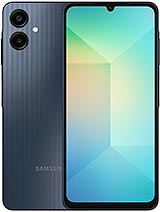
Galaxy A06