Realme C55 review
The C55 makes sense for someone in a cost-sensitive market who watches a lot of video on their phone, can't stand charging every afternoon, and doesn't game seriously or need 5G. Anyone expecting a all-rounder that gambles less on battery and more on performance or camera should look elsewhere, and users relying on content creation or high-frame-rate gaming will feel the midrange ceiling quickly.

This review is based on Realme’s published specifications and public benchmark data for the Realme C55, and the rating is spec-based. GoSolo does not physically test devices; where we estimate real-world behaviour such as battery life or charge time, we say so. How we rate phones.
Overview
The Realme C55 is a budget phone built around a large 6.72-inch screen and a 5000 mAh battery that will comfortably outlast a day of normal use. It's not for anyone who games seriously or needs raw power, but it does everyday tasks without fuss and costs less than many 5G phones that do far less with their battery.
Design & build
At 189.5g and 7.9mm thick, the C55 feels solid without being light. The glass front, plastic frame, and plastic back are the formula for phones at this price, and they do the job—no complaints about build quality, just don't expect premium materials. The side-mounted fingerprint sensor is convenient in one hand, and the phone fits most pockets without protest. NFC is present (region-dependent), which matters in markets where tap-to-pay is actually used. The dual-SIM layout with a dedicated microSD slot is the practical choice for this market.
Display
This is where Realme spent its budget wisely. The 6.72-inch 1080p IPS LCD is large enough to matter for video watching and web browsing without needing to lean in. Scrolling through apps and social feeds benefits from the 90Hz refresh—not as silky as a 120Hz flagship, but noticeably smoother than 60Hz budget phones from a few years back. At 680 nits peak brightness, outdoor readability is decent, though direct sunlight does create glare; it's not as punchy as an OLED, but good enough for practical use. The 20:9 aspect ratio and 86.7% screen-to-body ratio mean less bezel waste, and at 392 ppi you won't see pixels at normal viewing distance.
Performance
The Helio G88 is a mainstream midrange chip that does what it's built for: runs Android, handles messaging apps, email, and social media without lag. With 4GB RAM, the base model will feel tighter once you install a handful of games and apps; jump to 6GB or 8GB and you'll have breathing room. The real limit is gaming. Light games like Candy Crush and lower-settings MOBAs run fine, but anything demanding—Genshin Impact, recent Call of Duty—will stutter or require graphics turned down to unplayable levels. Everyday tasks are quick enough that you won't spend time waiting, but the performance ceiling is clearly visible. The dedicated microSD slot is useful here since internal storage fills fast once you have apps, photos, and videos.
Camera
The 64MP main camera with PDAF is genuinely useful in daylight: autofocus locks fast, and shot detail is sharp at normal framing distances. HDR works as expected, lifting shadows in high-contrast scenes. The auxiliary lens is vague in the spec, but the single sensor approach means no ultrawide, which is the real miss for a budget phone in 2023—wide-angle shots have to come from the main camera's crop, and that costs detail. Video maxes out at 1080p@60fps, so anything shot at distance will look softer on a larger screen. The 8MP selfie is entry-level; it's fine for messaging but not for video calls or content creation. Expect a quality step down from the main camera and soft detail.
Battery & charging
The 5000 mAh cell is the phone's strongest card. On a day of moderate use—messaging, social media, calls, a bit of video—you'll reach the evening with 15–20% remaining and comfortably push into the next day on light use. Heavy video streaming or gaming eats into this buffer, but for the target buyer, the battery endurance is a relief compared to having to hunt for a charger mid-afternoon. The 33W charging tops the battery to 50% in 29 minutes and full charge in roughly 50 minutes, which is fast enough to grab a meaningful charge before heading out. No wireless charging, but that's not a miss at this price tier. The wired connection is reliable, and Type-C is standard now.
Software & connectivity
Realme UI 4.0 over Android 13 is stable and will receive updates, but it does lean on bloatware and aggressive notifications out of the box—expect to disable a few apps to clean things up. The core Android experience is present and usable. Connectivity is LTE only, so 5G is out; Wi-Fi ac (Wi-Fi 5) and Bluetooth 5.2 handle local speeds well, and GPS with quad-band support is solid. The lack of 5G is not a drawback for most buyers in this price bracket—LTE is still the standard in many markets—but it does mean future-proofing is limited. NFC support for tap-to-pay is a nice addition in supported regions.
Value & verdict
At around 530 EUR, the C55 sits in a crowded segment, but it makes a pragmatic choice for buyers who prioritize screen size and battery life over raw speed or camera reach. It's not fighting for the title of best budget phone; it's accepting its role and doing it well. The large display and all-day-plus battery are real benefits for people who watch video, read, or just want to charge less often. The Helio G88 won't excite anyone chasing performance, and there's no 5G or camera zoom to show off, but if your use case is messaging, social media, calls, and light gaming, you'll get through the day without compromise. The trade-off is clarity: you're paying for battery and screen, not processing muscle or imaging reach.
Verdict
The C55 makes sense for someone in a cost-sensitive market who watches a lot of video on their phone, can't stand charging every afternoon, and doesn't game seriously or need 5G. Anyone expecting a all-rounder that gambles less on battery and more on performance or camera should look elsewhere, and users relying on content creation or high-frame-rate gaming will feel the midrange ceiling quickly.
- 5000 mAh battery stretches to a full day and a half on moderate use, with 33W charging getting to half in 29 minutes—genuinely practical for cost-conscious buyers who can't fret about daily top-ups.
- 6.72-inch 1080p display with 90Hz refresh and reasonable outdoor brightness (680 nits peak) makes the screen the standout feature: scrolling is smooth, text is sharp at 392 ppi, and video watching feels less cramped than smaller budget phones.
- Dedicated microSD slot lets you expand storage without sacrificing a SIM card, and the 256GB base option with 8GB RAM eliminates the tight-quarters feeling of entry-level budget phones.
- Helio G88 chipset handles light games (MOBAs at lower settings, puzzle games) and everyday apps without stuttering, which is enough for buyers who don't care about the latest 3D titles.
- Helio G88 and Mali-G52 GPU stall on demanding 3D games and can't push high frame rates, so anyone serious about gaming or running heavy apps will feel the bottleneck quickly.
- No 5G, no ultrawide camera, no 4K video—all standard omissions at this price, but they add up: you're paying for battery and screen size, not camera reach or connectivity speed.
- 8 MP selfie and 1080p video cap mean distant subjects lose detail and video calls are disappointingly soft, a real limitation if you stream or create content regularly.
Realme C55 Key Specifications
The essentials at a glance. See the full spec sheet.
| Released | 2023, March 07 |
|---|---|
| Display | 6.72 inches, 109.0 cm2 (~86.7% screen-to-body ratio), IPS LCD, 90Hz, 680 nits (peak) |
| Resolution | 1080 x 2400 pixels, 20:9 ratio (~392 ppi density) |
| Chipset | Mediatek MT6769H Helio G88 (12 nm) |
| RAM & storage | 64GB 4GB RAM, 64GB 6GB RAM, 128GB 4GB RAM, 128GB 6GB RAM, 128GB 8GB RAM, 256GB 8GB RAM |
| Main camera | 64 MP, (wide), 1/2.0", PDAF Auxiliary lens |
| Selfie camera | 8 MP, (wide) |
| Battery | 5000 mAh |
| Charging | 33W wired, 50% in 29 min |
| Software | Android 13, Realme UI 4.0 |
| Dimensions | 165.6 x 75.9 x 7.9 mm (6.52 x 2.99 x 0.31 in) |
| Weight | 189.5 g (6.70 oz) |
| Build | Glass front, plastic frame, plastic back |
| Network | GSM / HSPA / LTE |
| NFC | Yes, 360˚ (market/region dependent) |
| USB | USB Type-C 2.0 |
Realme C55 FAQ
Common questions, answered from the spec sheet.
Does the C55 support 5G?
No. The C55 tops out at GSM / HSPA / LTE, without 5G.
What chipset does the C55 use?
The C55 runs on the Mediatek MT6769H Helio G88 (12 nm).
What display does the C55 have?
A 6.72 inches, 109.0 cm2 (~86.7% screen-to-body ratio) IPS LCD, 90Hz, 680 nits (peak), 1080 x 2400 pixels, 20:9 ratio (~392 ppi density).
How big is the C55 battery?
The C55 has a 5000 mAh battery. Charging is rated at 33W wired, 50% in 29 min.
Does the C55 have NFC?
Yes, the C55 has NFC.
Does the C55 support a microSD card?
Yes, the C55 supports expandable storage (microSDXC (dedicated slot)).
Does the C55 have a headphone jack?
Yes, the C55 has a 3.5mm headphone jack.
Alternatives to consider
If the C55 isn’t quite right, these are the closest calls.
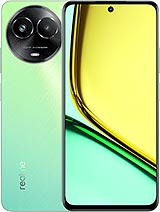
C67 5G

Narzo N55
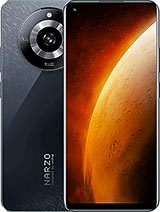
Narzo 60 5G
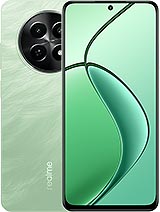
C65 5G
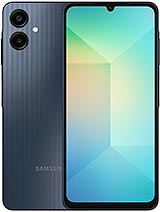
Galaxy A06