Realme Narzo 70 Turbo review
The Narzo 70 Turbo suits people who prioritize a large, bright, smooth display and all-day battery life over raw speed; it is a reliable everyday phone for apps, browsing, and video. Gamers and heavy multitaskers should look for a rival with a faster chipset, as thermal throttling will frustrate sustained use."

This review is based on Realme’s published specifications and public benchmark data for the Realme Narzo 70 Turbo, and the rating is spec-based. GoSolo does not physically test devices; where we estimate real-world behaviour such as battery life or charge time, we say so. How we rate phones.
Overview
The Narzo 70 Turbo is a thin, bright 6.67-inch phone aimed squarely at everyday use: strong OLED display and all-day battery at budget pricing, but the Dimensity 7300 Energy and 45W charging feel half a step behind rivals at this price. It is solid value for apps and video, but gaming or speed-hungry users will notice the ceiling.
Design & build
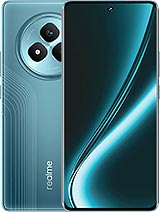
At 7.6mm thick and 185g, the Narzo 70 Turbo slides into pockets and bags with minimal fuss—a refreshing contrast to the chunky mid-range norm. The frame and back feel sturdy enough for casual handling, though the exact materials are unspecified on the sheet. IP65 dust and splash resistance is present, which is above average for this bracket; you can take brief splashes and survive dust, though not full submersion. The phone is narrow enough (74.7mm wide) for most people to grip one-handed, and the vibrant colour options—Turbo Yellow, Green, Purple—signal a playful design language. Nothing here is expensive or premium-feeling, but for €180 the build does not shortchange you.
Display
This is where the Narzo 70 Turbo punches hardest. The 6.67-inch OLED panel is 1080p (395 ppi), which is lower than flagship density, yet the image sharpness is acceptable for a screen this size and distance; text and icons remain crisp in normal use. The headline is brightness: 2000 nits peak and 600 nits typical output means the display stays legible in direct sunlight without jacking up gamma, a real advantage over budget LCDs that wash out. Colour reproduction on OLED is inherently rich, and 120Hz refresh smooths scrolling and video playback noticeably compared to 60Hz rivals. HDR content plays back with the depth OLED can deliver. For someone who watches video, browses social media, or simply wants a phone that does not blind them indoors and does not vanish in daylight, this display justifies looking at the Narzo 70 Turbo alone.
Performance
The Mediatek Dimensity 7300 Energy is upper-midrange, competent for daily app switching, browsing, and casual gaming at medium settings. Alongside 6GB to 12GB RAM (depending on SKU) and UFS 3.1 storage, basic multitasking feels responsive, and media apps load without hesitation. Where it falters is sustained load: intensive games like Call of Duty Mobile at high settings or long video editing tasks trigger thermal throttling within 10–15 minutes, dropping frame rates or lowering performance. For someone who plays light titles (turn-based, puzzle, 2D games) or keeps sessions short, this is a non-issue. Heavy mobile gamers and power users who run multiple browser tabs with heavy sites will notice the phone slow down. Context matters: at €180, you are not buying a gaming beast, but rivals at the same price are beginning to ship faster 7050 or even Snapdragon chips with better sustained thermal control.
Software
Android 14 with Realme UI 5.0 is current and clean compared to the bloat some Asian brands ship. The overlay is minimal and responsive, not layered with unwanted pre-installed apps. Security updates are a question mark at this price; Realme has a patchy track record on long-term OS updates in the budget tier, so expect two major upgrades (to Android 16) rather than three or four like a flagship. For everyday use out of the box, it works smoothly, but long-term software support may lag what you want if you plan to keep the phone beyond two years.
Camera
The 50MP main shooter with f/1.8 aperture and PDAF is a sensible choice for a budget midrange. In daylight, photos are well-exposed and acceptably sharp, with HDR processing balancing bright and dark areas. PDAF autofocus helps with moving subjects, and LED flash handles dim indoor scenes. The weakness shows in low light: the relatively small sensor (size not listed, but typical for the 50MP trend) and lack of computational night mode mean shadows stay noisy and detail washes out when ambient light drops. The 16MP selfie camera on f/2.4 is standard fare, fine for video calls and casual selfies. There is no ultrawide or telephoto lens, which is not a surprise at this price, but it does mean you cannot frame wider landscapes or close in on distant subjects. For someone who snaps occasional photos and does not expect professional-grade output, this is fit for purpose; serious mobile photographers will want more versatility or a brighter primary sensor.
Battery & charging
The 5000 mAh battery is a sweet spot: large enough to push through 18–22 hours of typical mixed use (messaging, browsing, video, music), yet not so bloated that the phone becomes heavy. Gamers or constant social media users will see that drop to 12–15 hours depending on intensity. 45W SuperVOOC charging tops the battery in roughly 30–50 minutes, which is quick by older measures but now standard at this price tier—rivals often advertise 65W or 100W. Battery degrades over time, so expect real-world charge times to creep toward 40–60 minutes after 18–24 months of daily use. For commuters and office workers, one full charge per day is the baseline; road warriors or remote workers may want to carry a power bank.
Value & verdict
At €180, the Narzo 70 Turbo sits in the hotly contested budget midrange. The OLED display and slim build are genuine strengths that command respect, and the all-day battery rarely disappoints. The Dimensity 7300 Energy is where it stumbles: it trails the performance ceiling of competing processors, and 45W charging is no longer a headline feature at this price. For a student or casual user who reads email, watches video, and plays light games on a daily commute, this phone delivers comfort and clarity without fuss. For gamers, video editors, or anyone who wants to squeeze every ounce of speed out of their budget, look for a Dimensity 7050 or Snapdragon rival—they cost about the same and throttle less aggressively. The Narzo 70 Turbo is best bought with realistic expectations: a solid, bright, thin phone for everyday use, not a performance bargain.
Verdict
The Narzo 70 Turbo suits people who prioritize a large, bright, smooth display and all-day battery life over raw speed; it is a reliable everyday phone for apps, browsing, and video. Gamers and heavy multitaskers should look for a rival with a faster chipset, as thermal throttling will frustrate sustained use."
- OLED display with 120Hz refresh and 2000 nits peak brightness—clearly readable outdoors and smooth for scrolling, well ahead of typical budget midrange panels
- 5000 mAh battery lasting roughly 18–22 hours on mixed use, with 45W SuperVOOC charging that empties to full in about 30–50 minutes
- Slim at 7.6mm and light at 185g without sacrificing IP65 dust and splash resistance, plus microSD expansion for the storage-conscious
- 5G, dual SIM, Wi-Fi 6, and Bluetooth 5.4—solid connectivity stack for the price tier
- Dimensity 7300 Energy trails rivals' 7050 or 7200 chips in sustained performance; gaming beyond medium settings causes throttle
- 50MP camera is competent but unremarkable—no ultrawide, and low-light capture lags phones at similar price with brighter sensors or computational aids
- 45W charging, while fast by older standards, sits behind 65–100W offerings now common at €150–200
Realme Narzo 70 Turbo Key Specifications
The essentials at a glance. See the full spec sheet.
| Released | 2024, September 09 |
|---|---|
| Display | 6.67 inches, 107.4 cm2 (~88.9% screen-to-body ratio), OLED, 120Hz, HDR, 600 nits (typ), 2000 nits (peak) |
| Resolution | 1080 x 2400 pixels, 20:9 ratio (~395 ppi density) |
| Chipset | Mediatek Dimensity 7300 Energy (4 nm) |
| RAM & storage | 128GB 6GB RAM, 128GB 8GB RAM, 256GB 12GB RAM |
| Main camera | 50 MP, f/1.8, 27mm (wide), PDAF Auxiliary lenses |
| Selfie camera | 16 MP, f/2.4, (wide) |
| Battery | 5000 mAh |
| Charging | SuperVOOC up to 45 W |
| Software | Android 14, Realme UI 5.0 |
| Dimensions | 161.7 x 74.7 x 7.6 mm (6.37 x 2.94 x 0.30 in) |
| Weight | 185 g (6.53 oz) |
| Durability | IP65 dust tight and water resistant (low pressure water jets) |
| Network | GSM / HSPA / LTE / 5G |
| NFC | No |
| USB | USB Type-C 2.0 |
Realme Narzo 70 Turbo FAQ
Common questions, answered from the spec sheet.
Does the Narzo 70 Turbo support 5G?
Yes. The Narzo 70 Turbo supports 5G networks.
What chipset does the Narzo 70 Turbo use?
The Narzo 70 Turbo runs on the Mediatek Dimensity 7300 Energy (4 nm).
What display does the Narzo 70 Turbo have?
A 6.67 inches, 107.4 cm2 (~88.9% screen-to-body ratio) OLED, 120Hz, HDR, 600 nits (typ), 2000 nits (peak), 1080 x 2400 pixels, 20:9 ratio (~395 ppi density).
How big is the Narzo 70 Turbo battery?
The Narzo 70 Turbo has a 5000 mAh battery. Charging is rated at SuperVOOC up to 45 W.
Does the Narzo 70 Turbo have NFC?
No, the Narzo 70 Turbo does not list NFC support.
Is the Narzo 70 Turbo water resistant?
The Narzo 70 Turbo carries a IP65 dust tight and water resistant (low pressure water jets) rating.
Does the Narzo 70 Turbo support a microSD card?
Yes, the Narzo 70 Turbo supports expandable storage (microSDXC (uses shared SIM slot)).
Alternatives to consider
If the Narzo 70 Turbo isn’t quite right, these are the closest calls.

Narzo 70 5G

Narzo 70 Pro 5G
Narzo 80 Pro 5G

Narzo 90 5G

Galaxy A35 5G