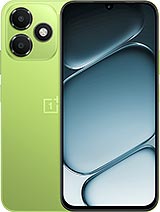
Realme Note 80 review
The Realme Note 80 suits someone who lives in a tight budget, uses a phone for browsing, messaging, and occasional media, and values a large screen and multi-day battery over performance. If you demand smooth gaming, rapid app loading, or ambitious photography, this phone will disappoint quickly—save for something in the €200 range instead.
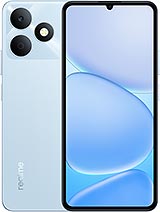
This review is written with AI assistance from Realme’s published specifications and public benchmark data for the Realme Note 80, and the rating is spec-based. GoSolo does not physically test devices; where we estimate real-world behaviour such as battery life or charge time, we say so. How we rate phones.
Overview
The Realme Note 80 is a lean, light budget phone with a sharp 90Hz display and solid battery that survives a full day without charge hunting. It's built to a price, but what you get—especially the large screen and 6300mAh cell—makes it honest value for under €100 in markets where every euro counts.
Design & build
At 197 grams and 7.9mm thick, the Note 80 feels light in hand—a real relief when you're using a 6.74-inch phone all day. The glass front and plastic frame and back cheapen it visually, but Realme didn't skip protection: IP54 dust and splash resistance plus MIL-STD-810H toughening means it can survive a tumble or splashed coffee without drama. The display bezel is visible but proportioned fairly for 2026, and the fingerprint sensor on the side is more reliable than under-display options in this segment. Dual SIM support (with a shared microSD slot) keeps flexibility intact. It won't turn heads, but it won't fall apart either.
Display
The 6.74-inch LCD is the strongest card in this phone's hand. At 90Hz refresh, scrolling feels responsive—a genuine step above the 60Hz standard in budget rivals. Brightness hits 450 nits, which is actually enough to read outdoors without squinting, a rarity at this price. The 260ppi density from 720 x 1600 resolution is low, so text and icons have a slight softness, but the 20:9 aspect ratio makes the screen tall and usable for reading. Panda Glass protection is adequate. For someone buying at sub-€100, this display punches above its price tag and justifies the larger footprint.
Performance
The Unisoc T7250 is unambiguously entry-level. This chip handles basic tasks—browsing, messaging, YouTube—without freezing, but switch to gaming, editing, or heavy multitasking and you hit a wall. Apps open noticeably slower than phones at €200 or above, and juggling multiple apps in memory shows lag. The Mali-G57 GPU is particularly weak for graphics. 4GB RAM is the bottleneck too; most competitors in this slot now offer 6GB or 8GB. Android 15 and Realme UI 5.0 run cleanly enough, but the hardware drags them down. This is a phone for light use and patience—don't expect snappiness.
Camera
The 8MP main camera and 5MP selfie are functional but uninspired. Daytime shots have acceptable sharpness and decent color under bright sun, but the fixed focus and basic f/2.0 aperture mean night shots are soft and grainy. There's no ultrawide, no macro, no depth sensor—just a single lens doing single-duty. The selfie camera is purely adequate for video calls. 1080p video at 30fps is the limit, which feels dated next to phones that shoot 4K at this price. Panorama mode is present but rarely useful. If you take photos regularly, this camera will frustrate you; treat it as a document scanner, not a creative tool.
Battery & charging
The 6300mAh cell is genuinely large for the frame size and pays dividends in real-world stamina. Light use nets two full days; moderate use gets a solid day and a half before hunting for a charger. That's a meaningful advantage over rivals cramming 4500–5000mAh into the same space. The downside is 15W charging, which is glacially slow. The spec sheet doesn't list actual charge time, but based on capacity and wattage, expect two to three hours from flat to full—not a dealbreaker if you charge overnight, but a real drag on road trips or when you need a quick top-up between meetings.
Software
Realme UI 5.0 on Android 15 arrives clean and bloat-free compared to some rivals. The skin is lightweight and doesn't add much visual drama, which actually suits this hardware; there's no pretense here. Security updates will likely arrive regularly given Realme's track record, and a small, underpowered phone benefits from regular patches more than a flagship does. Long-term software support is unspecified, but expect mainstream support for two years and security patches for three—typical for budget Realme phones. No surprises, no nasty bloat, just Android that does its job.
Value & verdict-context
At under €100, the Realme Note 80 occupies a specific niche: people who need a large, durable screen and long battery without paying €200+. For that mission, it largely succeeds. The 6.74-inch 90Hz display alone would justify picking this over a 60Hz competitor at the same price, and the 6300mAh battery means fewer charge hunts per week. Durability at IP54 is rare this cheap. The real catch is the Unisoc T7250, which lags noticeably and will age poorly; in two years, this chip will feel genuinely slow. Cameras are basic and the 15W charging is slow. But context matters: in regions where €100 phones are common buys, this delivers more screen, more battery life, and more ruggedness than what you'd typically get. It's not a hidden gem, but it's an honest budget phone that doesn't insult your intelligence.
Verdict
The Realme Note 80 suits someone who lives in a tight budget, uses a phone for browsing, messaging, and occasional media, and values a large screen and multi-day battery over performance. If you demand smooth gaming, rapid app loading, or ambitious photography, this phone will disappoint quickly—save for something in the €200 range instead.
- 6.74-inch 90Hz LCD display with 450 nits brightness, rare for the sub-€100 bracket and genuinely useful for outdoor reading
- 6300mAh battery with realistic multi-day stamina between charges, a real advantage in a market where budget phones often bail by afternoon
- Light at 197g with a 7.9mm frame, easy to pocket and carry all day without fatigue
- IP54 rating plus MIL-STD-810H certification shows Realme took durability seriously at this price point
- Unisoc T7250 is entry-level and shows it: expect noticeable lag in heavy apps and multitasking, not just slower but visibly behind midrange rivals
- Cameras are minimal (8MP main, 5MP selfie) with no ultrawide; shots are serviceable in daylight but lack detail and color depth compared to phones at double the price
- 15W charging is slow by any standard and no spec sheet lists actual charge time, but a 6300mAh battery from flat will take two-plus hours
Realme Note 80 Key Specifications
The essentials at a glance. See the full spec sheet.
| Released | 2026, March 10 |
|---|---|
| Display | 6.74 inches, 109.7 cm2 (~85.6% screen-to-body ratio), LCD, 90Hz, 450 nits |
| Resolution | 720 x 1600 pixels, 20:9 ratio (~260 ppi density) |
| Chipset | Unisoc T7250 (12 nm) |
| RAM & storage | 64GB 4GB RAM, 128GB 4GB RAM |
| Main camera | 8 MP, f/2.0, (wide), AF |
| Selfie camera | 5 MP, f/2.2, (wide) |
| Battery | 6300 mAh |
| Software | Android 15, Realme UI 5.0 |
| Dimensions | 167.2 x 76.6 x 7.9 mm (6.58 x 3.02 x 0.31 in) |
| Weight | 197 g (6.95 oz) |
| Build | Glass front, plastic frame, plastic back |
| Durability | IP54 dust protected and water resistant (water splashes) MIL-STD-810H compliant* * does not guarantee ruggedness or use in extreme conditions |
| Network | GSM / HSPA / LTE |
| NFC | No |
| USB | USB Type-C 2.0 |
Realme Note 80 FAQ
Common questions, answered from the spec sheet.
Does the Note 80 support 5G?
No. The Note 80 tops out at GSM / HSPA / LTE, without 5G.
What chipset does the Note 80 use?
The Note 80 runs on the Unisoc T7250 (12 nm).
What display does the Note 80 have?
A 6.74 inches, 109.7 cm2 (~85.6% screen-to-body ratio) LCD, 90Hz, 450 nits, 720 x 1600 pixels, 20:9 ratio (~260 ppi density).
How big is the Note 80 battery?
The Note 80 has a 6300 mAh battery.
Does the Note 80 have NFC?
No, the Note 80 does not list NFC support.
Is the Note 80 water resistant?
The Note 80 carries a IP54 dust protected and water resistant (water splashes) MIL-STD-810H compliant* * does not guarantee ruggedness or use in extreme conditions rating.
Does the Note 80 support a microSD card?
Yes, the Note 80 supports expandable storage (microSDXC (uses shared SIM slot)).
Alternatives to consider
If the Note 80 isn’t quite right, these are the closest calls.
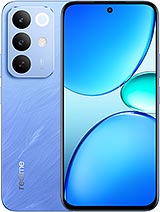
C85 4G
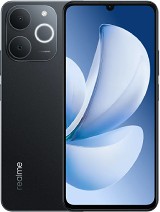
P4 Lite 4G
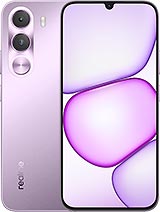
C100i

C100x
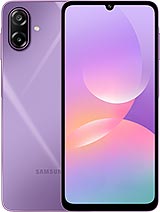
Galaxy M17e