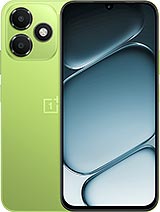
Realme P3 Lite 4G review
The P3 Lite suits someone who prioritises battery endurance and low cost over performance and modern display quality, particularly in regions where charging access is inconsistent. Anyone wanting smooth gaming, fast charging, or a sharp 1080p screen should spend a bit more—the gaps here are not minor compromises but fundamental choices made in favour of battery life and price.
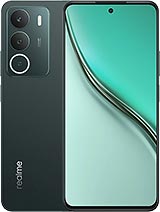
This review is written with AI assistance from Realme’s published specifications and public benchmark data for the Realme P3 Lite 4G, and the rating is spec-based. GoSolo does not physically test devices; where we estimate real-world behaviour such as battery life or charge time, we say so. How we rate phones.
Overview
The Realme P3 Lite 4G is a budget phone that prioritises long battery life and a large screen over raw power—a sensible choice for users in markets where daily charging isn't convenient. The low price (about €140) and 6300 mAh battery make it practical for light daily use, but the weak processor and poor 15W charging mean it's strictly for calls, messaging, and social media, not gaming or content creation.
Design & build
At 196g and 7.8mm thick, the P3 Lite is slim and reasonably light for its 6.67-inch frame. The design itself is plain—nothing stands out visually—but it feels compact enough to grip single-handed in most conditions. Dust-tight and water-splash resistant (water splashes according to the spec) with drop resistance up to 1.5 metres gives you basic everyday durability. This is a phone built to survive routine pocket duty and a splash of rain, not to thrive in truly harsh conditions. For €140, the build gets the job done without pretence.
Display
The 6.67-inch IPS LCD panel runs at 120Hz and peaks at 725 nits, which keeps scrolling buttery and readability strong in bright light. However, the 720 x 1604 resolution works out to only 264 pixels per inch, a noticeable step below the 1080p standard now common at this price. Text, icons, and photos appear softer and less sharp than rivals with higher pixel density. For video watching and web browsing it does not feel as poor as the number suggests, but side-by-side with a 1080p phone at similar cost, the softness is real. The 120Hz refresh is the display's saving grace—scrolling feels fluid and responsive, which helps mask the lower resolution in daily use.
Performance
The Unisoc T7250 with 2x1.8 GHz Cortex-A75 cores and a Mali-G57 MP1 GPU is firmly entry-level. Apps like WhatsApp, Instagram, and email run without stutter, and casual browsing is fine. Anything beyond that—heavy games, video editing, large file transfers—reveals the limits quickly. The chipset was designed to hit a price point, not to perform, and it does exactly that. Paired with up to 8GB of RAM, the combination offers enough breathing room for light multitasking without frustration, but do not expect smooth gameplay or complex app performance. For the target audience (light daily use), this is appropriate; for anyone with heavier demands, it will feel constrained.
Software
Android 15 with Realme UI 6.0 is current and sensible for a 2025 budget phone. Realme's custom layer is usually bloat-light compared to some rivals, though the specific version on this model was not tested here. The 64GB base storage is tight if you keep many apps, but the 128GB and 256GB options give more room, and the microSD slot means you are never forced to uninstall anything to make space. Software experience should be stable and straightforward—no cutting-edge features, but no major headaches either.
Camera
The 50MP main sensor with f/1.8 aperture and PDAF sounds promising on paper, but camera quality at this price is often limited by optics and processing rather than megapixel count alone. Video maxes out at 1080p at 30fps, which is functional but not ambitious. The 5MP selfie camera is basic and sufficient for video calls. Without hands-on testing of image quality, it is hard to judge whether the sensor delivers crisp daylight shots or struggles in low light, but budget phones in this class rarely excel in either. Photos should be acceptable for sharing on social media; serious mobile photography or night work will disappoint.
Battery & charging
The 6300 mAh battery is the P3 Lite's real strength. In light to moderate use—messaging, social media, a bit of browsing—expect comfortably 1.5 to 2 days between charges, which is rare and valuable at any price. Heavy use might pull that down to a single day, but the capacity still trumps most rivals at this cost. The downside is VOOC charging at just 15 watts. A full charge takes about 1.5 to 2 hours, which is slow by current standards; phones at €140–150 increasingly come with 30W or faster. If you are in a market where frequent power banks are common and wall outlets are scarce, the two-day endurance makes up for sluggish charging. If you often need a quick top-up, this is a weakness.
Value & verdict-context
At approximately €140, the P3 Lite is pitched as an ultrabudget phone. It delivers on the core promise—long battery life, a large usable screen, basic connectivity, and no need to choose between storage options thanks to microSD. The trade-offs are real: weak processor, low resolution, slow charging, and no standout features. This is not a phone trying to be a flagship on a budget; it is a phone designed to be a secondary device or a first phone for someone who mainly calls, texts, and browses. In its narrow lane it competes well. If you need gaming, snappy performance, fast charging, or a sharp display, look elsewhere. For markets where offline battery life is precious and processor power is overkill, the P3 Lite makes straightforward sense.
Verdict
The P3 Lite suits someone who prioritises battery endurance and low cost over performance and modern display quality, particularly in regions where charging access is inconsistent. Anyone wanting smooth gaming, fast charging, or a sharp 1080p screen should spend a bit more—the gaps here are not minor compromises but fundamental choices made in favour of battery life and price.
- 6300 mAh battery easily lasts a full day under normal use and beats rivals at this price on endurance.
- Large 6.67-inch 120Hz display is smooth to scroll and bright enough for outdoor visibility despite the low 720p resolution.
- Dedicated microSD slot for expandable storage; no need to sacrifice internal space for more photos and files.
- Includes NFC and modern Android 15, so you get practical connectivity features in a phone that costs less than €150.
- 15W charging is slow even for a budget phone; rivals now hit 30W at this price, so a full charge takes roughly 1.5 to 2 hours.
- 720p resolution on a 6.67-inch screen makes text and graphics noticeably soft compared to standard 1080p phones at similar prices.
- Unisoc T7250 chipset is underpowered for anything beyond messaging and light social media; avoid heavy games or multitasking.
Realme P3 Lite 4G Key Specifications
The essentials at a glance. See the full spec sheet.
| Released | 2025, September 30 |
|---|---|
| Display | 6.67 inches, 107.2 cm2 (~85.2% screen-to-body ratio), IPS LCD, 120Hz, 725 nits (peak) |
| Resolution | 720 x 1604 pixels, 20:9 ratio (~264 ppi density) |
| Chipset | Unisoc T7250 (12 nm) |
| RAM & storage | 64GB 4GB RAM, 128GB 4GB RAM, 128GB 6GB RAM, 128GB 8GB RAM, 256GB 8GB RAM |
| Main camera | 50 MP, f/1.8, 27mm (wide), 1/2.88", PDAF |
| Selfie camera | 5 MP, f/2.2, 27mm (wide), 1/5.0" |
| Battery | 6300 mAh |
| Charging | VOOC up to 15 W |
| Software | Android 15, Realme UI 6.0 |
| Dimensions | 165.8 x 75.9 x 7.8 mm (6.53 x 2.99 x 0.31 in) |
| Weight | 196 g (6.91 oz) |
| Durability | Dust tight and water resistant (water splashes) Drop resistant up to 1.5m |
| Network | GSM / HSPA / LTE |
| NFC | Yes, 360˚ (market/region dependent) |
| USB | USB Type-C 2.0, OTG |
Realme P3 Lite 4G FAQ
Common questions, answered from the spec sheet.
Does the P3 Lite 4G support 5G?
No. The P3 Lite 4G tops out at GSM / HSPA / LTE, without 5G.
What chipset does the P3 Lite 4G use?
The P3 Lite 4G runs on the Unisoc T7250 (12 nm).
What display does the P3 Lite 4G have?
A 6.67 inches, 107.2 cm2 (~85.2% screen-to-body ratio) IPS LCD, 120Hz, 725 nits (peak), 720 x 1604 pixels, 20:9 ratio (~264 ppi density).
How big is the P3 Lite 4G battery?
The P3 Lite 4G has a 6300 mAh battery. Charging is rated at VOOC up to 15 W.
Does the P3 Lite 4G have NFC?
Yes, the P3 Lite 4G has NFC.
Is the P3 Lite 4G water resistant?
The P3 Lite 4G carries a Dust tight and water resistant (water splashes) Drop resistant up to 1.5m rating.
Does the P3 Lite 4G support a microSD card?
Yes, the P3 Lite 4G supports expandable storage (microSDXC (dedicated slot)).
Alternatives to consider
If the P3 Lite 4G isn’t quite right, these are the closest calls.
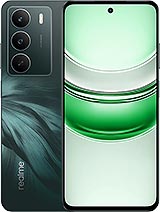
P3 Lite 5G
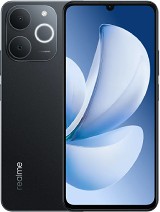
P4 Lite 4G

Narzo 80 Lite 5G
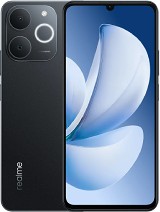
Narzo 80 Lite
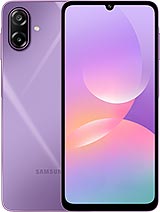
Galaxy M17e