Realme P4R review
The P4R suits buyers who commute, work in dusty or wet environments, and want a phone that keeps up with everyday use without fuss or fear of drops. Anyone prioritising cameras, cutting-edge gaming, or high-resolution visuals should look at competitors with stronger optics and sharper screens.

This review is written with AI assistance from Realme’s published specifications and public benchmark data for the Realme P4R, and the rating is spec-based. GoSolo does not physically test devices; where we estimate real-world behaviour such as battery life or charge time, we say so. How we rate phones.
Overview
The Realme P4R is a big-screened budget 5G phone with a crisp 144Hz display and punchy processor, built to last with IP65 rating and an 8000mAh battery. It's a sensible option for everyday users who value screen fluidity and battery endurance over cutting-edge power, though the 720p resolution and plastic build remind you of the price.
Design & build
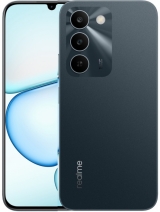
At 224 grams and 8.8mm thin, the P4R is light and pocketable. The glass-front plastic-frame combo is standard for this bracket, though it feels cheap to hold when rivals at ₹18k are moving toward aluminum. IP65 rating and MIL-STD-810H compliance are genuine plusses; this phone can take dust and water splashes without flinching, and the 1.8m drop rating is better than most budget competition. The RGB notification light is a quirk that actually works. Three matte finishes (Silver, Titanium, Lavender) avoid the fingerprint-magnet trap. Overall, it is built to be durable, not to impress.
Display
The 6.81-inch IPS LCD is the star here. 144Hz is rare below ₹20k, and it shows in scrolling through apps and web pages—the motion is noticeably smoother than 90Hz rivals. Brightness of 975 nits typical and 1200 in high-brightness mode is more than enough for outdoor use. The real weakness is the 720p resolution: at 254 ppi, text is sharp enough, but fine detail does blur if you look closely, and watching videos or playing games exposes the pixel grid. For 2026, most competitors at this price have hit 1080p; Realme is making a trade-off to hit the 144Hz target cheaply. The Panda-1681 glass is a mid-tier protection standard, so expect it to scratch with keys or gravel.
Performance
The Mediatek Dimensity 6300 is a mainstream midrange chip for 2026—capable but not swift. Apps open in a normal pace, social media feeds scroll without hitching, and light gaming (Genshin Impact at lower settings, Call of Duty Mobile) runs acceptably. Expect no issues with video playback, navigation, or messaging. This is not a phone for heavy multitasking or demanding games at high frames; a flagship user jumping to this would feel the throttle. The 4GB RAM entry variant is tight for longer app chains, but the 6GB and 8GB options breathe easier. UFS 2.2 storage is dated; rivals now use UFS 4.0, so file transfers and app installs are slower than they should be.
Software
Android 16 with Realme UI 7.0 is clean and current. The interface is clutter-free, with most bloat confined to a folder you can ignore. Updates will matter here: Realme's track record on budget phones is patchy, so longevity beyond three years is uncertain. The side-mounted fingerprint sensor is snappy and reliable, a sensible choice over an in-display reader at this price point where the savings matter.
Camera
The 50MP f/1.8 main camera captures detail well in bright daylight and the f/1.8 aperture lifts low-light performance above entry-level phones. However, there is no ultrawide, no macro, no telephoto—just the one lens. Video maxes out at 1080p@30fps, which is behind rivals that now offer 4K. The 8MP selfie camera is basic but functional for video calls. Overall, the camera is a weak point relative to the midrange market of 2026; it is adequate for snaps and social media but falls behind when the subject is low light or anything beyond a single wide angle.
Battery & charging
The 8000mAh battery is substantial and genuinely lasts a full day under normal use, with room for light gaming or streaming in the evening. The 45W charging is adequate but not exceptional; rivals now offer 65W to 120W at similar prices, so a full charge from empty takes roughly two hours. For a phone this size, that is reasonable if not fast. The lack of any mention of fast wireless charging suggests it is wired only—another area where the budget category is moving forward and this phone is holding steady.
Value & verdict
At ₹18,330, the P4R targets buyers who value smooth scrolling, endurance, and durability over outright power or camera prowess. The 144Hz display and 8000mAh battery are genuine strengths in the entry-midrange, and IP65 rating sets it apart from plastic rivals. The 720p display is a letdown for 2026, and the camera feels generic for the price. If you spend most of your time in apps, messaging, and light content, this phone delivers good value. If you shoot a lot, or want the newest specs across the board, rivals with better camera systems and 1080p screens may offer more for the same money.
Verdict
The P4R suits buyers who commute, work in dusty or wet environments, and want a phone that keeps up with everyday use without fuss or fear of drops. Anyone prioritising cameras, cutting-edge gaming, or high-resolution visuals should look at competitors with stronger optics and sharper screens.
- 144Hz IPS LCD display at this price is genuinely smooth and the nits are solid
- 8000mAh battery with 45W charging covers a full day and a half without stress
- IP65 rating and 1.8m drop resistance mean it survives real life better than most budget phones
- Mediatek Dimensity 6300 handles daily apps, gaming, and multitasking without stuttering
- 720p on a 6.81-inch screen reads pixelated; rivals are moving to 1080p or better at this price
- Camera output caps at 1080p video and the 50MP sensor feels generic for a 2026 launch
- Plastic frame and back feel hollow compared to metal-and-glass rivals, even at similar prices
Realme P4R Key Specifications
The essentials at a glance. See the full spec sheet.
| Released | 2026, June 10 |
|---|---|
| Display | 6.81 inches, 113.4 cm2 (~87.1% screen-to-body ratio), IPS LCD, 144Hz, 975 nits (typ), 1200 nits (HBM) |
| Resolution | 720 x 1570 pixels, 19.5:9 ratio (~254 ppi density) |
| Chipset | Mediatek Dimensity 6300 (6 nm) |
| RAM & storage | 128GB 4GB RAM, 128GB 6GB RAM, 256GB 6GB RAM |
| Main camera | 50 MP, f/1.8, (wide), AF |
| Selfie camera | 8 MP, f/2.0, (wide) |
| Battery | 8000 mAh |
| Software | Android 16, Realme UI 7.0 |
| Dimensions | 166.4 x 78.2 x 8.8 mm (6.55 x 3.08 x 0.35 in) |
| Weight | 224 g (7.90 oz) |
| Build | Glass front, plastic frame, plastic back |
| Durability | IP65 dust tight and water resistant (low pressure water jets) MIL-STD-810H compliant* * does not guarantee ruggedness or use in extreme conditions Drop resistant up to 1.8m RGB notifications light (on the back) |
| Network | GSM / HSPA / LTE / 5G |
| NFC | No |
| USB | USB Type-C 2.0, OTG |
Realme P4R FAQ
Common questions, answered from the spec sheet.
Does the P4R support 5G?
Yes. The P4R supports 5G networks.
What chipset does the P4R use?
The P4R runs on the Mediatek Dimensity 6300 (6 nm).
What display does the P4R have?
A 6.81 inches, 113.4 cm2 (~87.1% screen-to-body ratio) IPS LCD, 144Hz, 975 nits (typ), 1200 nits (HBM), 720 x 1570 pixels, 19.5:9 ratio (~254 ppi density).
How big is the P4R battery?
The P4R has a 8000 mAh battery.
Does the P4R have NFC?
No, the P4R does not list NFC support.
Is the P4R water resistant?
The P4R carries a IP65 dust tight and water resistant (low pressure water jets) MIL-STD-810H compliant* * does not guarantee ruggedness or use in extreme conditions Drop resistant up to 1.8m RGB notifications light (on the back) rating.
Does the P4R support a microSD card?
Yes, the P4R supports expandable storage (microSDXC (uses shared SIM slot)).
Alternatives to consider
If the P4R isn’t quite right, these are the closest calls.

16x

C83

P4 Lite
C100

Galaxy M17e