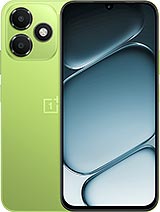
Realme P4s Lite review
The P4s Lite suits anyone who values battery endurance and ruggedness over raw speed or image quality—typical for budget buyers in developing regions who swap phones less often. Those expecting nimble performance, a sharp display, or credible camera work should stretch their budget to a mid-range model instead.

This review is based on Realme’s published specifications and public benchmark data for the Realme P4s Lite, and the rating is spec-based. GoSolo does not physically test devices; where we estimate real-world behaviour such as battery life or charge time, we say so. How we rate phones.
Overview
The Realme P4s Lite is a budget workhorse built for everyday tasks and long battery life rather than performance thrills. At €150, it trades processing power and camera finesse for a large screen, a 7000 mAh battery, and rugged IP64 durability—a sensible choice for users in emerging markets who prioritise battery endurance and robust build over snappy apps.
Design & build
At 215 g and 9 mm, this phone sits comfortably in hand—light enough for extended use, thin enough to slip into a pocket without bulk. The glass-front, plastic-frame-and-back formula is standard for the price, and the IP64 rating is a genuine practical win for this tier, offering protection against dust and water splashes. MIL-STD-810H compliance suggests it can handle drops and vibration without fussing. The 6.75-inch form factor is large without feeling awkward, and dual SIM support is expected for this market segment.
Display
The 6.75-inch IPS LCD with 120Hz refresh is where Realme has made a sensible choice: smoothness matters more to everyday feel than pixel density does. Scrolling through social feeds and web pages feels fluid. The drawback is the 720 x 1570 resolution, which resolves to just 256 ppi—noticeably soft for text and icons when you hold it close. Colours are typical IPS—accurate but not vibrant. At 900 nits (peak), brightness is adequate for outdoor reading in normal sunlight, though rivals at this price sometimes push a bit higher. The 85.5% screen-to-body ratio is respectable for a budget LCD.
Performance
The Unisoc T7250 is entry-level silicon, even for a €150 phone in 2026. It handles basic tasks—messaging, email, light browsing, video playback—without strain. But multitasking and demanding apps will show their limits: expect stutters when juggling several apps, noticeable loading times in games beyond simple 2D titles, and occasional lag when opening heavier social platforms. The Mali-G57 MP1 GPU is minimal for anything graphics-intensive. For daily web use and messaging, it is adequate. Anyone planning to game beyond casual play or edit photos should look elsewhere.
Software
Android 16 on a fresh device means you get the latest OS, though budget Realme phones historically ship with moderate bloat. The microSDXC slot is welcome for users who want to sidestep storage anxiety—the 64 GB base model fills quickly. Updates will likely be timely enough for a 2026 entry phone, but longevity support is usually three to four years at this price point.
Camera
The 13 MP main shooter with f/2.2 aperture and autofocus is straightforward and uninspiring. Daylight shots are fine if you do not expect sharpness or detail; colours are muted and dynamic range is narrow. There is no sign of night mode or HDR mention in the specs, so low-light photography will disappoint—expect muddy, noisy results. The 5 MP selfie is basic, adequate for video calls but not flattering. Video maxes out at 1080p 30fps, which is standard but with no stabilisation or bitrate optimisation noted, so expect wobble in handheld recording.
Battery & charging
The 7000 mAh battery is the phone's backbone. In real use, this should deliver two full days of moderate browsing and social media, and easily stretch to a day and a half under heavier load. Charging appears to be 15W based on the spec hints, which is slow by 2026 standards—budget rivals often offer 30W or more—so a full charge will take about two and a half hours from empty. The battery chemistry is Si/C lithium-ion, which is respectable for cycle longevity.
Value & verdict-context
At €150, the P4s Lite occupies a sweet spot for buyers in emerging markets who prioritise battery life and durability over processing speed and camera quality. It is not a flagship killer or a performance bargain—it is a pragmatic device that knows its limits. The 7000 mAh battery and IP64 rating make it more robust than many rivals at the same price. The soft display and weak camera are genuine compromises, but not unexpected at this cost. If you need a phone that lasts two days on a charge and can survive accidental drops and splashes, this delivers. If you are chasing gaming, photography, or zippy app performance, a slightly higher budget would serve you much better.
Verdict
The P4s Lite suits anyone who values battery endurance and ruggedness over raw speed or image quality—typical for budget buyers in developing regions who swap phones less often. Those expecting nimble performance, a sharp display, or credible camera work should stretch their budget to a mid-range model instead.
- 7000 mAh battery with durability: IP64 rating and MIL-STD-810H compliance mean it can survive daily bumps and splashes
- Large 6.75-inch display at 120Hz keeps scrolling smooth despite low 256 ppi density
- Runs Android 16 out of the box with microSDXC expansion for storage-conscious buyers
- Genuinely light at 215 g with 9 mm thickness, comfortable for one-handed use despite the big screen
- Unisoc T7250 is entry-level even by budget standards; expect lag in heavy apps and multitasking beyond casual use
- 720p resolution on a 6.75-inch screen looks soft up close; text and UI have visible pixelation
- 13 MP camera with no night mode or computational photography feels behind; low-light shots and video are basic
Realme P4s Lite Key Specifications
The essentials at a glance. See the full spec sheet.
| Released | 2026, October 05 |
|---|---|
| Display | 6.75 inches, 111.4 cm2 (~85.5% screen-to-body ratio), IPS LCD, 120Hz, 900 nits (HBM) |
| Resolution | 720 x 1570 pixels, 19.5:9 ratio (~256 ppi density) |
| Chipset | Unisoc T7250 (12 nm) |
| RAM & storage | 64GB 4GB RAM, 128GB 4GB RAM |
| Main camera | 13 MP, f/2.2, (wide), AF |
| Selfie camera | 5 MP, f/2.2, (wide) |
| Battery | 7000 mAh |
| Software | Android 16 |
| Dimensions | 166.5 x 78.2 x 9 mm (6.56 x 3.08 x 0.35 in) |
| Weight | 215 g (7.58 oz) |
| Build | Glass front, plastic frame, plastic back |
| Durability | IP64 dust tight and water resistant (water splashes) MIL-STD-810H compliant* * does not guarantee ruggedness or use in extreme conditions |
| Network | GSM / HSPA / LTE |
| NFC | No |
| USB | USB Type-C 2.0, OTG |
Realme P4s Lite FAQ
Common questions, answered from the spec sheet.
Does the P4s Lite support 5G?
No. The P4s Lite tops out at GSM / HSPA / LTE, without 5G.
What chipset does the P4s Lite use?
The P4s Lite runs on the Unisoc T7250 (12 nm).
What display does the P4s Lite have?
A 6.75 inches, 111.4 cm2 (~85.5% screen-to-body ratio) IPS LCD, 120Hz, 900 nits (HBM), 720 x 1570 pixels, 19.5:9 ratio (~256 ppi density).
How big is the P4s Lite battery?
The P4s Lite has a 7000 mAh battery.
Does the P4s Lite have NFC?
No, the P4s Lite does not list NFC support.
Is the P4s Lite water resistant?
The P4s Lite carries a IP64 dust tight and water resistant (water splashes) MIL-STD-810H compliant* * does not guarantee ruggedness or use in extreme conditions rating.
Does the P4s Lite support a microSD card?
Yes, the P4s Lite supports expandable storage (microSDXC).
Alternatives to consider
If the P4s Lite isn’t quite right, these are the closest calls.
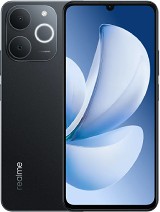
P4 Lite 4G

P4 Lite

Narzo 100 Lite
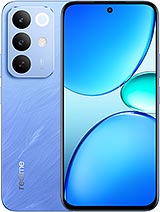
C85 4G
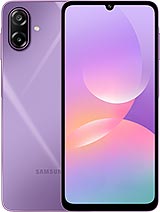
Galaxy M17e