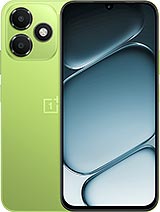
Realme P4x 4G review
The P4x 4G is for users who genuinely want a two-day phone and accept the trade-offs that come with that choice. Buyers who prioritize screen sharpness, performance, or modern charging speeds will find better value in competing budget phones released at the same time."
This review is written with AI assistance from Realme’s published specifications and public benchmark data for the Realme P4x 4G, and the rating is spec-based. GoSolo does not physically test devices; where we estimate real-world behaviour such as battery life or charge time, we say so. How we rate phones.
Overview
The Realme P4x 4G is a 219-gram budget phone built for battery endurance over raw speed; its 8000 mAh cell and modest Unisoc chipset target users who prioritize a full day of use over performance, though the 254ppi display and entry-level processor are honest steps backward from last year's value tier.
Design & Build
At 219 grams and 8.8mm thick, the P4x is a dense, blocky phone—heavier than most rivals at this price point, though the weight is partly explained by the large 8000 mAh cell inside. The glass front and plastic back-and-frame are the typical budget recipe; nothing here surprises or offends. IP64 dust and splash resistance plus MIL-STD-810H compliance and a claimed 2-meter drop tolerance add a layer of peace of mind, even if these claims come with asterisks. The physical side-mounted fingerprint sensor is a practical choice for phones without an under-display option, and it works reliably. For the money, this is a durable, no-frills build that should survive a year of careless use.
Display
The 6.8-inch IPS LCD is where the P4x shows its age. At 720 x 1570 pixels, the density sits at 254 ppi—soft and noticeably pixelated next to phones from the same price tier that now ship with 1080p or 1440p screens. The 120Hz refresh is welcome and does make scrolling feel smoother than a 60Hz panel, and 700 nits brightness is sufficient for outdoor use on a cloudy day. But once you place this display next to a budget rival with sharper pixels, the difference is stark. For a phone launched in mid-2026, a 1080p resolution would have been the honest baseline.
Performance
The Unisoc T7250 is an entry-level processor, and it behaves like one. Everyday tasks—messaging, social media, video playback—work without drama. Open multiple apps or a heavier game, and you will feel the throttle; the Mali-G57 GPU and modest 4GB RAM make multitasking choppy. This chip is two or three steps behind what Qualcomm and MediaTek now offer in the same price bracket. If you are buying this phone, accept that it is built for simple use, not for keeping 20 apps running or playing recent games at smooth frame rates. Android 16 runs on it, but you will notice lag in system animations compared to faster phones.
Software
Realme UI on Android 16 is clean enough, with a reasonable suite of bloat-lite tweaks and features. The side-mounted fingerprint sensor integrates well, and the software respects the device's limited horsepower by not piling on unnecessary animations. Security patches will matter more on this budget chip than on flagships, and Realme's track record on long-term updates is mixed; expect Android 17 support but plan to replace the phone within two to three years.
Camera
The 50MP f/1.8 main camera with autofocus is the device's strongest camera claim. In good light, it captures detail and color reasonably well; the f/1.8 aperture helps in indoor and dim scenes where a smaller aperture would struggle. HDR and panorama modes are present but basic. The catch: processing is slow (you will see the computational photography lag), and dynamic range is limited. The 5MP selfie camera is functional for video calls and snapshots, nothing more. Video is capped at 1080p@30fps, which is standard but uninspiring in 2026. Night shots are grainy and soft; this is a daylight camera first.
Battery & Charging
The 8000 mAh battery is the phone's headline feature and its main reason to exist. In practice, you will see about a day and a half to two days of moderate mixed use, or a full day of heavier social media and video streaming. This is genuinely useful for users who do not want to hunt for an outlet daily. The downside: 45W charging is slow by modern standards. At this wattage, expect a full charge in around 50 to 60 minutes from empty, which is fine but not competitive; rivals at this price are now charging at 65W or 80W, cutting 20 to 30 minutes off that time. For a phone built around battery endurance, the slow charging somewhat undermines the appeal.
Value & Verdict
At roughly 160 EUR, the P4x is priced fairly for what it is: a no-drama battery phone with a large screen and entry-level internals. You are not paying for speed or flagship features; you are paying for all-day battery and a big display. The question is whether the 720p screen and slow Unisoc chip are acceptable compromises at this price in 2026, when rivals often deliver 1080p displays and faster processors for similar money. This phone suits someone who values simplicity and battery life over responsiveness or image quality, and who is willing to tolerate a soft display and occasional performance hiccups. Anyone expecting gaming, smooth multitasking, or a sharp screen should spend slightly more and look elsewhere.
Verdict
The P4x 4G is for users who genuinely want a two-day phone and accept the trade-offs that come with that choice. Buyers who prioritize screen sharpness, performance, or modern charging speeds will find better value in competing budget phones released at the same time."
- 8000 mAh battery lasts a day of normal use without hunting for a charger
- Large 6.8-inch screen and 120Hz refresh on an IPS panel is a good refresh rate for budget phones this year
- Solid 50MP main camera with f/1.8 aperture and autofocus handles daylight shots competently
- IP64 rating and 2m drop resistance give baseline durability for a phone under 160 EUR
- 720p display density (254 ppi) on a 6.8-inch screen is noticeably soft and dated; rivals at this price now offer 1080p
- Unisoc T7250 is entry-level even for budget phones and will struggle with multitasking and heavier apps
- 45W charging is slow by 2026 standards; most competitors in this price bracket now hit 65W or higher
Realme P4x 4G Key Specifications
The essentials at a glance. See the full spec sheet.
| Released | 2026, June 23 |
|---|---|
| Display | 6.8 inches, 113.0 cm2 (~86.8% screen-to-body ratio), IPS LCD, 120Hz, 700 nits (typ) |
| Resolution | 720 x 1570 pixels, 19.5:9 ratio (~254 ppi density) |
| Chipset | Unisoc T7250 (12 nm) |
| RAM & storage | 64GB 4GB RAM, 256GB 4GB RAM |
| Main camera | 50 MP, f/1.8, (wide), AF |
| Selfie camera | 5 MP, f/2.2, (wide) |
| Battery | 8000 mAh |
| Software | Android 16 |
| Dimensions | 166.5 x 78.2 x 8.8 mm (6.56 x 3.08 x 0.35 in) |
| Weight | 219 g (7.72 oz) |
| Build | Glass front, plastic frame, plastic back |
| Durability | IP64 dust tight and water resistant (water splashes) Drop resistant up to 2m MIL-STD-810H compliant* * does not guarantee ruggedness or use in extreme conditions |
| Network | GSM / HSPA / LTE |
| NFC | No |
| USB | USB Type-C 2.0, OTG |
Realme P4x 4G FAQ
Common questions, answered from the spec sheet.
Does the P4x 4G support 5G?
No. The P4x 4G tops out at GSM / HSPA / LTE, without 5G.
What chipset does the P4x 4G use?
The P4x 4G runs on the Unisoc T7250 (12 nm).
What display does the P4x 4G have?
A 6.8 inches, 113.0 cm2 (~86.8% screen-to-body ratio) IPS LCD, 120Hz, 700 nits (typ), 720 x 1570 pixels, 19.5:9 ratio (~254 ppi density).
How big is the P4x 4G battery?
The P4x 4G has a 8000 mAh battery.
Does the P4x 4G have NFC?
No, the P4x 4G does not list NFC support.
Is the P4x 4G water resistant?
The P4x 4G carries a IP64 dust tight and water resistant (water splashes) Drop resistant up to 2m MIL-STD-810H compliant* * does not guarantee ruggedness or use in extreme conditions rating.
Does the P4x 4G support a microSD card?
Yes, the P4x 4G supports expandable storage (microSDXC).
Alternatives to consider
If the P4x 4G isn’t quite right, these are the closest calls.
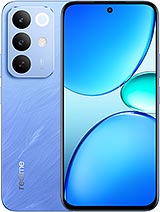
C85 4G
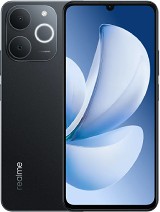
P4 Lite 4G

P3x 5G
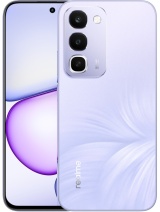
C100 4G
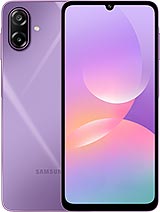
Galaxy M17e