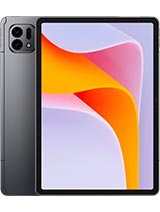
Realme Pad 3 review
This tablet suits someone who wants a large screen for reading, video, and basic work on a shoestring budget and doesn't plan to take it outside much. Anyone expecting modern performance, bright display for outdoor use, or long-term software support should look elsewhere—budget competition in 2026 offers better brightness and newer chips at similar prices."
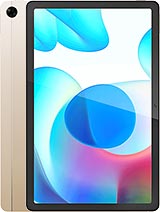
This review is written with AI assistance from Realme’s published specifications and public benchmark data for the Realme Pad 3, and the rating is spec-based. GoSolo does not physically test devices; where we estimate real-world behaviour such as battery life or charge time, we say so. How we rate phones.
Overview
The Realme Pad 3 is a big 10.4-inch Android tablet built for reading, video, and casual work, not gaming. It's lightweight at 440g, has decent battery life, but its aging 2021 Helio G80 chipset and modest 360-nit display feel ordinary next to what you'd expect from a 2021 mid-range tablet, making it best suited to buyers who just need screen real estate on a budget.
Design and build
At 440 grams and 6.9mm thin, the Pad 3 is genuinely light for its 10.4-inch size, making it comfortable to hold for reading or video for long stretches. The glass front and aluminum frame feel solid enough without being premium. The weight distribution is even, so there's no sense of wobble or flex when you're holding it in one hand. It's the kind of thing you could actually prop up in bed or on a desk without a stand for basic browsing, though that lightness does come at the cost of a less substantial feel compared to heavier tablets with thicker bezels.
Display
The 10.4-inch IPS LCD screen at 1200×2000 pixels is spacious and text is reasonably sharp at 224 ppi. The 5:3 aspect ratio leans toward landscape viewing, which suits video watching and reading well. However, the 360-nit brightness is the real weakness: it's adequate indoors and fine for video, but take it into direct sunlight and you will struggle to see the content. For 2021, this is below what you would expect even from a budget tablet at this size. Wi-Fi-only variants don't have GPS to compensate either, so there's no outdoor mapping fallback. The 80% screen-to-body ratio is reasonable, though the top and bottom bezels are noticeably thicker than the sides.
Performance
The Helio G80 is a mainstream entry-level chipset even by 2021 standards, and by 2026 it feels dated. It handles email, web browsing, and casual reading without hiccups, and light gaming like Candy Crush or simple arcade titles runs fine. But sustained performance is the limit: you will notice slowdowns in heavier apps like Google Maps navigation or video editing, and forget about playing demanding games at decent framerates. The Mali-G52 GPU is adequate for most interfaces but won't impress anyone expecting smooth 3D performance. RAM maxes out at 6GB, which is enough for basic multitasking but not generous for its class. For a tablet you intend to keep for three to four years, this chip is already showing its age.
Software
The Pad 3 shipped with Android 11 back in 2021, and there is no indication from the spec sheet whether it received Android 12 or 13 updates. By now, five years on, that is a concern: you are likely stuck on an obsolete OS with aging security patches if you buy this secondhand, and even the original launch was not cutting-edge. Realme's UI overlay is minimal and fairly inoffensive, but without knowing the update history, you should assume this tablet will not receive major OS upgrades. That said, Android 11 is stable and familiar enough for basic productivity and entertainment, so it won't hobble you immediately.
Camera
Both the 8MP rear and 8MP ultrawide front cameras are purely functional. The front camera's 105-degree field of view is useful for video calls, but 1080p video at 30fps is the bare minimum. Don't expect detailed photos or smooth video from either; they are adequate for documentation and casual messaging, nothing more. For a tablet, cameras are rarely the draw, and these confirm it.
Battery and charging
The 7100 mAh battery is sizeable for a 10-inch tablet and should deliver a solid day of mixed reading, video, and light work without needing a charge. That's the standout feature: endurance. The 45W charging is reasonable on paper, but for a 7100 mAh cell, you are still looking at roughly 45 to 60 minutes from empty to full. By modern standards, that's not quick, but it's acceptable for a device you charge once a day or less. The charger itself is not included in the box, which is standard but worth noting if you are buying used.
Value and verdict
At around 160 EUR, the Pad 3 is pitched as a budget tablet, and it delivers on that promise in terms of screen size and battery life. However, by 2026 standards, even budget competition offers better brightness, newer chipsets, and longer OS support. The weak display in sunlight and aging processor are not deal-breakers for someone who will use it indoors for reading, email, and video, but they do limit its appeal. The 5G bands sound impressive on paper but only matter if the LTE model is sold in your region and you have a plan to use them. Storage tops out at 128GB with microSD expansion, which is fine for media but tight if you plan to store apps and local files together. This is a tablet that works best if you treat it as a secondary device for relaxation, not as your primary computing tool.
Verdict
This tablet suits someone who wants a large screen for reading, video, and basic work on a shoestring budget and doesn't plan to take it outside much. Anyone expecting modern performance, bright display for outdoor use, or long-term software support should look elsewhere—budget competition in 2026 offers better brightness and newer chips at similar prices."
- Lightweight and thin (440g, 6.9mm) makes it genuinely comfortable to hold for reading for hours
- Large 10.4-inch screen with decent sharpness at 224 ppi is good value for the price
- Battery endurance is solid—expect a full day of mixed use without charging
- microSD expansion up to 2TB and cellular option with 5G bands add flexibility
- 360-nit display is too dim in sunlight, well below what you'd expect even from a 2021 budget tablet
- Helio G80 is entry-level and already outdated by 2026, limiting multitasking and gaming smoothness
- Android 11 with unclear update history suggests minimal OS support and aging security on secondhand units
Realme Pad 3 Key Specifications
The essentials at a glance. See the full spec sheet.
| Released | 2021, September 09 |
|---|---|
| Display | 10.4 inches, 307.9 cm2 (~80.2% screen-to-body ratio), IPS LCD, 360 nits (typ) |
| Resolution | 1200 x 2000 pixels, 5:3 ratio (~224 ppi density) |
| Chipset | Mediatek MT6769V/CU Helio G80 (12 nm) |
| RAM & storage | 32GB 3GB RAM, 64GB 4GB RAM, 128GB 6GB RAM |
| Main camera | 8 MP |
| Selfie camera | 8 MP, 105˚ (ultrawide) |
| Battery | 7100 mAh |
| Charging | Fast Charging up to 45 W |
| Software | Android 11 |
| Dimensions | 246.1 x 155.9 x 6.9 mm (9.69 x 6.14 x 0.27 in) |
| Weight | 440 g (15.52 oz) |
| Build | Glass front, aluminum frame, aluminum back |
| Network | GSM / HSPA / LTE |
| NFC | No |
| USB | USB Type-C 2.0, OTG |
Realme Pad 3 FAQ
Common questions, answered from the spec sheet.
Does the Pad 3 support 5G?
Yes. The Pad 3 supports 5G networks.
What chipset does the Pad 3 use?
The Pad 3 runs on the Mediatek MT6769V/CU Helio G80 (12 nm).
What display does the Pad 3 have?
A 10.4 inches, 307.9 cm2 (~80.2% screen-to-body ratio) IPS LCD, 360 nits (typ), 1200 x 2000 pixels, 5:3 ratio (~224 ppi density).
How big is the Pad 3 battery?
The Pad 3 has a 7100 mAh battery. Charging is rated at Fast Charging up to 45 W.
Does the Pad 3 have NFC?
No, the Pad 3 does not list NFC support.
Does the Pad 3 support a microSD card?
Yes, the Pad 3 supports expandable storage (microSDXC (uses shared SIM slot)).
Alternatives to consider
If the Pad 3 isn’t quite right, these are the closest calls.
Pad 2 Lite
Black Shark Pad SE
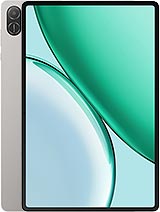
Pad X8b
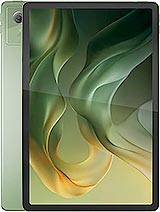
Moto Pad (2026)
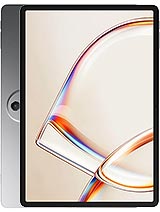
Tab A1 Plus NxtPaper