Realme V30 review
The V30 makes sense for someone in a 3G-heavy region who values battery life above screen clarity and will not play demanding games. In areas with 4G or 5G as the norm, the missing bands and grainy 720p display make it a frustrating compromise compared to modern budget alternatives.
This review is based on Realme’s published specifications and public benchmark data for the Realme V30, and the rating is spec-based. GoSolo does not physically test devices; where we estimate real-world behaviour such as battery life or charge time, we say so. How we rate phones.
Overview
The Realme V30 is a 2023 budget phone built for long battery life and light everyday use in regions with 3G coverage, but its 720p display and dated Dimensity 700 chip mean it reads grainy indoors and struggles with anything demanding. At €150, it is decent value for messaging and browsing if you accept slow data speeds and soft image quality.
Design and build
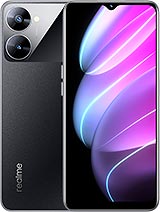
At 186 grams and 8.1 mm thick, the V30 is one of the slimmer phones at this price, and that matters for all-day carry. The glass front paired with a plastic frame and back is par for the budget class in 2023, though the glossy rear will attract fingerprints and smudges. Dual nano-SIM slots give you flexibility if you travel or juggle work and personal lines, a practical touch that many rivals dropped in favour of eSIM-only designs. There is nothing here that feels flimsy, but there is also nothing that rises above the category. It is a phone built to last, not to impress.
Display
The 6.5-inch IPS LCD delivers 600 nits of peak brightness, which is enough for outdoor readability and does not feel dim for a phone at this price tier. The problem is the resolution: 720p on a 6.5-inch panel means 270 ppi, and that is noticeable. Text in email, web pages, and apps will look slightly soft and pixelated when you hold the phone at normal distance, especially indoors where you can see individual pixels. Scrolling through social media or reading ebooks will feel grainier than a phone with 1080p. Outdoor brightness and arm's-length content like videos hold up better, but if you spend time reading or working on small text, this display will tire your eyes faster than a sharper 1080p screen.
Performance
The Mediatek Dimensity 700 with 2.2 GHz cores and Mali-G57 GPU is a 2021-generation chip, and it shows. Everyday apps—messaging, email, social media, light browsing—run smoothly without lag. The 6 GB or 8 GB RAM variant keeps the OS responsive when you have several apps in the background. However, demanding mobile games like PUBG or Genshin Impact at high settings will stutter noticeably. Video editing apps and photo processing will feel sluggish. For casual players and productivity work, this is acceptable, but anyone seeking snappy gaming or heavy multitasking will find the V30 frustrating after a week.
Software
Android 12 with Realme UI 3.0 is now three years old, and Realme's software skin remains lightweight and sensible for budget hardware. You do not get the latest Android 14 or 15, and updates beyond security patches are unlikely on a phone this old. The UI does not bog the chip down with unnecessary animations, which is wise given the Dimensity 700. Bloatware is present but manageable and mostly disableable. This is a practical software experience, not a polished one, but it serves the phone's everyday purpose without friction.
Camera
The 13 MP main sensor with autofocus and LED flash captures acceptable daylight photos, though detail falls short of even mid-range rivals from the same year. Indoors or in low light, the lack of optical stabilisation and a small aperture means photos become muddy and dark. The 5 MP selfie does the job for video calls but will not impress anyone who likes taking self-portraits. Video maxes out at 1080p 30fps, which is fine for casual clips, but the bitrate will feel compressed on a larger screen. For a phone at €150, the camera is competent rather than capable, and you should not expect sharp images from anything trickier than daylight snaps.
Battery and charging
The 5000 mAh battery is the phone's strongest card. Under light use—messaging, social media, light browsing—you will comfortably reach two days between charges, sometimes closer to two and a half. Under heavier scrolling and video streaming, expect a single full day, which is still respectable. The charging spec is not listed in the data, so you may not have rapid charging; budget phones at this price often cap out at 10W or 15W, meaning a full charge will take around two to three hours. If fast charging matters to you, check the box or the retailer listing before buying.
Value and verdict-context
At €150, the V30 fits squarely in the ultra-budget segment, competing with phones built for users in regions where battery life trumps screen clarity and data speeds. The 720p display is the clearest weak point for a phone this large, and the missing 4G and 5G bands are a show-stopper in areas where 3G is being phased out. If you live in a region with strong 3G infrastructure and your priorities are battery endurance and low cost, the V30 delivers. If you expect sharp visuals, responsive performance, or decent mobile game support, look elsewhere. Two years on, this phone is past its prime for most global markets, but in pockets where 3G remains the standard and users value simplicity, it remains practical value.
Verdict
The V30 makes sense for someone in a 3G-heavy region who values battery life above screen clarity and will not play demanding games. In areas with 4G or 5G as the norm, the missing bands and grainy 720p display make it a frustrating compromise compared to modern budget alternatives.
- 5000 mAh battery stretches to a full day and a half under light use, a real win for users away from frequent chargers
- Thin and light at 8.1 mm and 186 g, comfortable to hold and pocket for hours
- Dual SIM and microSD expansion up to 1TB keep the phone flexible for travel and storage without paying more
- Side-mounted fingerprint sensor is responsive and convenient, faster than face unlock on a phone this dim
- 270 ppi 720p display on a 6.5-inch screen looks noticeably grainy for reading text and web content indoors
- Lacks 4G and 5G bands entirely—network speeds are capped at 3G, making browsing slow and unusable in 4G-only regions
- Dimensity 700 chipset struggles visibly with games and multitasking; expect stutters in PUBG or heavy apps
Realme V30 Key Specifications
The essentials at a glance. See the full spec sheet.
| Released | 2023, February 09 |
|---|---|
| Display | 6.5 inches, 102.0 cm2, IPS LCD, 600 nits |
| Resolution | 720 x 1600 pixels, 20:9 ratio (~270 ppi density) |
| Chipset | Mediatek |
| RAM & storage | 128GB 6GB RAM, 128GB 8GB RAM |
| Main camera | 13 MP, (wide), AF Auxiliary lens |
| Selfie camera | 5 MP (wide) |
| Battery | 5000 mAh |
| Software | Android 12, Realme UI 3.0 |
| Dimensions | 8.1 mm thickness |
| Weight | 186 g (6.56 oz) |
| Build | Glass front, plastic frame, plastic back |
| Network | GSM / HSPA / LTE / 5G |
| NFC | Unspecified |
| USB | USB Type-C 2.0 |
Realme V30 FAQ
Common questions, answered from the spec sheet.
Does the V30 support 5G?
Yes. The V30 supports 5G networks.
What chipset does the V30 use?
The V30 runs on the Mediatek.
What display does the V30 have?
A 6.5 inches, 102.0 cm2 IPS LCD, 600 nits, 720 x 1600 pixels, 20:9 ratio (~270 ppi density).
How big is the V30 battery?
The V30 has a 5000 mAh battery.
Does the V30 have NFC?
No, the V30 does not list NFC support.
Does the V30 support a microSD card?
Yes, the V30 supports expandable storage (microSDXC).
Alternatives to consider
If the V30 isn’t quite right, these are the closest calls.

V60 Pro

Narzo N55

V50
12 Lite

Defy 2