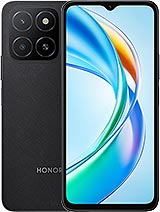
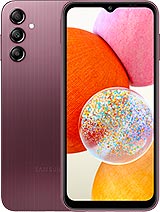
Samsung Galaxy A14 review
This phone is built for budget buyers who value battery life and screen size over speed and polish. Anyone juggling multiple tasks or expecting gaming performance should aim higher; those on a tight budget who simply need reliability will get years of steady use out of it.
This review is based on Samsung’s published specifications and public benchmark data for the Samsung Galaxy A14, and the rating is spec-based. GoSolo does not physically test devices; where we estimate real-world behaviour such as battery life or charge time, we say so. How we rate phones.
Overview
The Galaxy A14 is a durable, no-nonsense budget phone with a big screen and battery that easily lasts two days on moderate use. It struggles with demanding apps and charges slowly, but it's honest value for the money if you just want calls, messages, and social media without breaking the bank.
Design & Build
At 201 grams and 9.1 mm thick, the A14 is hefty but not unwieldy for a 6.6-inch phone. The glass front and plastic back feel modest rather than premium, which is fair for the price, but the frame flex slightly under pressure and there's no water resistance to speak of. The side-mounted fingerprint sensor works reliably, and the overall shape is straightforward and comfortable in one hand. In practice, you'll want a case immediately—scratches accumulate fast on the back, and the thin glass can crack if dropped without protection.
Display
The 6.6-inch PLS LCD pushes 1080p at 400 ppi, which is sharp enough for text and images at normal viewing distance. The 20:9 aspect ratio means taller black bars when watching widescreen video, but it gives you more room to scroll through feeds and messages. Brightness is adequate indoors and in shade, but the LCD panel dims noticeably in direct sunlight compared to AMOLED rivals, making outdoor reading slower. For the price, the screen is solid; it does not flicker and colors are neutral, though it lacks the punch of pricier displays.
Performance
The Helio G80 is a mainstream budget chipset that handles everyday tasks—calls, email, web browsing, social media—without hiccup. Multitasking is smooth as long as you are not running more than a handful of apps at once, and the system stays responsive during normal use. Gaming is where it stumbles: casual titles play fine, but anything demanding will stutter and heat up noticeably. The 4GB RAM variant will lag under load; jump to 6GB or 8GB if you can afford it. By 2023 standards, the G80 is ordinary for this price bracket, not a compromise but also not an upgrade path for anyone who wants to run heavier tasks.
Software
Android 13 ships with One UI 7 skin and Samsung promises updates to Android 15, which is respectable longevity for a budget phone. One UI adds Samsung's own tweaks—Bixby, Samsung account features, and bloatware like Samsung Internet and Galaxy Store—some of which you can disable but not remove. The software is stable and does not feel bogged down, and security patches roll out regularly. For someone used to Google's vanilla Android, the extra Samsung layer feels cluttered, but it is not slow or broken.
Camera
The 50MP main sensor captures fine detail in good daylight with its f/1.8 aperture and PDAF autofocus, though the 0.64µm pixel size means night shots are noisier than larger sensors. The 5MP ultrawide is more for novelty than utility—it does not match the main camera's sharpness and feels like a box-ticking exercise. The 2MP macro is basically useless. The 13MP selfie is acceptable for video calls but not portrait detail. No optical zoom means you are stuck with digital crop for distant subjects, losing resolution fast. Overall, the camera is fine for quick photos and social media posting, not a strong point.
Battery & Charging
The 5000 mAh battery easily covers a full day for moderate users—texts, calls, social media, email. Heavier use (streaming or gaming) will eat through it by evening, but you can reliably get from breakfast to bed without panic. At moderate use, you might stretch it to a second partial day. The weak point is charging: 15W is slow by any current standard, and a full cycle from zero to 100 takes about 2.5 to 3 hours. There is no fast-charge option, so if you need juice quickly, you are out of luck. It is the kind of speed that forces you to plan ahead.
Value & Verdict
At around $110–90, the Galaxy A14 competes in a crowded entry-level tier where several phones offer similar specs for similar money. It is not the fastest, not the most durable, and not the most advanced. What it does offer is balance: the battery will last you through two light days, the screen is large and readable, and the core experience is stable and reliable. It suits anyone who wants a straightforward phone for daily calls, messages, and light apps without spending much. If you game, edit photos, or demand fast charging, look elsewhere. If you just want a phone that works and is hard to break, you have found it.
Verdict
This phone is built for budget buyers who value battery life and screen size over speed and polish. Anyone juggling multiple tasks or expecting gaming performance should aim higher; those on a tight budget who simply need reliability will get years of steady use out of it.
- 5000 mAh battery delivers about 1.5 to 2 days of moderate use, enough that you can skip a day of charging
- Large 6.6-inch display with a tall 20:9 ratio gives plenty of space for scrolling without filling your pocket
- Headphone jack and microSD slot let you add storage and avoid wireless earbuds if you don't want them
- Dual SIM support is useful for anyone juggling work and personal lines or traveling with multiple carriers
- 15W charging takes roughly 2.5 to 3 hours for a full top-up, forcing you to plan ahead if you leave the house
- Helio G80 chipset bogs down with heavy multitasking or any modern game beyond casual titles, especially on the 4GB RAM variants
- No water resistance and a plastic back means daily scratches and dents; a case is non-negotiable
Samsung Galaxy A14 Key Specifications
The essentials at a glance. See the full spec sheet.
| Released | 2023, February 28 |
|---|---|
| Display | 6.6 inches, 104.9 cm2 (~80.2% screen-to-body ratio), PLS LCD |
| Resolution | 1080 x 2408 pixels, 20:9 ratio (~400 ppi density) |
| Chipset | Mediatek MT6769 Helio G80 (12 nm) - Version AExynos 850 (8 nm) - Version B |
| RAM & storage | 64GB 4GB RAM, 128GB 4GB RAM, 128GB 6GB RAM, 128GB 8GB RAM |
| Main camera | 50 MP, f/1.8, 26mm (wide), 1/2.75", 0.64µm, PDAF 5 MP, f/2.2, 17mm (ultrawide), 1/5.0", 1.12µm 2 MP (macro) |
| Selfie camera | 13 MP, f/2.0, 26mm (wide), 1/3.1", 1.12µm |
| Battery | 5000 mAh |
| Charging | 15W wired |
| Software | Android 13, upgradable to Android 15, One UI 7 |
| Dimensions | 167.7 x 78 x 9.1 mm (6.60 x 3.07 x 0.36 in) |
| Weight | 201 g (7.09 oz) |
| Build | Glass front, plastic back, plastic frame |
| Network | GSM / HSPA / LTE |
| NFC | Yes (market/region dependent) |
| USB | USB Type-C 2.0 |
Samsung Galaxy A14 FAQ
Common questions, answered from the spec sheet.
Does the Galaxy A14 support 5G?
No. The Galaxy A14 tops out at GSM / HSPA / LTE, without 5G.
What chipset does the Galaxy A14 use?
The Galaxy A14 runs on the Mediatek MT6769 Helio G80 (12 nm) - Version AExynos 850 (8 nm) - Version B.
What display does the Galaxy A14 have?
A 6.6 inches, 104.9 cm2 (~80.2% screen-to-body ratio) PLS LCD, 1080 x 2408 pixels, 20:9 ratio (~400 ppi density).
How big is the Galaxy A14 battery?
The Galaxy A14 has a 5000 mAh battery. Charging is rated at 15W wired.
Does the Galaxy A14 have NFC?
Yes, the Galaxy A14 has NFC.
Does the Galaxy A14 support a microSD card?
Yes, the Galaxy A14 supports expandable storage (microSDXC (dedicated slot)).
Does the Galaxy A14 have a headphone jack?
Yes, the Galaxy A14 has a 3.5mm headphone jack.
Alternatives to consider
If the Galaxy A14 isn’t quite right, these are the closest calls.
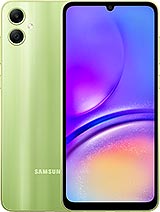
Galaxy A05
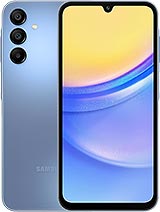
Galaxy A15 5G
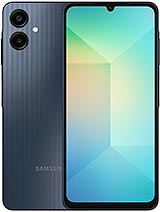
Galaxy A06

Galaxy A05 Dual SIM
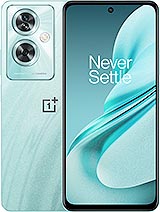
Nord N30 SE 5G