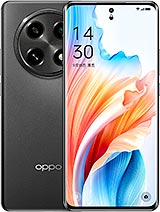
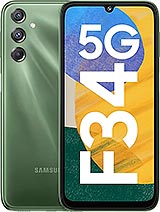
Samsung Galaxy F34 review
The Galaxy F34 suits budget users and light app users who value all-day battery and a bright screen over gaming or fast charging. Anyone expecting flagship performance, durable water sealing, or rapid charge times should cross-shop rivals offering faster chips or higher wattage at the same cost.
This review is based on Samsung’s published specifications and public benchmark data for the Samsung Galaxy F34, and the rating is spec-based. GoSolo does not physically test devices; where we estimate real-world behaviour such as battery life or charge time, we say so. How we rate phones.
Overview
The Galaxy F34 swaps power for longevity: a 6000 mAh battery and bright 120Hz AMOLED screen carry you through a full day of moderate use, but the Exynos 1280 and 25W charging fall behind what rivals offer at the same price. It is a solid daily driver for calls, messages, and light apps, not for gaming or content creation.
Design & build
At 208g and 8.8mm thick, the F34 feels light and slim in hand, which partly explains its battery reach. The side-mounted fingerprint sensor is reachable without awkward stretching. Gorilla Glass 5 on the front is decent against scratches, but Samsung did not publish a water or dust rating, so do not rely on splash resistance; treat it as an everyday device that benefits from care. The dual nano-SIM setup works globally, though the shared microSD slot means choosing between expansion and a second SIM.
Display
The 6.5-inch Super AMOLED screen is the phone's strongest feature. 120Hz scrolling is smooth, 1000 nits peak brightness beats most mid-range phones for outdoor readability, and color saturation is punchy without looking oversaturated. At 396 ppi, text is legible but not as crisp as 1440p flagships; it is a sensible trade-off at this price and size. The 83% screen-to-body ratio is respectable, though the 19.5:9 aspect ratio leaves narrow side bezels that can catch thumb presses during landscape gaming.
Performance
The Exynos 1280 is a mainstream midrange chip that handles everyday tasks—calls, messaging, email, light web browsing—without lag. Apps open quickly, One UI does not stutter, and the Mali-G68 GPU manages light gaming (turn-based, indie titles, older games on low settings) adequately. Heavy 3D games like Fortnite or Genshin Impact will stumble; expect reduced frame rates or settings cranked down to low. For streaming Netflix or YouTube, the chipset is sufficient. It is a gap from rivals at this price—some competitors pack the Snapdragon 695 or MediaTek Dimensity 7025, which offer noticeably faster gaming and demanding app performance.
Software
Android 13 with One UI 5.1 is clean and mature. Samsung's OneUI additions (routines, Bixby integration, secure folder) add practical value without clutter. Security updates are likely to roll in regularly for a couple of years, though software support depth beyond three years is not guaranteed. The 128GB base storage is tight if you plan to install many games or shoot heavy video; stepping to 8GB RAM helps multitasking but does not unlock more base storage.
Camera
The 50MP main sensor with f/1.8 aperture and optical image stabilization is the right tool for daylight shots and video; it delivers sharp, well-exposed images and stable 4K video at 30fps without noticeable shake. Indoors and low-light, the wide aperture and OIS pull in decent detail. The 8MP ultrawide at 120 degrees is functional but soft; it trades sharpness for field-of-view, a typical compromise at this price. The 2MP macro is essentially a gimmick—it cannot match a proper dedicated macro lens or close focus from the main sensor. The 13MP selfie camera handles video calls and casual selfies, though it lacks night mode. Do not expect flagship detail or computational photography tricks; it is straightforward, capable imaging for social media and memories.
Battery & charging
The 6000 mAh battery is the reason this phone stretches to a full day. With mixed use (calls, messages, some social media, occasional video), expect 16–18 hours before hunt for a charger; heavier gaming or streaming video cuts that to 12–14 hours. Standby is long. The tradeoff is charging speed: 25W wired takes about 50–70 minutes to full from empty, which is functional but not fast. Rivals with 33W or 65W chargers reach 100% in 30–40 minutes, a meaningful convenience if you charge on the go. There is no wireless charging, which at this price is standard to leave out.
Value & verdict-context
At roughly 210 EUR, the F34 targets budget-conscious users who prioritize battery life and a usable display over gaming prowess or charging speed. It undercuts flagship phones by a large margin and matches entry-to-midrange competitors in price, though it lags slightly in raw performance and charging. The absence of a water rating and the entry-level chipset limit its appeal for buyers planning to keep it three years; a more robust processor and better sealing would justify the price more convincingly. For developing markets where call time and screen real estate matter most, the battery and display shine. For anyone chasing gaming or creative work (video editing, photo processing), look elsewhere.
Verdict
The Galaxy F34 suits budget users and light app users who value all-day battery and a bright screen over gaming or fast charging. Anyone expecting flagship performance, durable water sealing, or rapid charge times should cross-shop rivals offering faster chips or higher wattage at the same cost.
- 6000 mAh battery delivers solid 16–18 hour days with mixed use; outlasts most rivals at this price
- Bright 120Hz AMOLED display (1000 nits peak) makes outdoor visibility and scrolling smooth
- 50MP main camera with f/1.8 aperture and OIS handles daylight and video without blur
- Expandable storage via microSD and 3.5mm jack—useful features many competitors have dropped
- 25W charging is slow by 2023 standards; rivals in this bracket hit 33W or more, shaving 20–30 minutes off full charge time
- Exynos 1280 is entry-level for gaming; heavy 3D titles stutter noticeably or won't run
- No water/dust rating—treat it as unprotected; screen is only Gorilla Glass 5, not the toughest in its class
Samsung Galaxy F34 Key Specifications
The essentials at a glance. See the full spec sheet.
| Released | 2023, August 07 |
|---|---|
| Display | 6.5 inches, 103.7 cm2 (~83.1% screen-to-body ratio), Super AMOLED, 120Hz, 1000 nits (peak) |
| Resolution | 1080 x 2340 pixels, 19.5:9 ratio (~396 ppi density) |
| Chipset | Exynos 1280 (5 nm) |
| RAM & storage | 128GB 6GB RAM, 128GB 8GB RAM |
| Main camera | 50 MP, f/1.8, (wide), PDAF, OIS 8 MP, f/2.2, 120˚ (ultrawide) 2 MP, f/2.4 |
| Selfie camera | 13 MP, f/2.2, (wide) |
| Battery | 6000 mAh |
| Charging | 25W wired |
| Software | Android 13, One UI 5.1 |
| Dimensions | 161.7 x 77.2 x 8.8 mm (6.37 x 3.04 x 0.35 in) |
| Weight | 208 g (7.34 oz) |
| Network | GSM / HSPA / LTE / 5G |
| NFC | Yes |
| USB | USB Type-C 2.0, OTG |
Samsung Galaxy F34 FAQ
Common questions, answered from the spec sheet.
Does the Galaxy F34 support 5G?
Yes. The Galaxy F34 supports 5G networks.
What chipset does the Galaxy F34 use?
The Galaxy F34 runs on the Exynos 1280 (5 nm).
What display does the Galaxy F34 have?
A 6.5 inches, 103.7 cm2 (~83.1% screen-to-body ratio) Super AMOLED, 120Hz, 1000 nits (peak), 1080 x 2340 pixels, 19.5:9 ratio (~396 ppi density).
How big is the Galaxy F34 battery?
The Galaxy F34 has a 6000 mAh battery. Charging is rated at 25W wired.
Does the Galaxy F34 have NFC?
Yes, the Galaxy F34 has NFC.
Does the Galaxy F34 support a microSD card?
Yes, the Galaxy F34 supports expandable storage (microSDXC (uses shared SIM slot)).
Does the Galaxy F34 have a headphone jack?
Yes, the Galaxy F34 has a 3.5mm headphone jack.
Alternatives to consider
If the Galaxy F34 isn’t quite right, these are the closest calls.
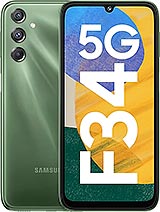
Galaxy F34 5G
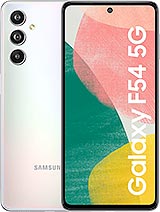
Galaxy F54
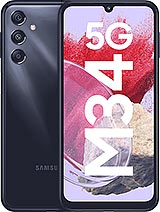
Galaxy M34 5G
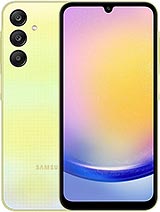
Galaxy A25
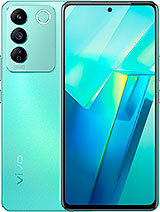
T2 5G