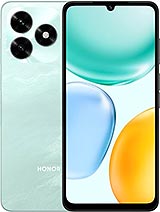
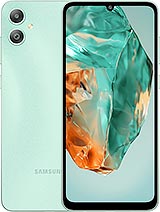
Samsung Galaxy M05 review
The M05 suits users in markets where LTE is the norm, networks are congested (and 5G unproven), and a phone must earn its battery charge over raw speed. Skip it if you stream video, play games, or expect a screen sharper than a budget phone from three years ago.
This review is based on Samsung’s published specifications and public benchmark data for the Samsung Galaxy M05, and the rating is spec-based. GoSolo does not physically test devices; where we estimate real-world behaviour such as battery life or charge time, we say so. How we rate phones.
Overview
The Galaxy M05 is a low-cost, large-screened phone built for battery endurance and network reliability over anything else. At €90 it delivers what you pay for: LTE connectivity, a 5000 mAh cell that outlasts almost any phone this year, and basic performance, all packaged in a body that doesn't pretend to be premium.
Design & build
At 195 g and 8.8 mm thin, the M05 feels light and comfortable in hand. Glass front, plastic back, and a plastic frame hit the mark for a €90 device—nothing feels cheap in the unboxing sense, but nobody will mistake this for something more expensive. The form is straightforward, no fussy angles, and the Mint Green finish has a gentle matte quality that resists fingerprints better than glossy rivals. Dual Nano-SIM slots and a dedicated microSD tray mean you can keep both a personal and work line active while expanding storage; that's actually thoughtful design at this price. The phone sits roughly on par with budget competitors from this era in terms of construction, which is to say it works, won't embarrass you, and won't survive a drop test either.
Display
The 6.7-inch PLS LCD is the elephant in the room. At 720 x 1600 pixels, you're looking at just 262 ppi, which is dim and grainy by modern standards. Text softens noticeably at arm's length, and icons have that fuzzy quality you remember from budget phones five years ago. The 20:9 aspect ratio makes the screen tall and narrow, which is intentional for reading and scrolling but awkward for media. PLS is an older tech; the panel won't climb to high brightness outdoors, so direct sunlight kills legibility. Against competing phones at this price from late 2024, the display is behind—most rivals offer at least 1080p on a 6.5-inch panel. For messaging, browsing, and casual use, it works. For media or photo editing, you'll notice the ceiling.
Performance
The Helio G85 is entry-level MediaTek: eight cores split between two faster Cortex-A75 units at 2.0 GHz and six efficiency cores at 1.8 GHz, paired with a Mali-G52 GPU. This configuration handles apps, social media, and light web browsing without lag. Casual games—Candy Crush, Threes, Sudoku—run smoothly. Anything demanding stutters: Genshin Impact, PUBG Mobile, or heavy streaming apps at high bitrate will see frame drops and thermal throttling. The 4 GB of RAM is adequate for everyday multitasking but shallow for app switching if you keep ten things open. Storage writes are eMMC 5.1, which is slower than modern UFS but serviceable. This chipset was mainstream-budget in late 2024; it's not a compromise for survival, it's the baseline you pay for.
Software
Android 14 ships with One UI Core 6.0, Samsung's lighter skin that avoids the bloat of One UI on flagships. You get a promise of two major Android upgrades, which means realistic support through 2026 at minimum. The software runs smoothly on the Helio G85; there's no unnecessary animation or bloat slowing things down. Samsung's apps are present but restrained, and the Play Store gives you freedom to choose alternatives. Security patches are standard Samsung fare—quarterly, mostly reliable. For a €90 phone, the software experience is genuinely helpful, not a burden.
Camera
The rear camera is a 50 MP sensor with f/1.8 aperture and autofocus. In daylight and decent indoor light, it captures fine detail; the f/1.8 lens helps with lower-light shots where a smaller aperture would demand higher ISO and more noise. Video maxes out at 1080p at 30 or 60 fps—no 4K, no stabilization listed, no ultra-wide or zoom lens. For social media and quick documentation, 1080p is acceptable. The 8 MP selfie camera is basic but fine for video calls. The camera is a genuine strength for the price tier, not because it's competitive with midrange flagships, but because it doesn't feel half-baked. You get a useful daily camera, not a compromised one.
Battery & charging
The 5000 mAh battery is the phone's strongest card. With moderate use—browsing, messaging, some video—expect a full day and into the next morning before you need to plug in. Heavy video streaming or gaming pushes that down to a single charge, but even then you're not hunting for an outlet by noon. The Helio G85 is power-efficient for entry-level, and the large display's low resolution helps battery life more than it hurts screen quality in this context. Charging is where patience becomes a virtue: 25W takes roughly 1.5 to 2 hours to fill from empty. That's slow by 2024 standards; most competitors at this price now push 65W or higher. Plan for a proper charge in the afternoon or evening, not a quick 20-minute top-up.
Value & verdict-context
At €90, the Galaxy M05 is positioned as a no-frills survival phone for users in regions where 5G hasn't landed yet (it has no 5G radio) and where affordable LTE phones still dominate. It does not chase premiumness or performance. It doesn't try to be a tiny flagship or a budget marvel. Instead, it commits to what matters at this price: battery life, network coverage, storage flexibility, and a camera that doesn't embarrass you. Rivals at this cost exist, and some offer sharper screens or faster charging, but few bundle the microSD slot and the 5000 mAh cell this cleanly. The trade-offs are real—the screen is soft, the chip is slow, and you won't game or edit on this thing. For someone who needs a durable phone to last a weekend between charges, who doesn't stream video constantly, and who reads more than they game, this makes sense. For anyone expecting flaglike performance or a screen that doesn't squint, look up the price tier.
Verdict
The M05 suits users in markets where LTE is the norm, networks are congested (and 5G unproven), and a phone must earn its battery charge over raw speed. Skip it if you stream video, play games, or expect a screen sharper than a budget phone from three years ago.
- 5000 mAh battery with realistic all-day runtime even on moderate use
- Dedicated microSD slot means you don't sacrifice a SIM for extra storage
- 50 MP main camera with f/1.8 aperture handles daylight shots reasonably well
- 3.5mm jack and loudspeaker still intact, plus Android 14 support with room for two major upgrades
- 720p screen at 6.7 inches is noticeably soft; text and UI elements blur at normal viewing distance
- 25W charging takes 1.5 to 2 hours to fill the 5000 mAh cell, so this isn't a quick-top-up phone
- Helio G85 is entry-level; expect stutter in demanding apps and any serious gaming
Samsung Galaxy M05 Key Specifications
The essentials at a glance. See the full spec sheet.
| Released | 2024, September 10 |
|---|---|
| Display | 6.7 inches, 108.4 cm2 (~82.1% screen-to-body ratio), PLS LCD |
| Resolution | 720 x 1600 pixels, 20:9 ratio (~262 ppi density) |
| Chipset | Mediatek Helio G85 (12 nm) |
| RAM & storage | 64GB 4GB RAM |
| Main camera | 50 MP, f/1.8, (wide), AF Auxiliary lens |
| Selfie camera | 8 MP, f/2.0 |
| Battery | 5000 mAh |
| Charging | 25W wired |
| Software | Android 14, up to 2 major Android upgrades, One UI Core 6.0 |
| Dimensions | 168.8 x 78.2 x 8.8 mm (6.65 x 3.08 x 0.35 in) |
| Weight | 195 g (6.88 oz) |
| Build | Glass front, plastic back, plastic frame |
| Network | GSM / HSPA / LTE |
| NFC | No |
| USB | USB Type-C 2.0 |
Samsung Galaxy M05 FAQ
Common questions, answered from the spec sheet.
Does the Galaxy M05 support 5G?
No. The Galaxy M05 tops out at GSM / HSPA / LTE, without 5G.
What chipset does the Galaxy M05 use?
The Galaxy M05 runs on the Mediatek Helio G85 (12 nm).
What display does the Galaxy M05 have?
A 6.7 inches, 108.4 cm2 (~82.1% screen-to-body ratio) PLS LCD, 720 x 1600 pixels, 20:9 ratio (~262 ppi density).
How big is the Galaxy M05 battery?
The Galaxy M05 has a 5000 mAh battery. Charging is rated at 25W wired.
Does the Galaxy M05 have NFC?
No, the Galaxy M05 does not list NFC support.
Does the Galaxy M05 support a microSD card?
Yes, the Galaxy M05 supports expandable storage (microSDXC (dedicated slot)).
Does the Galaxy M05 have a headphone jack?
Yes, the Galaxy M05 has a 3.5mm headphone jack.
Alternatives to consider
If the Galaxy M05 isn’t quite right, these are the closest calls.
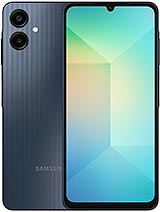
Galaxy A06
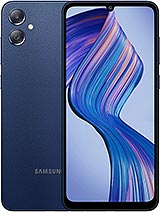
Galaxy F05
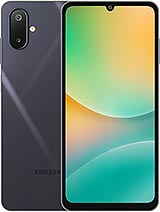
Galaxy M06 5G
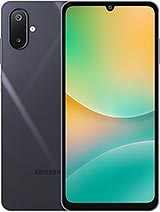
Galaxy M06
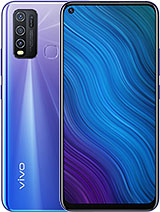
Y50 5G