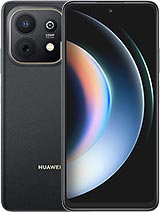
Samsung Galaxy M08 review
The M08 suits buyers in regions where LTE coverage is spotty and battery endurance is a priority, or anyone upgrading from a 2020-era phone who does not mind sacrificing sharpness for screen size and stamina. Skip it if you spend hours reading on-screen or multitasking; the 720p display and 4GB RAM will frustrate you quickly, and spending 20 EUR more gets you a 1080p screen and 6GB RAM elsewhere.
This review is based on Samsung’s published specifications and public benchmark data for the Samsung Galaxy M08, and the rating is spec-based. GoSolo does not physically test devices; where we estimate real-world behaviour such as battery life or charge time, we say so. How we rate phones.
Overview
The Galaxy M08 is a budget-friendly 6.7-inch phone with a 6000 mAh battery, 50MP main camera, and a dated 720p display that struggles to justify its size. It arrives in late 2026 with the Helio G99+ and a price around 160 EUR, making it a play for buyers who want screen real estate and stamina over sharpness and speed.
Design & build
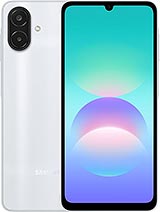
The M08 feels ordinary in hand: 197g is light enough, the 8mm profile is respectable, and the glass front with plastic back is the standard cost-cutting for this tier. The dual SIM slot and IP64 rating earn points for practicality—splash resistance matters when you are not carrying a phone case. The phone is sized generously; at 167.4mm tall and a 20:9 aspect ratio, it is unmistakably a tablet-sized device. That length makes one-handed use awkward, but it is what you pay for in this class. The single-color silver option is forgettable but predictable.
Display
Here the spec sheet reveals the M08's biggest compromise: a 720x1600 PLS LCD on a 6.7-inch panel works out to 262 ppi, and that graininess is visible in daily use. Reading small text, browsing social feeds, or playing casual games all suffer compared to the 1080p screens that have become routine at this price in 2026. The 90Hz refresh helps scrolling feel smoother, but it cannot hide the low pixel density. The 83.6% screen-to-body ratio is decent, and the PLS panel delivers okay colors for an LCD, but this is the phone's most conspicuous shortcut.
Performance
The Helio G99+ is a known quantity: it is capable for everyday work—messaging, light browsing, social media—and handles light gaming without stalling. Do not expect sustained heavy loads; the GPU is modest, and the pair of faster Cortex-A76 cores backed by six efficiency cores is tuned for stamina, not speed. The 4GB RAM is the real bottleneck. In 2026, that much memory is tight; expect occasional app reloads and slower task-switching, especially once you install 20+ apps. The chipset itself is not the problem; the memory pairing is. Storage-wise, 64GB before the OS and One UI take their cut leaves about 45GB for your apps and files, which nudges you toward the microSDXC card immediately.
Software
Android 17 with One UI 9 is current for late 2026. The promise of up to 6 major OS updates gives the phone a fighting chance at remaining usable for 4–5 years, which is important at this price if you are keeping it long-term. One UI's bloatware footprint is heavier than stock Android, and with only 4GB RAM, you may notice it tugging on performance during background processes. The FM radio is included, a feature that has largely disappeared but can be useful in regions with poor or unreliable mobile data.
Camera
The 50MP main shooter is solid on paper: an f/1.8 aperture, 0.64µm pixels, and PDAF promise decent low-light performance and fast focus. In practice, at this price, a 50MP sensor often combines high pixel count with modest processing power, so expect reasonable daylight shots but mediocre low-light output compared to rivals with superior image tuning. Video tops out at 1080p@60fps, which is standard for the budget tier but not impressive. The 8MP selfie camera is purely functional for video calls and casual selfies. There is no ultrawide, no macro, no depth sensor—just the one camera doing all the work. That keeps cost down but limits creative range.
Battery & charging
The 6000 mAh cell is the M08's strongest card. For casual to moderate daily use, you are looking at roughly 1.5–2 days between charges, which is a real comfort at this price and a key reason to choose this phone over smaller rivals. The practical downside is the 25W charging speed: rivals in the same bracket have moved to 33W, 50W, or faster, so a full recharge takes longer. The lack of any detail on wireless charging suggests there is none. For a phone at 160 EUR, the battery endurance is the main reason to tolerate its other limitations.
Value & verdict
At around 160 EUR, the M08 sits in a crowded and improving budget segment. Its main draw is the 6000 mAh battery and the sheer screen size for media consumption. Its main price is the 720p display, which feels like a deliberate step backward in 2026, and the 4GB RAM bottleneck. The Helio G99+ is fine, but the overall package shows cost-cutting where it hurts most: resolution and RAM. If you prioritize battery life and do not mind working around the low-resolution screen, it makes sense. If you are upgrading from an older phone, the larger battery and modest performance bump will feel adequate. But buyers cross-shopping at 150–180 EUR will find rivals with 1080p screens, more RAM, or faster charging that offer better all-around value.
Verdict
The M08 suits buyers in regions where LTE coverage is spotty and battery endurance is a priority, or anyone upgrading from a 2020-era phone who does not mind sacrificing sharpness for screen size and stamina. Skip it if you spend hours reading on-screen or multitasking; the 720p display and 4GB RAM will frustrate you quickly, and spending 20 EUR more gets you a 1080p screen and 6GB RAM elsewhere.
- 6000 mAh battery should deliver 1.5–2 days of mixed use, a genuine advantage in its price bracket
- IP64 rating for dust and splash resistance is a welcome safety net at this price
- Dedicated microSDXC slot lets you expand storage without sacrificing a SIM
- Helio G99+ handles everyday apps and light gaming adequately without power-sipping too hard
- 720p resolution on a 6.7-inch screen delivers 262 ppi—noticeably grainy for reading and scrolling, and rivals at this price have moved to 1080p
- 4GB RAM is tight for multitasking and app switching in 2026, and 64GB storage plus that 4GB configuration points to compromised performance
- Missing 25W charging speed is conspicuous when even budget rivals offer 33W or faster
Samsung Galaxy M08 Key Specifications
The essentials at a glance. See the full spec sheet.
| Released | 2026, October 01 |
|---|---|
| Display | 6.7 inches, 108.4 cm2 (~83.6% screen-to-body ratio), PLS LCD, 90Hz |
| Resolution | 720 x 1600 pixels, 20:9 ratio (~262 ppi density) |
| Chipset | Mediatek Helio G99+ (6 nm) |
| RAM & storage | 64GB 4GB RAM |
| Main camera | 50 MP, f/1.8, (wide), 1/2.76", 0.64µm, PDAF Auxiliary lens |
| Selfie camera | 8 MP, f/2.0, (wide), 1/4.0", 1.12µm |
| Battery | 6000 mAh |
| Software | Android 17, up to 6 major OS updates, One UI 9 |
| Dimensions | 167.4 x 77.4 x 8 mm (6.59 x 3.05 x 0.31 in) |
| Weight | 197 g (6.95 oz) |
| Build | Glass front, plastic back, plastic frame |
| Durability | IP64 dust tight and water resistant (water splashes) |
| Network | GSM / HSPA / LTE |
| NFC | No |
| USB | USB Type-C 2.0 |
Samsung Galaxy M08 FAQ
Common questions, answered from the spec sheet.
Does the Galaxy M08 support 5G?
No. The Galaxy M08 tops out at GSM / HSPA / LTE, without 5G.
What chipset does the Galaxy M08 use?
The Galaxy M08 runs on the Mediatek Helio G99+ (6 nm).
What display does the Galaxy M08 have?
A 6.7 inches, 108.4 cm2 (~83.6% screen-to-body ratio) PLS LCD, 90Hz, 720 x 1600 pixels, 20:9 ratio (~262 ppi density).
How big is the Galaxy M08 battery?
The Galaxy M08 has a 6000 mAh battery.
Does the Galaxy M08 have NFC?
No, the Galaxy M08 does not list NFC support.
Is the Galaxy M08 water resistant?
The Galaxy M08 carries a IP64 dust tight and water resistant (water splashes) rating.
Does the Galaxy M08 support a microSD card?
Yes, the Galaxy M08 supports expandable storage (microSDXC (dedicated slot)).
Alternatives to consider
If the Galaxy M08 isn’t quite right, these are the closest calls.
Galaxy A08 4G
Galaxy A07s
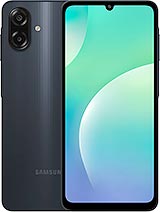
Galaxy M07
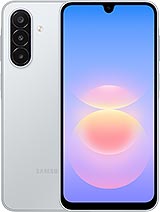
Galaxy A18 4G
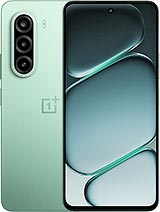
Turbo 6X