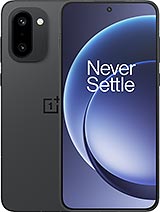
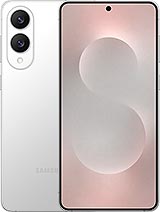
Samsung Galaxy S25 Edge review
The S25 Edge suits design-conscious buyers who prioritise thinness, build quality, and performance over battery endurance and won't mind a daily charge. Anyone expecting all-day battery or wary of thin phones should look elsewhere—the trade-offs are real, not marketing."
This review is written with AI assistance from Samsung’s published specifications and public benchmark data for the Samsung Galaxy S25 Edge, and the rating is spec-based. GoSolo does not physically test devices; where we estimate real-world behaviour such as battery life or charge time, we say so. How we rate phones.
Overview
The S25 Edge is Samsung's bet on form over longevity: a razor-thin flagship (5.8mm) with flagship silicon and a sharp display, but a 3,900mAh battery that demands daily charging. If you value thinness and build quality over all-day stamina, it delivers on both—just know what you're trading.
Design & build
At 5.8mm and 163g, the S25 Edge is among the thinnest flagship phones today, and it doesn't cheat durability to get there. The titanium frame and Gorilla Glass Ceramic 2 front (Mohs hardness 5) are genuinely tougher than standard Gorilla Glass—ceramic resists scratching better, and titanium feels lighter and more durable than aluminum. The glass back is Victus 2, which is fine. The phone fits easily in a pocket and feels light without being flimsy, though the thinness means no room for wireless charging coils, and the small footprint (158.2 x 75.6mm) is snug for one-handed use. It's a phone engineered around a constraint, and the constraint shows in every choice Samsung made. For buyers who swap phones often or travel light, this is genuinely compelling. For those who value grip and pocketability equally, a standard 8–9mm phone feels more balanced.
Display
The 6.7-inch LTPO AMOLED screen is crisp and bright, with 1440x3120 resolution and 513 ppi delivering no visible pixelation. The 120Hz adaptive refresh rate keeps scrolling smooth and, in theory, helps battery life on static content. Colour reproduction is punchy and typical of Samsung's calibration. At this screen size and resolution, media looks good, and text is sharp enough for reading. The Gorilla Glass Ceramic 2 is a nice touch for scratch resistance. The catch is that 1440p at 6.7 inches is overkill for day-to-day use—the ppi density far exceeds what most people notice—and the combination of high refresh, high resolution, and flagship brightness drains the small battery faster than lower-res or lower-refresh displays would. It's a quality screen held back by the phone's power constraints.
Performance
The Snapdragon 8 Elite (3nm) is current-generation flagship silicon and performs at that level. In benchmarks (AnTuTu ~2.1M, GeekBench 9391), it matches or exceeds last year's flagship chips. Gaming—Genshin Impact, Honkai Star Rail at high settings—runs without stuttering, and video editing or multitasking with 12GB RAM feels responsive. One UI 7 on Android 15 is clean and lag-free, and Samsung promises 7 major Android upgrades, so you're covered through 2031 or so. For its price, this is the right silicon. The thin chassis doesn't throttle performance visibly, though sustained heavy load may cause minor thermal climbing given the limited internal volume.
Camera
The 200MP f/1.7 main camera with a 1/1.3-inch sensor and multi-directional PDAF is the standout hardware. The large sensor and fast aperture capture fine detail in daylight and handle low light better than a smaller sensor would—night shots are competent if not cutting-edge. The 12MP ultrawide (f/2.2) is a reasonable pairing for group shots and landscapes, though not exceptional. The selfie camera (12MP f/2.2) is functional for video calls and casual stills. Video caps out at 8K@30fps, which is overkill for most users; 4K@60fps is the practical sweet spot. Overall, the main sensor delivers on its spec: detailed stills and capable night mode. It's not revolutionary, but for the price and class, it's a genuine strength.
Battery & charging
The 3,900mAh battery is the trade-off Samsung made to hit 5.8mm thickness, and it's a big one. In real use with 120Hz enabled and moderate-to-heavy workload (browsing, gaming, video), expect 5–6 hours of screen-on time; light use (messaging, calls, photos) might stretch to a full day. That means most users will need a midday top-up or carry a power bank. The 25W wired charging hits 55% in 30 minutes, which is useful for emergency boosts but ranks below 60W and 100W charging now standard at this price. A full recharge from zero takes about 70–90 minutes. The 15W wireless charging (Qi2 Ready) is present but slow compared to wired. In 2025, 25W charging on a thin flagship feels like playing catch-up to rivals who prioritise speed.
Software & connectivity
One UI 7 is Samsung's latest skin over Android 15 and is snappy and minimal compared to older iterations. The 7-year upgrade guarantee means security and feature updates through 2031, which is solid for resale and peace of mind. Connectivity is thorough: 5G SA/NSA Sub-6 and mmWave (US models), Wi-Fi 7 tri-band, UWB, NFC, and GPS with GLONASS and Galileo. The Snapdragon 8 Elite's modem handles these well. Samsung DeX support is there for desktop-mode users. Nothing stands out as weak or missing.
Value & verdict
At ~$468 USD or €508, the S25 Edge sits between mid-range and flagship pricing, and what you pay for is form, durability, and speed—not longevity. The thin, titanium-framed build is genuinely well-made, the Snapdragon 8 Elite is current-tier, the camera is strong, and the 1440p display is sharp. What you don't get is a battery that lasts a full day of heavy use or charging speeds that match rivals. The phone works best for someone who doesn't stray far from power, values thinness and design, and is willing to recharge daily. For others, a standard-thickness flagship (S25 or S25+) or a larger battery at the same price point is the smarter pick. The S25 Edge is a niche phone that nails its niche—but it's a niche.
Verdict
The S25 Edge suits design-conscious buyers who prioritise thinness, build quality, and performance over battery endurance and won't mind a daily charge. Anyone expecting all-day battery or wary of thin phones should look elsewhere—the trade-offs are real, not marketing."
- Genuinely thin (5.8mm) without sacrificing durability—titanium frame and Gorilla Glass Ceramic 2 front are serious upgrades over standard glass
- 200MP f/1.7 main sensor with 1/1.3-inch size captures sharp detail and performs well in low light; 1440x3120 display at 513ppi is crisp for media and text
- Snapdragon 8 Elite handles heavy gaming and video editing without lag; One UI 7 on Android 15 with 7 major update guarantees keeps it current for years
- Charging hits 55% in 30 minutes, enough for a midday top-up; IP68 rating and ceramic glass more resistant to scratches than usual flagships
- 3,900mAh battery lasts roughly 5–6 hours of heavy use; thin profile prioritizes aesthetics over practical endurance and forces daily charging
- 25W charging is now below-average for its price tier and year (rivals offer 60W to 120W); full recharge takes 70–90 minutes
- 120Hz LTPO is smooth but paired with high-resolution panel and flagship silicon drains battery faster than the rated numbers suggest in real use
Samsung Galaxy S25 Edge Key Specifications
The essentials at a glance. See the full spec sheet.
| Released | 2025, May 13 |
|---|---|
| Display | 6.7 inches, 110.2 cm2 (~92.1% screen-to-body ratio), LTPO AMOLED 2X, 120Hz, HDR10+ |
| Resolution | 1440 x 3120 pixels, 19.5:9 ratio (~513 ppi density) |
| Chipset | Qualcomm SM8750-AC Snapdragon 8 Elite (3 nm) |
| RAM & storage | 256GB 12GB RAM, 512GB 12GB RAM |
| Main camera | 200 MP, f/1.7, 24mm (wide), 1/1.3", 0.6µm, multi-directional PDAF, OIS 12 MP, f/2.2, 13mm (ultrawide), 1/2.55", 1.4µm, PDAF |
| Selfie camera | 12 MP, f/2.2, 26mm (wide), 1/3.2", 1.12µm, dual pixel PDAF |
| Battery | 3900 mAh |
| Charging | 25W wired, PD, QC2.0, 55% in 30 min15W wireless (Qi2 Ready) |
| Software | Android 15, up to 7 major Android upgrades, One UI 7 |
| Dimensions | 158.2 x 75.6 x 5.8 mm (6.23 x 2.98 x 0.23 in) |
| Weight | 163 g (5.75 oz) |
| Build | Glass front (Gorilla Glass Ceramic 2), titanium frame, glass back (Gorilla Glass Victus 2) |
| Durability | IP68 dust tight and water resistant (immersible up to 1.5m for 30 min) |
| Network | GSM / HSPA / LTE / 5G |
| NFC | Yes |
| USB | USB Type-C 3.2 |
Samsung Galaxy S25 Edge FAQ
Common questions, answered from the spec sheet.
Does the Galaxy S25 Edge support 5G?
Yes. The Galaxy S25 Edge supports 5G networks.
What chipset does the Galaxy S25 Edge use?
The Galaxy S25 Edge runs on the Qualcomm SM8750-AC Snapdragon 8 Elite (3 nm).
What display does the Galaxy S25 Edge have?
A 6.7 inches, 110.2 cm2 (~92.1% screen-to-body ratio) LTPO AMOLED 2X, 120Hz, HDR10+, 1440 x 3120 pixels, 19.5:9 ratio (~513 ppi density).
How big is the Galaxy S25 Edge battery?
The Galaxy S25 Edge has a 3900 mAh battery. Charging is rated at 25W wired, PD, QC2.0, 55% in 30 min15W wireless (Qi2 Ready).
Does the Galaxy S25 Edge have NFC?
Yes, the Galaxy S25 Edge has NFC.
Is the Galaxy S25 Edge water resistant?
The Galaxy S25 Edge carries a IP68 dust tight and water resistant (immersible up to 1.5m for 30 min) rating.
Does the Galaxy S25 Edge support a microSD card?
No, the Galaxy S25 Edge does not support expandable storage.
Does the Galaxy S25 Edge have a headphone jack?
No, the Galaxy S25 Edge does not have a 3.5mm headphone jack.
Alternatives to consider
If the Galaxy S25 Edge isn’t quite right, these are the closest calls.
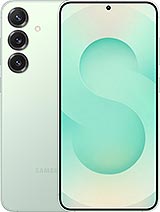
Galaxy S25+
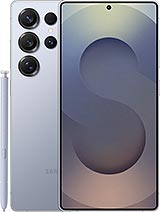
Galaxy S25 Ultra
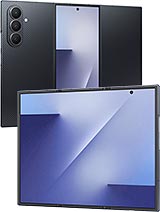
Galaxy Z TriFold
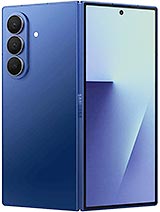
Galaxy Z Fold7
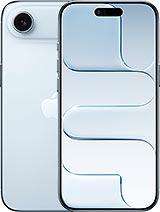
iPhone Air